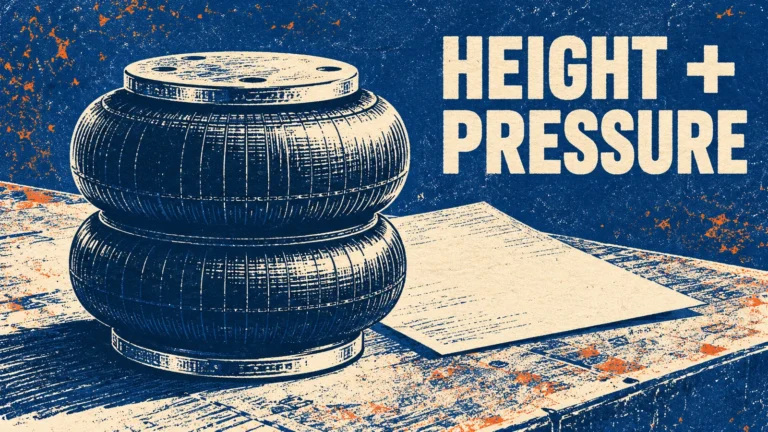
This guide helps distributors organize a purchasing inquiry about those interfaces. It supplies no universal dimensions, thread size, inflation procedure or installation approval. The outcome is a comparison record showing what the offered reference actually matches, what is included and which questions still need manufacturer or vehicle documentation.
Start with the selected reference and position
Record the requested reference exactly, including its suffix and the relevant vehicle or suspension position. Keep the customer's existing part identity separate from the supplier's offered identity. A broad vehicle description or an abbreviated catalog label should not erase a difference between the two records.
Ask which application source supports the offer. If the supplier proposes a cross-reference, retain the source and its scope with the quote. Do not treat a cross-reference as permission to ignore the end arrangements or to reuse an unrelated drawing. The application record and the interface record should refer to the same selected item.
Continental's official air spring catalog page describes technical data, drawings and searches by application and part references. This bounded example supports using selected documentation alongside pictures. It does not establish Continental fitment, dimensions or performance for a MAKEXCAR air spring.
Name what the supplier is offering
Ask whether the sales unit is the identified rubber component or an assembly with the specified end components. Use the supplier's selected description and drawing to name those components. The phrase air spring bag alone can leave the delivered boundary unclear when buyers and suppliers use it differently.
Record whether the relevant end plates, lower support or piston, mounting hardware and air connection items are supplied, separate or outside the offer. Do not infer inclusion from a photograph of a complete assembly. A drawing showing an associated item is also not, by itself, the carton contents list.
This article concerns the interfaces of the proposed item. It does not decide whether existing end components can be reused or assembled with a different rubber component. That is a separate selected-product technical question, requiring the applicable instructions and approval rather than a purchasing assumption.
Keep top and bottom views consistently oriented
Request clear overall, upper and lower views, linked to the offered reference. Agree which end each image shows and retain the drawing's orientation. If a photograph is rotated or viewed from the opposite side, an apparent port or mounting-position difference may be a comparison problem rather than a documented component difference.
Use the source's datum or orientation convention where one is provided. Keep the reference feature visible in the image or identify it in the record. Avoid independently renaming drawing positions in a way that loses the connection with the supplier's documentation.
If an image cannot show an important feature, say so. Request a clearer view or the relevant drawing detail instead of estimating the hidden arrangement. A symmetrical-looking rubber body does not tell the reviewer which way a particular end interface is oriented.

Compare the selected end arrangements
Record the identified upper and lower component arrangements from the selected source. Ask for the relevant outline, mounting face and locating details where they affect the buying decision. Keep each observation connected to its source view, so a plate feature is not confused with a feature on a different end.
Where dimensions are necessary, use the drawing's stated dimensions and units. Identify the particular feature being compared and the source revision. This guide provides no acceptance tolerance and no rule that a near match is adequate. An unresolved discrepancy should remain visible for technical clarification.
For a lower support or piston shown in the source, ask what identifies the selected version and its relation to the offered assembly. Do not select it merely by color, apparent material or resemblance in an advertising image. Any material or version claim needs the selected documentation.
Record the air connection as its own interface
Ask for the air connection identity and its documented location relative to the source orientation. Retain the selected connection specification and relevant drawing details. A visible opening is an observation; it is not enough to assign a thread standard, sealing arrangement or mating part.
If a fitting is shown, confirm whether that fitting is actually supplied and which selected connection it serves. Keep connection compatibility and fitting inclusion in separate fields. A buyer may have adequate evidence for the port identity while still needing a clear answer about the delivered fitting.
Do not resolve a mismatch by assuming that another fitting or adapter will make the offer suitable. Such a proposal requires its own application-specific evidence. This guide gives no pressure value, connection modification, sealing material or tightening instruction.
Check mounting locations and fastening descriptions
Identify the mounting features using the selected drawing and oriented views. Ask for the relevant location dimensions and fastening descriptions where needed for comparison. Preserve whether the source describes a stud, hole or other particular feature instead of reducing all of them to a general mounting point.
Do not infer a fastening specification from an image. The visible number of mounting features, their positions and their documented identities answer different questions. A matching count does not establish matching locations or a suitable fastening interface.
Ask which fastening items belong to the sales unit. Keep supplied hardware, separately ordered items and installation requirements distinct. This purchasing record does not authorize transferring old hardware or selecting a torque value. Applicable selected-product and vehicle instructions govern those decisions.
Build an interface comparison record
The following original worksheet organizes the inquiry. It is not a measurement specification or an interchange approval. Record the selected source beside each answer; if the source is missing, name the outstanding question instead of filling the field from another reference.
| Comparison field | Evidence requested | Limit of the entry |
|---|---|---|
| Identity | Requested and offered references with position | No broad application assumption |
| Supply boundary | Component or assembly and itemized contents | Picture does not establish inclusion |
| Orientation | Overall, upper and lower source views | No unrecorded rotation |
| End arrangements | Selected drawing and component identity | No resemblance-based version choice |
| Air connection | Location and selected connection specification | No guessed thread or adapter approval |
| Mounting | Locations and fastening descriptions | No torque or hardware reuse instruction |
| Decision record | Confirmed entries and unresolved differences | Worksheet is not fitment approval |
Retain the completed comparison with the quote, drawing revision and sample record. If the offered reference or component arrangement changes, reopen the affected fields. A previous answer should not be carried forward to a different item merely because the rubber profile remains familiar.

A similar bellows with a different end layout
Consider a hypothetical inquiry where the customer and supplier photographs show a similar rubber shape. The upper views appear to place the air connection differently, while the lower mounting arrangement is not visible. The buyer should record the visible concern and the missing lower view without declaring either a match or a confirmed incompatibility.
The next request is for the exact offered identity, consistently oriented views and the relevant selected drawing. If the apparent difference disappears when the views are aligned, keep that explanation with the comparison. If a documented difference remains, send it for application-specific clarification rather than accepting the item on overall appearance.
This is an illustrative sourcing scenario, not a real MAKEXCAR interchange case. It includes no actual dimensions or recommended modification. Its purpose is to show how a familiar rubber profile can distract the reviewer from an unanswered interface question.
Retain a useful sample and incoming record
When a sample arrives, record its identity and the visible end arrangements against the accepted quote. Photograph the same views used in the inquiry. If a supplied fitting or mounting item differs from the agreed contents, identify that difference separately from a fitment question.
A sample photograph can establish what was delivered, while the selected drawing establishes what was offered and documented. Keep both. Do not replace a missing application assignment with an incoming visual check or mark the item approved simply because the sample looks like the promotional photograph.
For a later order, preserve any supplier notice about a changed reference, component version or contents. Recheck the affected comparison fields before using the earlier catalog record. This keeps the reason for a revision visible to purchasing, catalog maintenance and customer service.
Frequently asked air spring fitment questions
Is a matching rubber shape enough to select an air spring?
No. Use the selected application and reference records, then compare the documented end arrangements, air connection and mounting interfaces. The rubber profile is only one visible observation.
Can port identity be read from a photograph?
A photograph can show a location and visible features. Obtain the selected connection specification to establish its identity. Do not guess a thread or sealing arrangement from appearance.
Does an assembly photo mean all fittings are included?
No. Ask for the itemized sales-unit contents and identify separately supplied items. Keep inclusion separate from connection compatibility and installation requirements.
What should happen when mounting views are missing?
Leave the comparison unresolved and request the selected drawing or clearer oriented view. Do not invent locations or use another reference's dimensions to complete the record.
Send a reference-specific air spring inquiry
Browse the current MAKEXCAR Air Spring Bags category for published references. Category membership does not establish a common end layout or universal fitting. Start with the particular offered item and the customer's documented application.
Through MAKEXCAR contact, send the exact requested reference, application and position, quantity and oriented photographs. Ask for the offered identity, selected drawing, air connection and mounting details, and actual contents. Keep unresolved differences visible before turning a visual resemblance into a catalog fitment claim.