This guide helps buyers review supplier reports. It does not provide an acceptable pressure-drop limit, a substitute test method or a ranking of MAKEXCAR filters. No actual supplier curves have been evaluated here. The responsible technical reviewer must apply the requirements for the intended application and decide whether the reports are comparable.
Identify the filter and the test report
Request the filter reference, sample identity, report identifier, test date and document revision. If a report covers several references, ask the supplier to identify which result belongs to the offered item. A product-family brochure or a graph with an unlabelled curve can provide general context but cannot settle an offer-specific comparison.
Ask whether the result represents a complete filter element, a media sample or another stated specimen. Keep that specimen description beside the result. A test on one specimen type should not be presented as though it directly measured another. The reviewer needs the actual boundary of the measurement to understand what is being compared.
Retain the original report and any explanatory reply. If the supplier sends a reformatted chart, request its relationship to the source record and the identity of the plotted data. A readable presentation is useful, but it should remain traceable to the evidence supporting the offer. Do not create a new curve from an image without the data needed to interpret it.
Ask for the airflow associated with each result
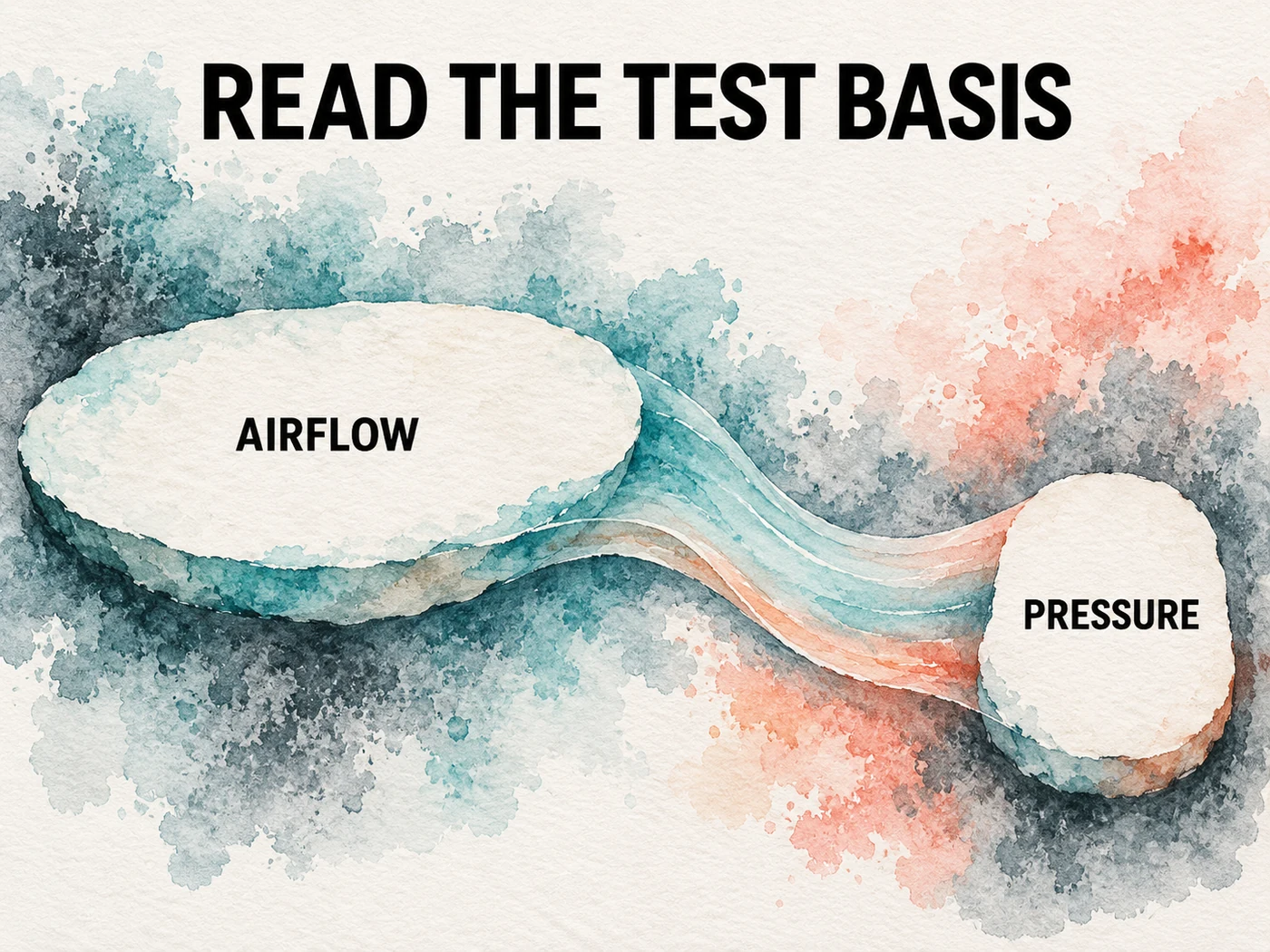
A pressure-loss result should remain associated with the airflow at which it was reported. Request the airflow units and the pressure units, and ask the supplier to clarify any ambiguous axis label. Your reviewer should compare like quantities, using an agreed unit basis where necessary. This article supplies no conversion formula or invented example measurements.
If both reports show curves, identify the airflow of interest from the application requirement and ask the reviewer to use the corresponding reported results. If one report does not include that airflow, request the appropriate information rather than extend the plotted curve by eye. A figure outside the reported range should not become an apparent measured result.
If the supplier provides only one point, ask what that point represents and whether additional data is available for the review. One point may answer a specifically defined requirement, but it should not be treated as a complete performance curve. Record the limitation and let the responsible reviewer decide whether the evidence is sufficient.
Understand what the cited test document covers
ISO’s public summary for ISO/TS 11155-1:2001 describes a particulate-filtration test for passenger-compartment filters and identifies pressure loss among the assessed characteristics. It also refers to test equipment, procedure and reporting. This supports requesting an identified test basis, rather than interpreting a number in isolation. See the ISO/TS 11155-1 public record.
The same ISO summary limits absolute comparability to elements matching in shape and size and positioned alike in the test duct. Keep those features visible in the report review. Matching airflow alone should not erase a specimen or arrangement difference.
The public summary is not the full procedure, and this article does not claim to have audited a supplier against it. If a report cites that document or another method, request the actual method identification and the information your reviewer needs. Do not label an offered filter compliant merely because a standard number appears in a quotation.
Keep the sample condition comparable
Ask the supplier to describe the condition of the tested specimen. A record for an initial sample condition and a record for a stated loaded condition answer different questions. Retain the condition description used in each report instead of combining results under a general heading such as “resistance.” The reviewer should determine which condition the application requirement addresses.
If a supplier reports a sequence of results, ask how each point is associated with the reported specimen condition and method. This guide does not prescribe dust loading, exposure duration or an endpoint. Those details must come from the actual test basis. Keep the document references available so the technical review can interpret the sequence accurately.
Do not assume that an old filter removed from a vehicle is a controlled comparison specimen. Its history may be useful context, but it needs its own identification and condition record. If the intended comparison is between supplier offers, request the evidence that represents those offers rather than replace one report with an undocumented field observation.
Review the test arrangement and measurement boundary
Ask the supplier to identify the test arrangement and how the reported pressure loss relates to the specimen. The reviewer may need details about mounting and the measurement boundary to determine comparability. Request that information from the actual method and report. This article does not supply instructions for building a test rig or locating measurement points.
If two reports use different arrangements or methods, record the difference and ask the reviewer what it means for the comparison. Matching airflow is necessary for the question being discussed, but it does not automatically settle every other difference. Do not call two results equivalent simply because the units and one airflow value match.
Request any relevant uncertainty or repeatability information available in the report where your reviewer needs it. Avoid demanding an unrelated document merely to enlarge the file set. The useful request is the information required to judge the actual comparison, with the sample, method and report clearly connected.
Keep pressure loss separate from filtration efficiency
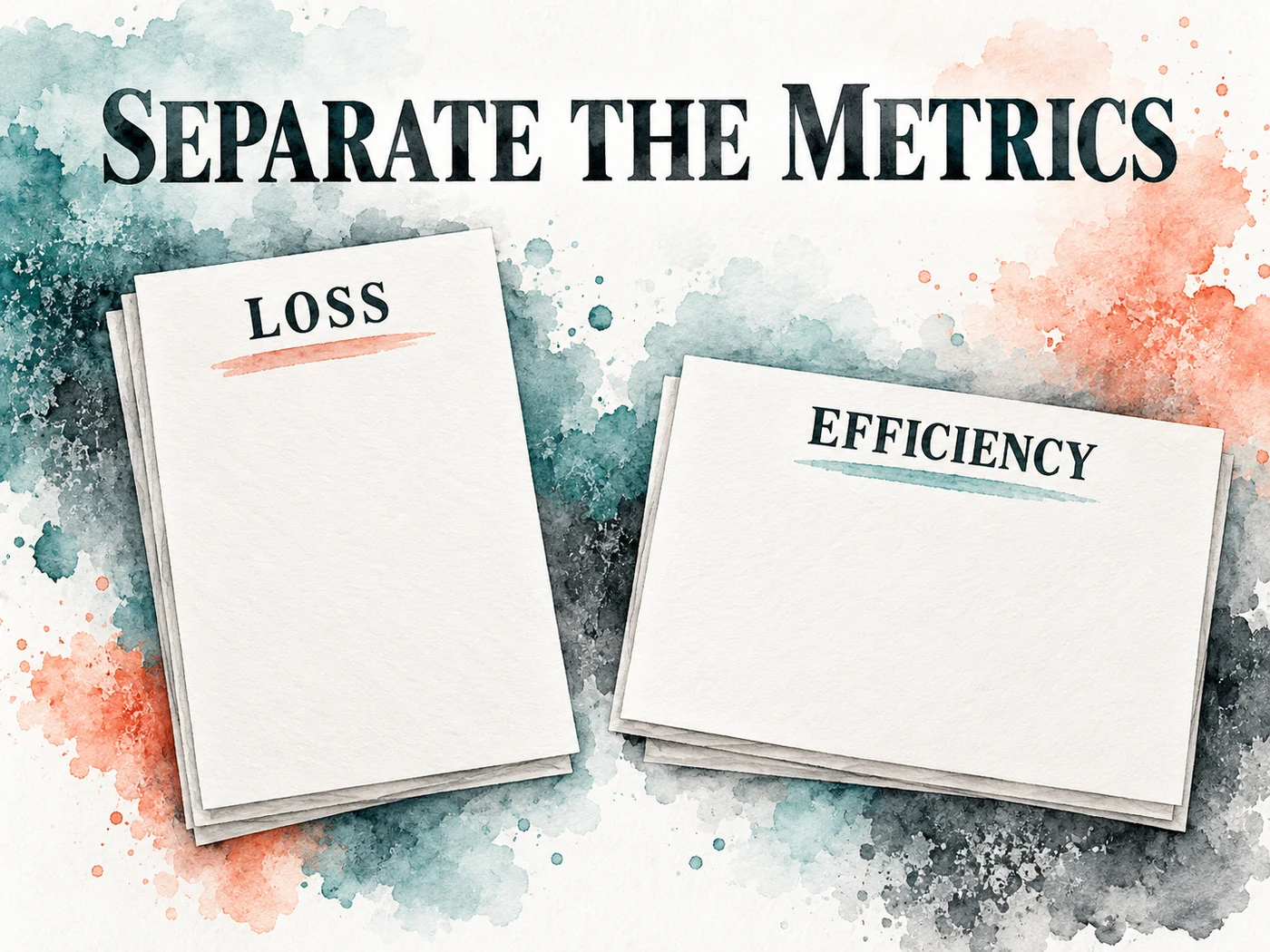
A reported pressure-loss value is not a substitute for an efficiency result. If the supplier makes both claims, request the source for each and keep their test conditions identifiable. Do not conclude that a filter has better filtration because it has a lower reported pressure loss, or that it has an acceptable application result from one metric alone.
Similarly, a filtration grade or an attractive media description does not replace a pressure-loss curve. Your requirement may involve more than one performance question, but each should retain its own supporting evidence. This guide focuses on organizing the pressure-loss comparison while preventing an unsupported conclusion about another characteristic.
Create the comparison worksheet
The following worksheet connects a reported result to its basis. Complete it for each offered reference before discussing the numerical comparison. It is an inquiry aid, not a pass/fail test report, and it contains no suggested acceptance values.
| Field | Request for each offer | Review question |
|---|---|---|
| Identity | Filter, sample and report identifiers | Does this result belong to the offered reference? |
| Specimen | Complete element or other described specimen | Are equivalent specimen boundaries compared? |
| Airflow | Reported range, point and units | Is the comparison airflow covered? |
| Pressure loss | Original curve/data and units | Can the result be traced to the report? |
| Condition | Specimen condition for the reported result | Does the condition match the review question? |
| Method | Test basis, arrangement and report revision | What comparability differences remain? |
| Decision | Requirement, reviewer and conclusion | What evidence is accepted or pending? |
Keep a separate notes field for missing information. For example, an unreadable axis or an unidentified specimen should remain an open issue until clarified. Do not enter a guessed value so that the table appears complete. A visible pending field is more useful than a polished comparison that conceals its assumptions.
Write a conclusion limited to the evidence
If the reviewer finds the reports comparable, state which references, airflow, conditions and documents support the conclusion. Avoid turning a result at one basis into a universal ranking across all applications. Keep any limitation visible in the purchasing record, especially where the report does not cover the requested condition or range.
If the reports are not yet comparable, describe the unresolved difference and ask for the specific additional information. A report can be valid for its stated purpose without answering your comparison question. The task is to identify what the offered evidence supports, rather than reject or approve a filter from a single attractive number.
Common pressure-loss comparison questions
Can two single values be compared without airflow?
Request the associated airflow and the rest of the test basis first. Without those details, the values do not provide the defined like-for-like comparison this guide addresses.
Does lower pressure loss mean better filtration?
No efficiency conclusion follows from that value alone. Request the separate efficiency evidence and its conditions when that characteristic is part of the requirement.
Can a missing curve section be estimated from the picture?
Do not turn an unsupported extrapolation into a reported measurement. Request the relevant data or ask the reviewer whether the available range is sufficient for the specific question.
Does citing ISO/TS 11155-1 prove the offered filter complies?
A citation alone does not establish a supplier-specific result. Request the actual report and method information. The responsible reviewer should assess the evidence against the applicable requirement.
Send a report-based comparison request
Browse MAKEXCAR’s current Cabin Air Filters references, then identify the offered item you want to review. Category membership does not imply a shared pressure-loss result or interchangeable application.
Send the references, application, quantity and comparison airflow requirement through the MAKEXCAR contact page. Request the original pressure-loss curves, specimen condition and identified test basis for each offer. That gives your reviewer a traceable comparison question without an unsupported performance promise.