For a distributor, a small missing component can become a large catalog problem when the same ambiguous description is copied into many orders. The useful purchasing question is straightforward: what arrives under this part number, and what evidence identifies its intended interfaces? This guide explains how to build that record without inventing a universal boot design, spring specification or replacement procedure.
Start with the part number and supply unit
Separate a complete ignition coil from a boot kit, a boot supplied alone and any separately listed contact component. Use the supplier's actual terminology and ask for clarification where the description is incomplete. Record the unit of sale as well: one component, one kit, one coil assembly or a stated multipack. An image showing several pieces may illustrate a range rather than the contents of one sale unit.
The NGK wire-set page includes a coil-on-plug boot installation resource. This is a manufacturer example of boot-related aftermarket support, not evidence that every ignition coil has a separately serviceable boot. Check the selected reference and its instructions before presenting that possibility to a customer.
When a seller uses the word complete, ask what it covers. Preserve the answer against the quoted SKU and revision. Do not translate a vague description into an unsupported promise that all springs, seals, contacts or accessories are included. An accurate short listing is more useful than a confident description with an undefined scope.
Identify the boot without relying on appearance
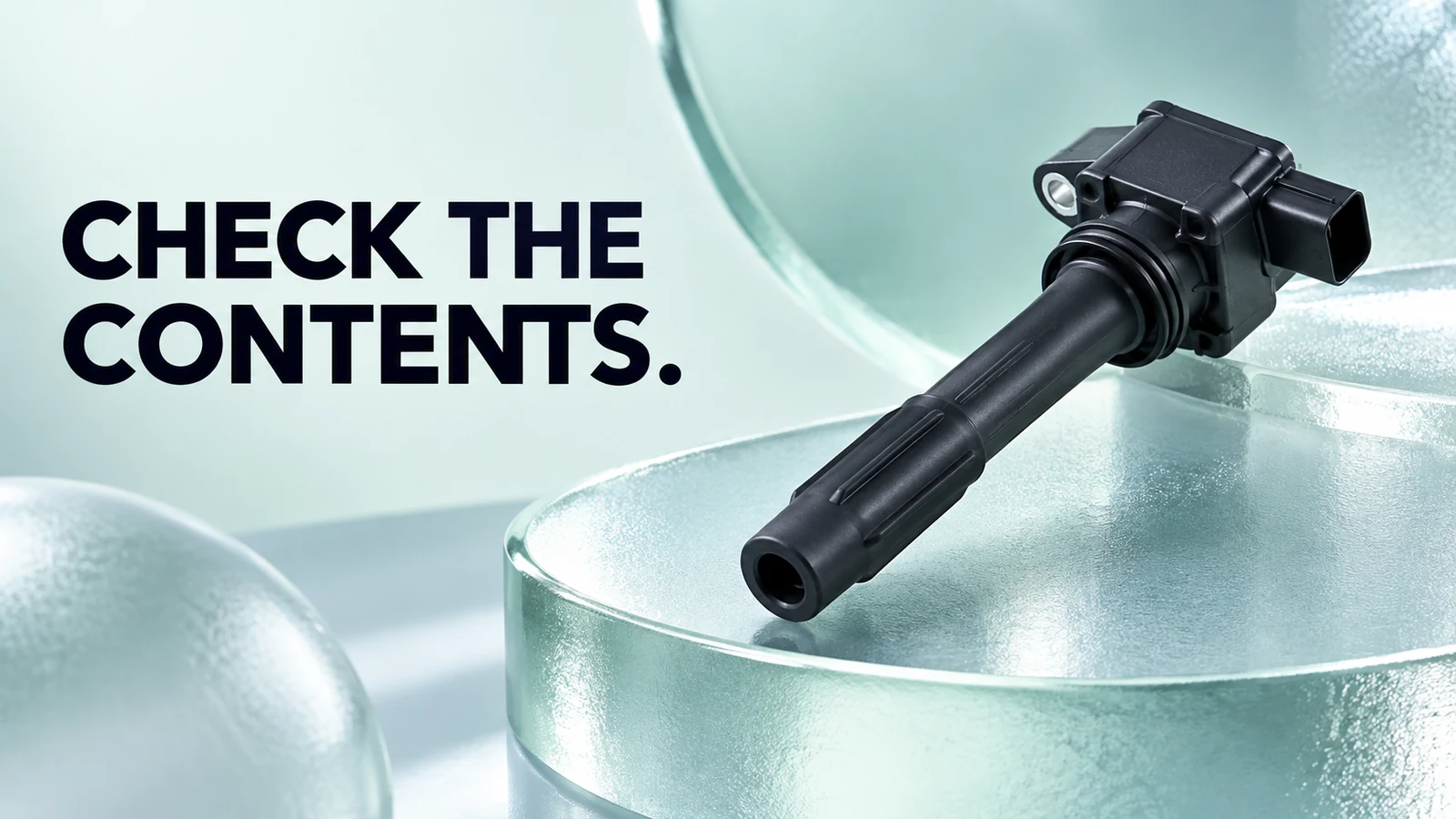
A boot photograph is helpful for identifying the item being discussed, but visual similarity is only a starting point. Request the selected boot reference, the associated coil reference and the application evidence used by the supplier. If a drawing is available, preserve its number and revision. Avoid declaring two pieces interchangeable because their color, general length or outside profile looks similar.
Use clear views of the supplied item and its relevant ends, with a traceable connection to the quotation. Ask the supplier to identify which features are important to the selected interface. This article sets no universal dimensional tolerance, material grade or temperature rating. Those values belong in product-specific documents when they are needed for the purchasing decision.
Name the spring or contact component precisely
If a spring is shown or mentioned, ask whether it is supplied with the boot, with the coil or under another reference. Record the supplier's name for that component. The word spring alone can be an inadequate catalog description when the purchasing team has no drawing, contents list or application record linking it to the intended product.
Ask for confirmation of the specified component rather than proposing a generic substitute from a photograph. Do not infer its electrical characteristics, material, coating, force, dimensions or resistance from appearance. Where these are necessary to support a product claim, request the relevant supplier specification and its scope. Keep the answer tied to the selected revision.
Also distinguish included, available separately and not confirmed. These are different purchasing states. A supplier may confirm that a separate item can be quoted without confirming it is inside the current package. Keep that distinction in the sales description, order line and receiving record so the warehouse does not have to interpret it later.
A practical supply-scope record
| Field | Evidence to preserve |
|---|---|
| Quoted reference | Exact SKU, supplier description and revision |
| Sale unit | One coil, one boot, one kit or stated multipack |
| Boot scope | Included item and its supported reference |
| Spring or contact scope | Included, separately quoted or not confirmed |
| Interface evidence | Relevant drawing, image and supplier identification |
| Application basis | Traceable catalog reference and applicable notes |
| Service information | Selected manufacturer instructions where applicable |
| Receiving basis | Approved contents list and reference-linked sample |
This table is an editorial purchasing aid, not a manufacturer specification or a mandatory inspection standard. Fill it with actual evidence. If the supplier cannot confirm a field, leave the uncertainty visible and explain which claim or order decision it prevents. An empty field is preferable to a guessed answer copied across a distributor catalog.
Keep application evidence separate from package contents
A clear contents list answers what is supplied. Application evidence answers where that particular reference is supported. Neither substitutes for the other. A boot kit may have a well-defined contents list while its intended coil or vehicle application remains unresolved. Conversely, an application match may be documented while the quotation leaves a spring or accessory inclusion unclear.
Preserve the original catalog notes and any restrictions attached to the reference. Do not broaden them when writing a shorter product title. If a requested application is absent from the evidence, ask for a specific confirmation rather than assuming that a familiar coil shape proves compatibility. Record the customer's reference and the supplier's response together.
For an existing product listing, compare its recorded information with the new quote before a repeat purchase. Treat a changed item image or contents description as a question to resolve. It may reflect a catalog update, a different package or another explanation; it does not by itself establish an approved substitution.
Do not turn a contents check into a diagnosis
The NGK ignition-coil page describes the coil, boot and spark plug together as a high-voltage circuit. That supports keeping the broader ignition context visible. It does not prove that a reported vehicle symptom was caused by a missing spring, a damaged boot or an internal coil defect.
When a customer reports a problem, preserve the application, installed references, observations and relevant service history. Ask for the actual technician's findings where a technical conclusion is required. A procurement desk can resolve whether the ordered item arrived with the agreed components; it should not promise that adding a boot kit will cure an unexplained symptom.

An illustrative quotation comparison
Consider two hypothetical offers. Offer A is described as an ignition coil with a photograph showing a long boot. Offer B is described as a boot kit, with a separate list naming its supplied pieces. Neither description alone establishes that the items are substitutes. The buyer first confirms the intended reference and whether the request is for a coil assembly or a boot-related service item.
For Offer A, the unresolved question may be whether the photographed configuration matches the actual package and revision. For Offer B, it may be whether the named kit is supported for the customer's coil reference and includes the requested contact component. These are different evidence gaps, and they should produce different supplier questions.
This example contains no actual supplier quotation, fitment recommendation or performance comparison. Its purpose is to show why a lower unit price cannot settle a comparison when the sale units and documented scope differ. Compare like-for-like offers only after identifying what each one supplies.
Make the receiving check match the approved order
Give the receiving team the approved contents description, reference and relevant images. If a kit is supplied, ask them to compare the received items with that agreed list. Keep any discrepancy associated with the order and package identification. Do not ask the warehouse to determine electrical suitability or vehicle compatibility from loose components.
Where a sample was approved, preserve its identity and the scope of that approval. A sample photographed for a contents review is not automatically a validated application test. If the next shipment differs, record the difference and request a disposition against the purchase agreement before changing the catalog description.
Frequently asked questions
Does every ignition coil include a removable boot?
This guide establishes no universal rule. Request the selected manufacturer's product information and service instructions. A boot-related resource from another manufacturer does not establish serviceability for the quoted SKU.
Does a boot kit always include a spring?
Confirm the actual kit contents. Record a spring or contact component as included only when the supplier's documentation supports that statement for the selected reference and package.
Can a matching photograph confirm interchangeability?
Use the photograph to support identification, then check reference-linked application and interface evidence. Appearance alone does not establish a supported substitution, material specification or electrical characteristic.
Should a distributor recommend a boot kit for a misfire?
A sales team should not infer a technical cause from the complaint alone. Keep the procurement scope separate from the technician's diagnosis and the selected vehicle's service information.
Request a reference-specific contents review
Browse the current MAKEXCAR ignition-coil listings and review the information recorded for the selected item. Category membership does not establish that a separate boot kit or spring is available for every coil. Ask about the particular reference and requested sale unit.
For a sourcing inquiry, send the coil or boot reference, application, quantity, relevant images and the exact contents question. State whether you need a complete coil, a confirmed boot kit or a separately identified component. Ask for a reference-linked contents list and the evidence needed to support the application before confirming the order.