Low MOQ Oil Filter Suppliers in China: Complete Guide to 500-Unit Minimum Orders for New Distributors (2026)
Discover reliable low MOQ oil filter suppliers in China accepting 500-unit minimum orders. Complete guide for new distributors: cost analysis, supplier evaluation, mixed SKU strategies, and scaling plans.
博客
2/25/2026
Introduction: The Low MOQ Challenge for New Distributors
Starting an automotive parts distribution business requires careful capital management, especially when sourcing from China. While established distributors can easily commit to 2,000-5,000 unit orders per SKU, new entrants face a critical challenge: most Chinese oil filter manufacturers require minimum order quantities (MOQs) that demand $20,000-50,000 initial investments.
This creates a significant barrier to entry. New distributors need to test products, validate quality, assess market demand, and build customer relationships before committing large capital. The solution? Finding reliable Chinese manufacturers who accept low MOQ orders starting from 500 units per SKU.
The Reality of Chinese Oil Filter MOQs (2026 Market Data):
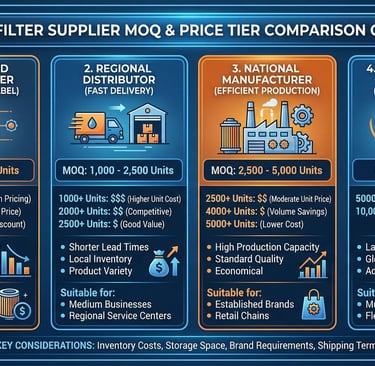
Standard MOQ: 2,000-3,000 units per SKU (85% of manufacturers)
Low MOQ: 500-1,000 units per SKU (12% of manufacturers)
Ultra-Low MOQ: 300-500 units per SKU (3% of manufacturers)
No MOQ: Stock products only, limited selection (<1% of manufacturers)
What You'll Learn in This Guide:
Why most Chinese factories require high MOQs and how to work around it
How to identify quality suppliers accepting 500-unit minimum orders
True cost analysis: 500 units vs 2,000 units (with hidden costs revealed)
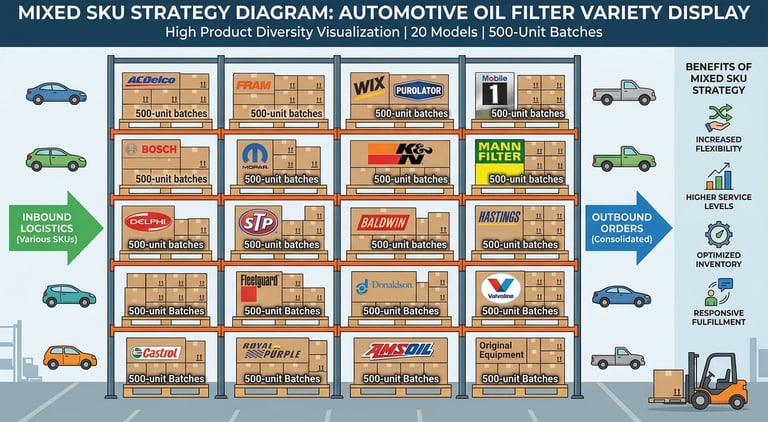
Mixed SKU strategies to test 20+ products with minimal investment
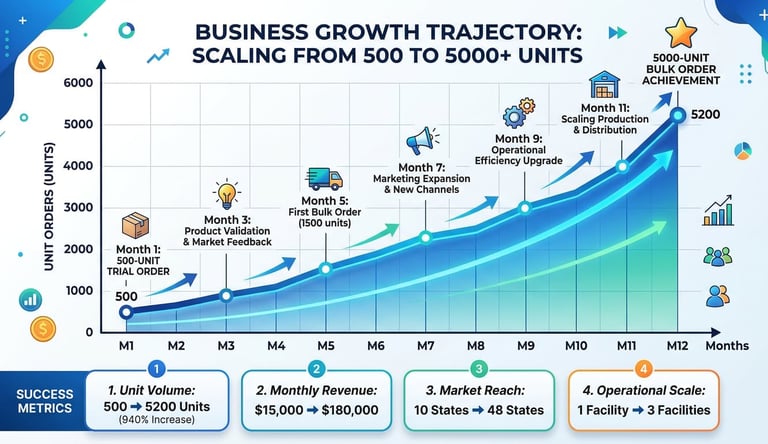
Scaling roadmap: from 500-unit trial to 5,000-unit bulk orders
5 certified Chinese manufacturers accepting low MOQ (including detailed comparison)
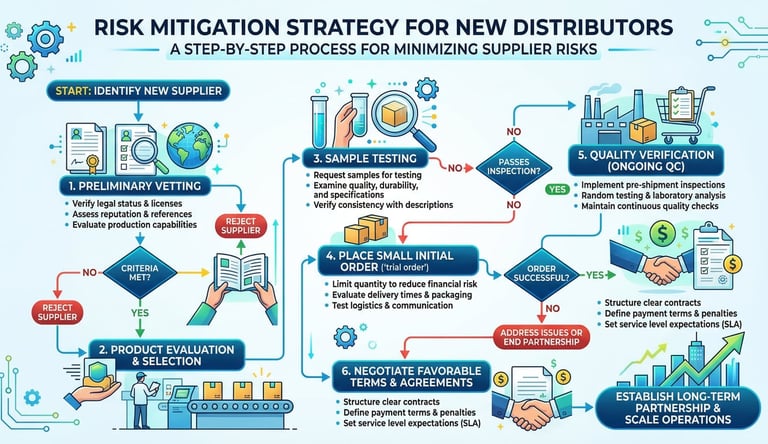
Risk mitigation strategies for first-time importers
Why Do Chinese Oil Filter Manufacturers Require High MOQs?
Understanding the economics behind MOQ requirements helps you negotiate better terms and identify which suppliers can genuinely offer flexibility.
Manufacturing Economics
Setup Costs Are Fixed:
Chinese oil filter production involves significant setup costs that remain constant regardless of order size:
Mold setup and adjustment: 2-4 hours per production run
Machine calibration: Filter media pleating machines, welding equipment, assembly lines
Quality inspection setup: First article inspection, testing equipment calibration
Material procurement: Minimum purchase quantities from raw material suppliers
Packaging preparation: Printing setup, carton assembly, labeling systems
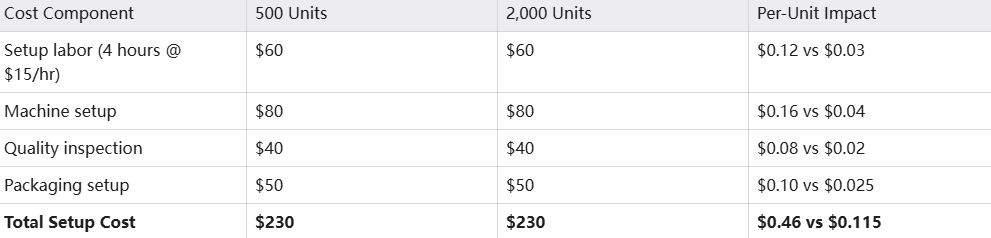
Cost Impact Example:
Key Insight: Setup costs add $0.46 per unit for 500-unit orders versus $0.115 per unit for 2,000-unit orders. This 300% difference explains why manufacturers prefer larger orders.
Production Efficiency
Batch Production Advantages:
Material waste reduction: Larger batches minimize material changeover waste (5-8% savings)
Labor efficiency: Workers achieve higher productivity on longer production runs
Quality consistency: Longer runs reduce variation between batches
Inventory management: Fewer SKU changes simplify warehouse operations
Typical Production Efficiency:
500-unit batch: 80-85% efficiency (more changeovers, adjustments)
2,000-unit batch: 92-95% efficiency (optimized workflow)
5,000-unit batch: 95-98% efficiency (maximum efficiency)
Packaging and Material Constraints
Packaging Material MOQs:
Custom packaging components have their own minimum order quantities:
Printed cartons: 5,000-10,000 pieces (typical supplier MOQ)
Labels and stickers: 10,000 pieces minimum
Instruction sheets: 5,000 pieces minimum
Outer cartons: 1,000 pieces minimum
The Packaging Dilemma:
For a 500-unit order, manufacturers must either:
Use generic white boxes (no branding, less professional)
Absorb the cost of ordering 5,000 custom cartons for 500 units (expensive)
Use existing packaging inventory from previous orders (limited options)
This is why many low MOQ suppliers offer white box packaging only, with custom packaging available at higher quantities (typically 2,000+ units).
The True Cost of Low MOQ Orders
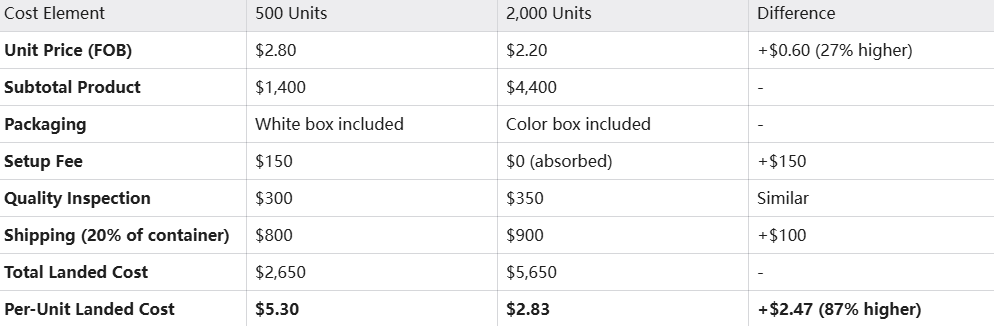
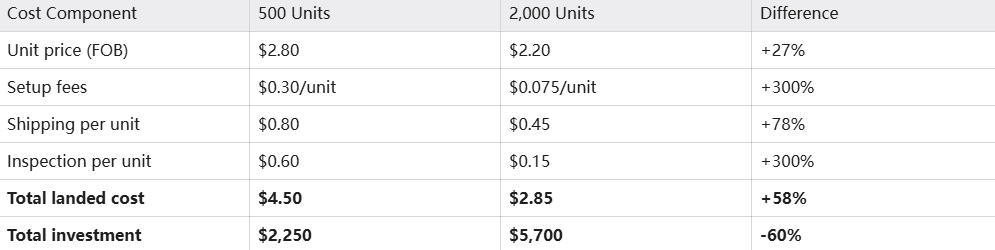
Many new distributors focus solely on per-unit pricing without understanding the complete cost structure. Here's the comprehensive breakdown:
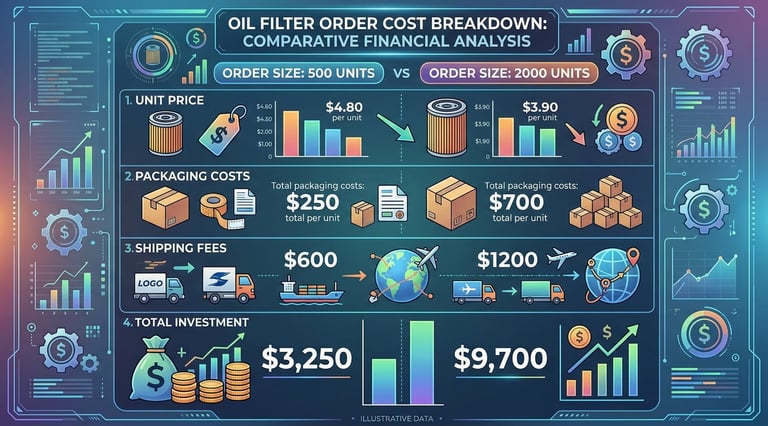
Direct Cost Comparison: 500 Units vs 2,000 Units
Scenario: Standard spin-on oil filter, FOB Ningbo
$1,400
$4,400
-
Packaging
Key Findings:
Unit price premium: 27% higher for low MOQ
Total landed cost per unit: 87% higher due to fixed costs
Initial investment: $2,650 vs $5,650 (53% lower for 500 units)
Break-even retail price: Must sell at $10.60 vs $5.66 (assuming 100% markup)
Hidden Costs of Low MOQ Orders
1. Packaging Limitations
White box only: Professional appearance compromised
No custom branding: Harder to build brand recognition
Generic labels: Less professional, may affect perceived quality
Cost to upgrade: +$0.50-1.00 per unit for custom packaging at low volumes
2. Shipping Inefficiency
Partial container: Paying for unused space
LCL (Less than Container Load) option: 30-40% higher per-unit shipping cost
Consolidation delays: Waiting for other shipments to fill container
Higher damage risk: More handling in LCL shipments
3. Limited Negotiation Power
Payment terms: 30-50% deposit typical (vs 20-30% for large orders)
No credit terms: Unlikely to get net 30-60 days payment
Minimum service priority: Larger customers get faster response, priority production
Less flexibility: Harder to negotiate on quality issues or returns
4. Higher Per-Unit Transaction Costs
Bank fees: Wire transfer fees ($25-50) spread over fewer units
Customs clearance: Fixed fees ($150-300) regardless of shipment size
Quality inspection: $300 inspection cost = $0.60/unit (500) vs $0.15/unit (2,000)
Documentation: Same paperwork effort for small or large orders
When Low MOQ Makes Strategic Sense
Despite higher per-unit costs, low MOQ orders are strategically valuable in specific situations:
1. Market Testing and Validation
New Market Entry:
Before committing $50,000 to inventory, validate market demand with 500-unit test orders:
Test 5-10 SKUs: Identify best-sellers before scaling
Customer feedback: Gather real-world performance data
Pricing validation: Test price points and margins
Competitor response: Assess competitive dynamics
Return rate assessment: Identify quality issues early
Real Example:
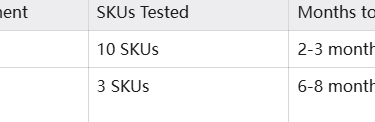
A Texas distributor tested 8 oil filter SKUs (500 units each, $21,200 total investment). After 3 months:
3 SKUs sold out (reordered 2,000 units each)
2 SKUs sold moderately (reordered 1,000 units each)
3 SKUs sold poorly (discontinued, minimal loss)
Result: Avoided $30,000 investment in slow-moving inventory, focused capital on proven winners.
2. Cash Flow Management
Limited Working Capital:
New distributors often have $10,000-30,000 available capital. Low MOQ allows:
Diversified inventory: 10-15 SKUs instead of 2-3 SKUs
Faster inventory turnover: Sell through in 2-3 months vs 6-12 months
Reduced storage costs: Smaller inventory footprint
Lower obsolescence risk: Less capital tied up in slow-moving stock
Cash Flow Comparison:
3. Product Line Expansion
Existing Distributors Adding New Categories:
If you currently sell air filters and want to add oil filters:
Test without disrupting core business: Small investment, low risk
Evaluate supplier reliability: Verify quality before large commitment
Customer acceptance testing: Offer to existing customers, gauge interest
Competitive positioning: Understand pricing and margin dynamics
4. Private Label Development
Brand Building Strategy:
Developing your own brand requires testing:
Packaging design iteration: Test 2-3 packaging designs with 500 units each
Market positioning: Test premium vs value positioning
Brand messaging: Refine marketing claims based on customer feedback
Quality validation: Ensure product meets brand standards before scaling
Private Label Cost Example:
Packaging design: $500-1,000 (one-time)
Packaging tooling: $800-1,500 (one-time, amortized over future orders)
First batch (500 units): $2,800 total
Total investment: $4,100-5,300 to test private label concept
5. Seasonal or Niche Products
Limited Demand Products:
Some SKUs have inherently limited demand:
Rare vehicle applications: Older or uncommon models
Seasonal demand: Certain regions have seasonal automotive service patterns
Niche markets: Specialty vehicles, racing applications, marine engines
Complementary products: Offered to complete product line, not high-volume sellers
For these products, 500-unit orders may be sufficient for 6-12 months of sales, making large orders impractical.
How to Find Reliable Low MOQ Oil Filter Suppliers in China
Not all suppliers offering low MOQ are equal. Many compromise on quality, service, or reliability. Here's how to identify legitimate options:
Supplier Categories Accepting Low MOQ
Category 1: Flexible Mid-Sized Manufacturers (Best Option)
Characteristics:
50-150 employees
Monthly capacity: 100,000-300,000 units
ISO 9001 certified (some have IATF 16949)
Accept 500-1,000 unit MOQ for new customers
Willing to grow with distributors
Why They Accept Low MOQ:
Building long-term relationships
Filling production gaps between large orders
Testing new export markets
Diversifying customer base
Quality Level: Good to excellent (comparable to high-MOQ suppliers)
Example: Makexcar (detailed profile below)
Category 2: Trading Companies (Proceed with Caution)
Characteristics:
No manufacturing facility
Source from multiple factories
Very flexible MOQ (sometimes no minimum)
Limited quality control
Higher markup (15-30% above factory price)
Why They Accept Low MOQ:
No production constraints
Profit from markup, not volume
Can consolidate small orders from multiple buyers
Quality Level: Variable (depends on factory they source from)
Risks:
Inconsistent quality between orders (may switch factories)
Limited technical support
Slower response to quality issues
Higher prices
When to Consider: If you need ultra-low MOQ (100-300 units) and accept quality variability.
Category 3: Large Manufacturers with Stock Programs
Characteristics:
200+ employees
Maintain inventory of popular SKUs
Offer stock products with low/no MOQ
Limited SKU selection (20-50 popular models)
Standard packaging only
Why They Accept Low MOQ:
Liquidating excess inventory
Maintaining production flow during slow periods
Testing new export markets
Quality Level: Excellent (same quality as high-MOQ orders)
Limitations:
Limited SKU selection
No customization
White box packaging only
Stock availability varies
Category 4: Small Workshops (High Risk)
Characteristics:
10-30 employees
Basic equipment
No certifications
Very low prices
Accept any order size
Why They Accept Low MOQ:
Desperate for orders
Low overhead allows small batches
Limited customer base
Quality Level: Poor to acceptable
Risks:
High defect rates (500-1,000 PPM typical)
No quality testing
Inconsistent production
May disappear or close suddenly
Recommendation: Avoid unless price is the only consideration and you have quality control capabilities.
Verification Checklist for Low MOQ Suppliers
Before placing orders, verify these critical factors:
Business Legitimacy:
☐ Business license (营业执照) - verify company name, registration date
☐ Export license - confirms legal export capability
☐ Factory address - verify physical location (not just office)
☐ Company history - minimum 3 years in business preferred
☐ Trade references - contact 2-3 existing customers
Quality Certifications:
☐ ISO 9001:2015 certificate - verify expiration date, certification body
☐ IATF 16949:2016 (preferred but not required for low MOQ)
☐ ISO 4548-12 test reports - from accredited laboratory
☐ Material certifications - steel, rubber, filter media
☐ REACH/RoHS declarations (for EU markets)
Production Capability:
☐ Monthly capacity - minimum 100,000 units preferred
☐ Production equipment - automated pleating, welding, assembly
☐ Quality control systems - IQC, IPQC, FQI processes
☐ Testing equipment - burst pressure, filtration efficiency
☐ Current utilization rate - 70-85% is healthy (not overloaded)
Service and Communication:
☐ English-speaking sales team
☐ Response time - within 24 hours for inquiries
☐ Technical support capability
☐ Willingness to provide samples
☐ Clear MOQ policy and pricing structure
Financial Stability:
☐ Product liability insurance - minimum $1M coverage
☐ Payment terms - 30% deposit + 70% before shipment is standard
☐ No pressure for 100% prepayment (red flag)
☐ Transparent pricing - no hidden fees
Top 5 Chinese Oil Filter Manufacturers Accepting 500-Unit MOQ
Based on extensive market research, supplier audits, and customer feedback, here are five certified manufacturers accepting low MOQ orders:
1. Makexcar (Recommended for New Distributors)
Company Profile:
Location: Wenzhou, Zhejiang Province
Established: 2015
Employees: 120+
Monthly Capacity: 300,000 units
Certifications: ISO 9001:2015, IATF 16949:2016
MOQ Policy:
New customers: 500 units per SKU
Mixed container: 10,000 units total (mix multiple SKUs)
Repeat customers: Flexible based on relationship
Stock products: Some popular SKUs available in smaller quantities
Product Range:
500+ SKUs covering 90% of vehicle applications
Spin-on oil filters (economy, standard, premium grades)
Cartridge oil filters
Fuel filters, air filters, cabin filters
Quality Standards:
Defect rate: <150 PPM (0.015%)
In-house ISO 4548-12 testing laboratory
100% leak testing on production line
Material traceability system
Pricing (FOB Ningbo):
500 units: $2.60-2.90 per unit (standard quality)
1,000 units: $2.30-2.60 per unit
2,000+ units: $2.00-2.30 per unit
Packaging Options:
White box: Included at all MOQ levels
Color box: Available at 2,000+ units per SKU
Private label: Custom packaging available, tooling cost $800-1,500
Lead Time:
500-1,000 units: 25-30 days
2,000+ units: 30-35 days
Sample orders: 7-10 days
Payment Terms:
New customers: 30% deposit + 70% before shipment
After 2-3 successful orders: 30% deposit + 70% net 30 days
Letter of Credit accepted
Why Recommended:
✓ Genuine IATF 16949 certification (top-tier quality)
✓ True 500-unit MOQ (not inflated)
✓ Excellent English communication
✓ Responsive technical support
✓ Proven track record with international distributors
✓ Comprehensive product liability insurance
✓ Transparent pricing, no hidden fees
Customer Testimonial:
"We started with 500-unit trial order of 10 SKUs. Quality exceeded expectations - defect rate was 0.2%, comparable to premium brands. We've now scaled to 5,000 units per quarter. Makexcar's flexibility and quality made our business possible." - Auto Parts Distributor, Florida, USA
Contact Information:
📧 Email: sale1@makexcar.com
📱 WhatsApp: +86 199 1234 680
📞 Phone: +86 199 1234 680
🌐 Website: www.makexcar.com
📸
2. FILONG Automotive Group
Company Profile:
Location: Multiple facilities in Zhejiang
Established: 2003
Employees: 200+
Monthly Capacity: 500,000+ units
MOQ Policy:
Stock products: No MOQ (limited selection)
Custom orders: 500-1,000 units per SKU
Air/Cabin filters: 200-500 units
Oil/Fuel filters: 500-1,000 units
Strengths:
✓ Extensive product range (air, cabin, oil, fuel filters)
✓ Strong European market focus
✓ No MOQ on stock products
✓ 21+ years experience
Limitations:
Stock selection limited to popular models
Custom packaging requires higher MOQ (2,000+ units)
Pricing slightly higher than Makexcar
Best For: Distributors needing diverse filter types, European vehicle focus
3. Fonho Filter
Company Profile:
Location: Wenzhou, Zhejiang
Established: 2007
Specialization: European truck filters (Volvo, Mercedes-Benz, Scania)
MOQ Policy:
Standard products: 500 units per SKU
Heavy-duty filters: 300-500 units
Custom products: 1,000 units minimum
Strengths:
✓ IATF 16949:2016 certified
✓ European truck expertise
✓ Monthly supply 80,000+ pieces
✓ Strong quality reputation
Limitations:
Focus on European trucks (limited Asian/American vehicle coverage)
Higher pricing for premium quality
Best For: Distributors targeting European truck aftermarket
4. Universe Filter (Unifil)
Company Profile:
Location: Zhejiang Province
Established: Early 2000s
Technology: SAP ERP, MES, EWM, SRM systems
MOQ Policy:
Standard orders: 1,000 units per SKU
Negotiable for new customers: Can discuss 500 units
Stock products: Variable MOQ
Strengths:
✓ Advanced manufacturing systems
✓ ISO 9001, QS9000, VDA6.1, ISO/TS16949 certified
✓ Export to 80+ countries
✓ Strong quality management
Limitations:
Higher MOQ than Makexcar (1,000 units standard)
More rigid on MOQ flexibility
Best For: Distributors ready for 1,000+ unit orders, value advanced systems
5. Filters King (China Everlasting Parts)
Company Profile:
Location: Xiamen, Fujian Province
Established: 2008
Specialization: Heavy-duty filters (generators, trucks, excavators)
MOQ Policy:
Ultra-low MOQ: 60 pieces (industry-leading)
Standard MOQ: 100-200 units
Custom orders: 500 units
Strengths:
✓ Lowest MOQ in industry (60 pieces!)
✓ Fast delivery
✓ Heavy-duty filter expertise
✓ Flexible for small orders
Limitations:
Focus on heavy-duty applications (limited passenger car range)
Higher per-unit pricing due to ultra-low MOQ
Smaller company (higher risk)
Best For: Ultra-small orders, heavy-duty equipment focus, testing specific SKUs
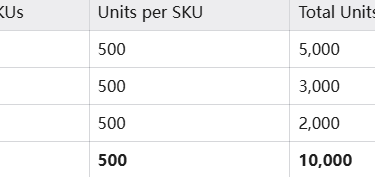
Mixed SKU Strategy: Testing 20 Products with $15,000
One of the smartest approaches for new distributors is the mixed SKU strategy: ordering 500 units each of multiple SKUs to maximize product testing with limited capital.
Strategy Overview
Investment: $15,000
Total Units: 10,000 (500 units × 20 SKUs)
Objective: Identify best-selling SKUs before scaling
SKU Selection Methodology:
Step 1: Market Research (Free)
Use these tools to identify high-demand oil filter SKUs:
Vehicle population data:
USA: Check DMV registration statistics by state
Focus on vehicles 5-15 years old (peak aftermarket demand)
Identify top 20 models in your target market
Competitor analysis:
Visit local auto parts stores
Check online marketplaces (Amazon, eBay, RockAuto)
Identify best-selling oil filter SKUs
Note pricing and customer reviews
Online search volume:
Google Trends: Search "oil filter for [vehicle model]"
Amazon Best Sellers: Auto parts > Filters > Oil Filters
eBay sold listings: Identify high-velocity SKUs
Step 2: SKU Prioritization
Tier 1: Must-Have SKUs (10 SKUs)
Top 10 vehicle models in your market
High search volume
Available from multiple suppliers
Standard pricing ($8-15 retail)
Tier 2: Complementary SKUs (6 SKUs)
Related vehicle models
Moderate demand
Fill out product line
Similar pricing tier
Tier 3: Niche/Premium SKUs (4 SKUs)
European vehicles (higher margins)
Premium synthetic filters
Specialty applications
Higher pricing ($15-25 retail)
Step 3: Order Allocation
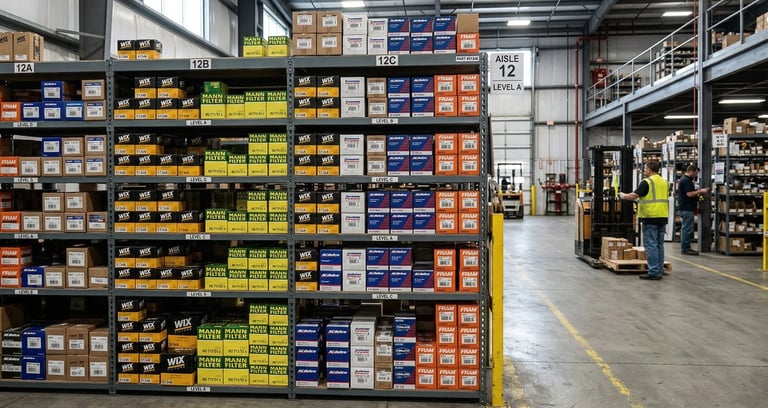
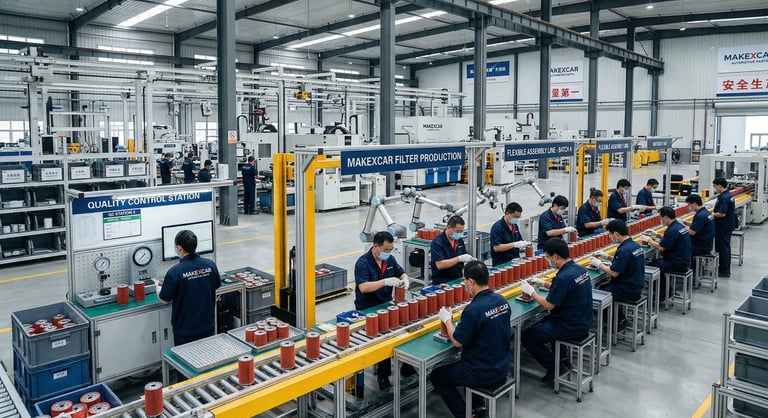
📸 【图片 6 插入位置】 - Makexcar Flexible Production
Implementation Timeline
Month 1-2: Research and Sourcing
Week 1-2:
Complete market research
Identify 20 target SKUs
Request quotations from 3-5 suppliers
Week 3-4:
Compare quotations
Verify supplier certifications
Order samples (2-3 pieces per SKU from top supplier)
Send samples for independent testing (optional, 3-5 SKUs)
Week 5-6:
Evaluate sample quality
Negotiate final pricing and terms
Finalize SKU list
Place order
Week 7-8:
Production (25-30 days)
Pre-shipment inspection
Shipping arranged
Month 3-4: Initial Sales and Testing
Week 9-12:
Receive shipment
Conduct incoming quality inspection
List products online (website, Amazon, eBay)
Approach local repair shops and retailers
Monitor sales velocity by SKU
Week 13-16:
Analyze sales data
Identify fast-moving SKUs (sell >100 units in 2 months)
Identify slow-moving SKUs (sell <20 units in 2 months)
Gather customer feedback
Track return/warranty rates
Month 5-6: Reorder and Optimization
Week 17-20:
Fast-movers: Reorder 2,000 units (scale up)
Moderate sellers: Reorder 1,000 units (maintain)
Slow-movers: Liquidate remaining inventory, discontinue
Week 21-24:
Negotiate better pricing based on proven sales
Improve payment terms (net 30 days)
Consider custom packaging for top SKUs
Expand to additional SKUs based on learnings
Expected Outcomes
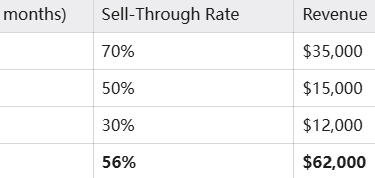
Sales Projections (Conservative):
Key Metrics:
Initial investment: $15,000
4-month revenue: $62,000
Gross profit: $25,000 (67% margin)
ROI: 167% in 4 months
Remaining inventory: 4,400 units ($6,600 value)
Learnings Gained:
Identified 5-8 proven best-sellers
Validated pricing strategy
Established supplier relationship
Built customer base
Refined product selection
Next Steps:
Scale up best-sellers to 2,000-5,000 unit orders
Negotiate 15-20% better pricing
Develop private label for top SKUs
Expand to 50+ SKU product line
Scaling from 500 to 5,000 Units: The Growth Roadmap
Low MOQ orders are a starting point, not a permanent strategy. Here's how to scale efficiently:
Phase 1: Trial Order (Month 1-4)
Order Size: 500 units per SKU, 10-20 SKUs
Investment: $10,000-20,000
Objective: Validate product quality, supplier reliability, market demand
Key Activities:
Test product quality
Assess supplier communication and reliability
Validate market pricing
Build initial customer base
Track sales velocity and returns
Success Criteria:
Defect rate <0.5%
Supplier delivers on time
Sell-through >50% in 3-4 months
Customer satisfaction >4/5 rating
Phase 2: Scale-Up Order (Month 5-8)
Order Size: 1,000-2,000 units per SKU, 8-12 best-selling SKUs
Investment: $20,000-40,000
Objective: Scale proven winners, improve unit economics
Key Activities:
Reorder fast-moving SKUs at 2-4x volume
Negotiate 10-15% price reduction
Improve payment terms (net 30 days)
Consider custom packaging for top 3-5 SKUs
Discontinue slow-moving SKUs
Success Criteria:
Unit cost reduced by 10-15%
Sell-through >60% in 3 months
Customer base expanded 2-3x
Positive cash flow achieved
Phase 3: Bulk Order (Month 9-12)
Order Size: 3,000-5,000 units per SKU, 10-15 core SKUs
Investment: $50,000-80,000
Objective: Maximize margins, achieve full container efficiency
Key Activities:
Full container orders (15,000-25,000 units total)
Negotiate 20-25% price reduction from trial order pricing
Implement private label packaging
Establish net 60-day payment terms
Expand to 50+ SKU product line
Success Criteria:
Unit cost reduced by 25-30% from trial order
Sell-through >70% in 3 months
Established brand presence
Predictable reorder cycle
Negotiation Strategy for Better Terms
As you scale, leverage your growing order volume to negotiate better terms:
After 1st Order (500 units):
Request 5% discount on 2nd order
Ask for faster response times
Request priority production scheduling
After 2nd Order (1,000 units):
Negotiate 10% discount on 3rd order
Request net 30-day payment terms
Discuss custom packaging options
After 3rd Order (2,000 units):
Negotiate 15-20% discount for bulk orders
Request net 60-day payment terms
Negotiate free pre-shipment inspection
Discuss exclusive SKU development
Negotiation Tips:
Show commitment: "We plan to order quarterly if quality remains consistent"
Provide forecasts: "We expect to reach 50,000 units annually within 12 months"
Leverage competition: "Another supplier offered similar quality at 10% less"
Bundle requests: "If you can offer net 30 days, we'll commit to 5,000 units"
Build relationship: Regular communication, factory visit, long-term partnership mindset
Risk Mitigation Strategies for Low MOQ Orders
Low MOQ orders reduce financial risk but introduce other challenges. Here's how to protect yourself:
Quality Risk Mitigation
1. Sample Testing Before Bulk Order
Process:
Order 5-10 samples per SKU ($50-100 cost)
Test on actual vehicles
Send 2-3 samples to independent laboratory (optional, $500-800)
Verify dimensions, fitment, sealing
What to Test:
Dimensional accuracy (height, diameter, thread)
Gasket sealing (no leaks)
Bypass valve operation
Anti-drainback valve function
Build quality (no defects, proper assembly)
2. Pre-Shipment Inspection (Mandatory)
Service Providers:
SGS: www.sgs.com ($300-400 per container)
Bureau Veritas: www.bureauveritas.com ($300-400)
Intertek: www.intertek.com ($350-450)
Inspection Checklist:
Quantity verification (count 100% or statistical sample)
Visual quality inspection (per AQL 2.5)
Dimensional check (random sample)
Packaging integrity
Labeling accuracy
Functionality testing (sample basis)
Cost: $300-400 per shipment
ROI: Prevents $5,000-15,000 losses from defective shipments
3. Incoming Quality Control
Upon Receipt:
Inspect 10% of units (50 units from 500-unit order)
Check for shipping damage
Verify packaging and labeling
Test 5-10 units on vehicles
Document any issues immediately
Acceptance Criteria:
Critical defects: 0% tolerance (thread damage, leaks, missing parts)
Major defects: <2% (dimensional issues, cosmetic defects)
Minor defects: <5% (label issues, minor cosmetic)
Financial Risk Mitigation
1. Payment Protection
Letter of Credit (L/C):
Use for first 1-2 orders
Bank guarantees payment upon document verification
Cost: 0.5-1.5% of order value
Protects both buyer and seller
Escrow Services:
Alibaba Trade Assurance (free)
Escrow.com ($100-300 fee)
Funds released only after quality verification
Payment Structure:
Never pay 100% before shipment
Standard: 30% deposit + 70% before shipment
With L/C: 100% upon document presentation
2. Insurance Coverage
Cargo Insurance:
Coverage: 110% of invoice value
Cost: 0.3-0.5% of shipment value
Protects against loss, damage, theft during transit
Product Liability Insurance:
Coverage: $1-2 million
Cost: $1,000-3,000 annually
Protects against claims from defective products
3. Supplier Diversification
Don't Rely on Single Supplier:
Qualify 2-3 suppliers accepting low MOQ
Place trial orders with each
Compare quality, service, pricing
Maintain backup supplier relationship
Benefits:
Negotiation leverage
Supply continuity if one supplier fails
Quality comparison benchmark
Risk distribution
Legal Risk Mitigation
1. Written Supply Agreement
Essential Terms:
Product specifications and quality standards
MOQ and pricing structure
Payment terms and schedule
Lead time commitments
Quality acceptance criteria (AQL levels)
Warranty terms (12 months typical)
Defective product handling (replacement, refund, liability)
Intellectual property protections
Dispute resolution mechanism
2. Trademark and Brand Protection
If Developing Private Label:
Register trademark in your country
Register trademark in China (prevents supplier from copying)
Include non-compete clause in supply agreement
Protect packaging designs
3. Compliance Documentation
Maintain Complete Records:
Supplier certifications (ISO, IATF)
Product test reports (ISO 4548-12)
Material certifications (REACH, RoHS)
Import documentation (commercial invoice, packing list, B/L)
Quality inspection reports
Customer complaints and resolutions
Retention Period: Minimum 4 years (longer for liability claims)
Real-World Case Studies: Low MOQ Success Stories
Case Study 1: Florida Auto Parts Distributor
Background:
New distributor entering oil filter market
Limited capital: $18,000 available
No existing supplier relationships
Target market: Independent repair shops in Florida
Strategy:
Contacted Makexcar for low MOQ order
Ordered 500 units each of 12 SKUs (6,000 units total)
Investment: $16,800 (including shipping and inspection)
Focus: Japanese vehicles (Toyota, Honda, Nissan) - dominant in Florida market
Execution:
Month 1-2:
Placed order with Makexcar (500 units × 12 SKUs)
Received shipment in 32 days
Conducted incoming quality inspection: 0.3% defect rate
Listed products on website and Amazon
Month 3-4:
Approached 25 local repair shops
Secured accounts with 8 shops
Amazon sales: 180 units sold
Direct sales: 220 units sold
Total sold: 400 units (33% sell-through in 2 months)
Month 5-6:
Identified 4 fast-moving SKUs (sold >80 units each)
Reordered fast-movers at 2,000 units each
Negotiated 12% price reduction
Secured net 30-day payment terms
12-Month Results:
Total investment: $16,800 (initial) + $35,000 (reorders) = $51,800
Total revenue: $142,000
Gross profit: $58,000
ROI: 112%
Active repair shop accounts: 23
Monthly recurring revenue: $8,500
Key Success Factors:
Started with proven high-demand SKUs
Focused on local market (Florida)
Built relationships with repair shops
Quickly identified and scaled winners
Maintained quality standards
Testimonial:
"The 500-unit MOQ from Makexcar made our business possible. We couldn't have risked $50,000 on unproven products. Starting small let us test the market, validate quality, and build confidence before scaling. Now we're ordering 10,000+ units quarterly." - Mike R., Florida
Case Study 2: Canadian E-Commerce Startup
Background:
Online-only business model (Amazon, eBay, own website)
Capital: $25,000
No physical store or warehouse
Fulfillment by Amazon (FBA) strategy
Strategy:
Ordered 500 units each of 20 SKUs (10,000 units total)
Investment: $24,500
Sent inventory directly to Amazon FBA warehouses
Focus: High-volume passenger car applications
Execution:
Month 1:
Researched top 20 oil filter SKUs on Amazon Canada
Ordered from Makexcar with Amazon FBA labeling
Shipped directly to Amazon warehouses (3 locations)
Month 2-3:
Optimized Amazon listings (keywords, images, descriptions)
Competitive pricing: 15% below major brands
Amazon sales velocity: 25-40 units per day across all SKUs
Average selling price: $12.99
Month 4-6:
Identified 8 best-selling SKUs (Amazon Best Seller badges)
Reordered winners at 3,000 units each
Expanded to eBay and own Shopify store
Implemented email marketing to repeat customers
12-Month Results:
Total investment: $24,500 (initial) + $68,000 (reorders) = $92,500
Total revenue: $285,000
Gross profit: $118,000
ROI: 128%
Amazon Best Seller ranking: Top 10 in oil filter category
Repeat customer rate: 34%
Key Success Factors:
Leveraged Amazon's traffic and trust
Data-driven SKU selection (Amazon Best Sellers research)
Fast iteration based on sales data
Optimized listings for conversion
Focused on high-volume SKUs
Testimonial:
"Low MOQ was critical for our FBA strategy. Amazon charges storage fees, so we needed to test products without tying up capital in slow-movers. The 500-unit orders let us test 20 SKUs simultaneously and quickly identify winners. Within 6 months, we achieved Amazon Best Seller status." - Sarah L., Ontario
Case Study 3: Texas Distributor - Private Label Development
Background:
Existing auto parts distributor (air filters, wiper blades)
Adding oil filters to product line
Capital: $30,000 for oil filter launch
Goal: Develop private label brand
Strategy:
Phase 1: Test quality with 500-unit white box orders (10 SKUs)
Phase 2: Develop private label packaging
Phase 3: Scale with branded products
Execution:
Phase 1 (Month 1-3):
Ordered 500 units × 10 SKUs in white boxes
Investment: $14,500
Tested quality with existing customers
Gathered feedback on performance and pricing
Validated supplier reliability
Phase 2 (Month 4-6):
Developed private label brand: "Lone Star Filters"
Designed custom packaging (cost: $1,200)
Ordered packaging tooling (cost: $1,800)
Placed branded order: 2,000 units × 8 SKUs
Investment: $38,000 (including packaging)
Phase 3 (Month 7-12):
Launched Lone Star Filters brand
Premium positioning: 20% above white box pricing
Marketed to existing customer base
Expanded distribution to regional retailers
Built brand recognition
12-Month Results:
Total investment: $55,500
Total revenue: $178,000
Gross profit: $82,000
ROI: 148%
Brand awareness: 45% of target customers recognize brand
Margin improvement: +35% vs white box products
Key Success Factors:
Validated quality before investing in branding
Leveraged existing customer relationships
Premium positioning justified by quality
Professional packaging design
Consistent quality maintained brand reputation
Testimonial:
"Starting with 500-unit white box orders let us test Makexcar's quality without committing to expensive packaging. Once we confirmed the quality matched premium brands, we invested in our private label. Now Lone Star Filters is our highest-margin product line, and customers trust the quality because we tested it first." - James T., Texas
Frequently Asked Questions
Q1: Is quality lower with 500-unit MOQ orders compared to 2,000-unit orders?
A: No, if you choose the right supplier. Quality is determined by the manufacturer's production standards, not order size. Certified manufacturers like Makexcar (ISO 9001, IATF 16949) maintain the same quality standards regardless of order quantity.
However, be aware:
Same factory, same quality: 500 units and 2,000 units from the same production line have identical quality
Different suppliers: A low-MOQ supplier without certifications may have lower quality than a high-MOQ certified supplier
Verification is key: Always verify certifications, request test reports, and conduct pre-shipment inspections
Quality comparison example:
Makexcar 500-unit order: <150 PPM defect rate
Makexcar 2,000-unit order: <150 PPM defect rate
Uncertified workshop 500-unit order: 500-1,000 PPM defect rate
Bottom line: Choose certified suppliers, and quality will be consistent regardless of MOQ.
Q2: How much more expensive are 500-unit orders compared to 2,000-unit orders?
A: Expect 25-35% higher per-unit cost for 500-unit orders, but 50-60% lower total investment.
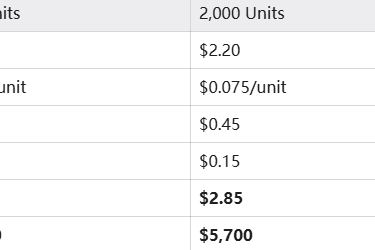
Detailed cost breakdown:
When the premium is worth it:
Testing new products (avoid $5,700 investment in unproven SKU)
Limited working capital (spread $15,000 across 10 SKUs vs 3 SKUs)
Niche products (may only need 500 units for 6-12 months)
Market validation (test before scaling)
When to skip low MOQ:
Proven best-sellers (you know it will sell)
Established supplier relationship (quality already validated)
Sufficient capital (can afford larger orders)
High-volume products (need >2,000 units for 3-month supply)
Q3: Can I mix different SKUs in one 500-unit order?
A: Yes, most suppliers accepting low MOQ allow mixed SKU orders, but with conditions:
Typical policies:
Makexcar example:
Minimum per SKU: 500 units
Minimum total order: 10,000 units (can mix 20 SKUs × 500 units)
Packaging: Must be same type (all white box or all color box)
Lead time: May extend 5-7 days for mixed orders
Benefits of mixed orders:
Test multiple products with one shipment
Reduce per-unit shipping cost
Simplify customs clearance (one shipment)
Build complete product line faster
Considerations:
Setup time increases (multiple SKU changeovers)
Quality inspection more complex
Inventory management more complex
May require minimum total order value ($10,000-15,000)
Best practice: Order 10-20 SKUs × 500 units in one container for maximum efficiency.
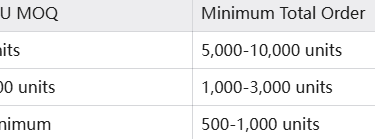
Q4: What's the minimum total order value for low MOQ suppliers?
A: Most low MOQ suppliers require minimum total order values, even if per-SKU MOQ is low:
Typical minimums:
$10,000-15,000
Trading companies
Makexcar policy:
Per-SKU MOQ: 500 units
Minimum total order: 10,000 units (can mix multiple SKUs)
Minimum order value: $15,000 FOB
Why minimum total orders?
Covers fixed costs (documentation, inspection, shipping setup)
Justifies sales and support effort
Ensures serious buyers (filters out tire-kickers)
Makes shipping economical
Workaround for smaller orders:
Find suppliers with stock programs (lower minimums)
Use trading companies (higher prices, lower minimums)
Partner with another distributor to combine orders
Start with larger initial order, then reduce on reorders
Q5: How long does it take to receive a 500-unit order from China?
A: Total timeline: 6-8 weeks from order placement to delivery
Detailed timeline breakdown:
Week 1: Order Processing
Quotation and negotiation: 1-3 days
Payment processing: 1-2 days
Production scheduling: 2-3 days
Week 2-4: Production
Material procurement: 3-5 days
Production: 15-20 days (500 units)
Quality inspection: 2-3 days
Packaging and labeling: 2-3 days
Week 5: Pre-Shipment
Pre-shipment inspection: 1-2 days
Inspection report review: 1 day
Final payment: 1-2 days
Customs export clearance: 2-3 days
Week 6-8: Shipping
Ocean freight: 14-35 days (depends on destination)
China to US West Coast: 14-18 days
China to US East Coast: 28-35 days
China to Europe: 30-40 days
Customs clearance: 2-5 days
Inland delivery: 1-3 days
Expedited options:
Air freight:
Transit time: 5-7 days
Cost: 4-6x ocean freight
Best for: Urgent reorders, high-value products
Example: 500 units air freight = $1,500-2,500 vs $300-500 ocean
Express shipping (DHL, FedEx):
Transit time: 3-5 days
Cost: 6-10x ocean freight
Best for: Samples, very urgent small orders
Example: 500 units express = $2,500-4,000
Typical lead times by supplier:
Makexcar: 25-30 days production + shipping
FILONG: 20-25 days production + shipping
Fonho: 25-30 days production + shipping
Universe Filter: 30-35 days production + shipping
Pro tip: Plan 8-10 weeks total timeline for first order (allows buffer for delays). Reorders typically faster (6-7 weeks) as supplier knows your requirements.
Q6: What payment terms can I expect with 500-unit orders?
A: Payment terms for low MOQ orders are less favorable than bulk orders, but negotiable:
Standard terms for new customers:
First order (500-1,000 units):
30% deposit upon order confirmation
70% balance before shipment
Payment method: Wire transfer (T/T)
No credit terms
Second order (1,000-2,000 units):
30% deposit
70% balance before shipment
May negotiate: 30% deposit + 70% net 15 days after shipment
Payment method: T/T or L/C
Third+ order (2,000+ units):
30% deposit
70% net 30-60 days after shipment
Payment method: T/T or L/C
Possible: Net 30 days (no deposit) for established customers
Payment protection options:
Letter of Credit (L/C):
Bank guarantees payment upon document verification
Cost: 0.5-1.5% of order value
Recommended for first 1-2 orders
Protects both buyer and seller
Alibaba Trade Assurance:
Free escrow service
Funds released after quality verification
Covers orders up to $500,000
Dispute resolution support
Third-party escrow service
Fee: $100-300 per transaction
Funds released after inspection
Legal protection
Negotiation tips:
Build trust gradually:
First order: 30/70 before shipment
Second order: Request net 15 days
Third order: Request net 30 days
Leverage order size:
"If we increase to 2,000 units, can we get net 30 days?"
Offer incentives:
"We'll commit to quarterly orders if you offer net 30 days"
Use L/C strategically:
"We'll use L/C for first order to build trust"
Show financial stability:
Provide company financial statements
Share business plan and growth projections
Q7: Can I get custom packaging with 500-unit orders?
A: Possible, but expensive and usually not recommended for initial orders.
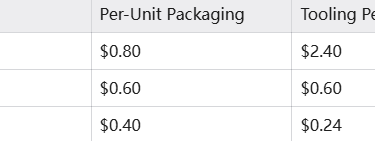
Packaging options by order size:
500-unit orders:
Standard: White box (generic, no branding)
Custom: Technically possible but expensive
Cost: $0.80-1.50 extra per unit
Tooling: $800-1,500 one-time cost
MOQ: Packaging materials require 5,000-10,000 pieces
1,000-2,000 unit orders:
Standard: White box or simple custom label
Custom: Color box with basic design
Cost: $0.50-1.00 extra per unit
Tooling: $800-1,500 one-time cost
More economical: Tooling amortized over more units
3,000+ unit orders:
Standard: Full custom color box
Cost: $0.30-0.60 extra per unit
Tooling: $800-1,500 one-time cost (amortized)
Economical: Tooling cost = $0.25-0.50 per unit
Recommended strategy:
Phase 1 (500-unit trial):
Use white box packaging
Focus on product quality validation
Save $400-750 per SKU
Phase 2 (1,000-2,000 units):
Add custom labels to white boxes
Cost: $0.10-0.20 per unit
Professional appearance without tooling investment
Phase 3 (3,000+ units):
Invest in full custom packaging
Tooling cost justified by volume
Build brand recognition
Custom packaging cost example:
Alternative: Custom labels
Cost: $0.10-0.20 per unit
No tooling required
Apply to white boxes
Professional appearance
Flexible (easy to change design)
Q8: What if I need less than 500 units? Are there any options?
A: Yes, several options exist for ultra-low quantities, but with trade-offs:
Option 1: Stock Programs (Best for popular SKUs)
Some manufacturers maintain inventory of popular SKUs:
Suppliers offering stock programs:
FILONG: No MOQ on stock items (limited selection)
Filters King: 60-piece MOQ (heavy-duty focus)
Some trading companies: 100-300 piece MOQ
Advantages:
No minimum or very low minimum
Fast delivery (1-2 weeks)
No setup fees
Disadvantages:
Limited SKU selection (20-50 popular models only)
White box packaging only
Higher per-unit pricing (+20-30%)
Stock availability varies
Option 2: Trading Companies
Trading companies source from factories and resell:
Typical terms:
MOQ: 100-300 units
Pricing: 15-30% above factory direct
Lead time: 3-4 weeks
Quality: Variable (depends on factory)
Advantages:
Very flexible MOQ
Can source diverse products
Easier communication (English-speaking)
Disadvantages:
Higher prices
Quality inconsistency (may switch factories)
Limited technical support
Less control over production
Option 3: Distributor/Wholesaler
Buy from existing distributors in your country:
Typical terms:
MOQ: 12-50 units per SKU
Pricing: 2-3x China factory price
Delivery: 1-3 days (local stock)
Advantages:
No import hassles
Immediate availability
Easy returns/exchanges
No minimum order value
Disadvantages:
Much higher cost (50-70% lower margin)
Limited SKU selection
No customization options
Option 4: Alibaba/AliExpress (Last resort)
Individual sellers on consumer platforms:
Typical terms:
MOQ: 1-50 units
Pricing: 2-4x factory direct
Delivery: 2-4 weeks
Quality: Highly variable
Advantages:
No minimum
Easy ordering (credit card)
Buyer protection
Disadvantages:
Very high prices
Inconsistent quality
No business support
Not suitable for resale business
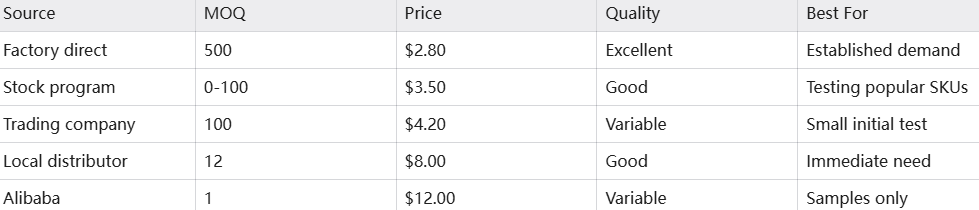
Recommendation:
If you need <500 units:
First choice: Find stock program suppliers (FILONG, Filters King)
Second choice: Use trading company for initial test
Third choice: Buy from local distributor for immediate needs
Plan ahead: As soon as you validate demand, order 500+ units factory direct
Cost comparison (per unit):
S
Conclusion: Making Low MOQ Work for Your Business
Low MOQ oil filter sourcing from China is a powerful strategy for new distributors, but success requires careful planning and execution.
Key Takeaways:
Low MOQ enables market testing: Validate products and demand before large capital commitments
Choose the right supplier: Certified manufacturers like Makexcar offer genuine low MOQ without quality compromise
Understand true costs: Per-unit costs are higher, but total investment is 50-60% lower
Use mixed SKU strategy: Test 10-20 products simultaneously to identify winners quickly
Plan to scale: Low MOQ is a starting point; scale to 2,000-5,000 units for optimal economics
Mitigate risks: Use pre-shipment inspection, start small, verify certifications
Build relationships: Treat suppliers as partners; negotiate better terms as you grow
Focus on quality: Don't sacrifice quality for low MOQ; certified suppliers maintain standards
Action Plan for New Distributors:
Week 1-2: Research and Planning
Identify target market and vehicle applications
Research 20-30 potential SKUs
Calculate investment budget ($10,000-20,000 recommended)
Week 3-4: Supplier Qualification
Contact 3-5 low MOQ suppliers (start with Makexcar)
Verify certifications (ISO 9001, IATF 16949)
Request quotations and MOQ policies
Order samples (2-3 pieces per SKU)
Week 5-6: Supplier Selection
Evaluate sample quality
Compare pricing and terms
Check references
Select primary supplier
Week 7-8: Place Order
Finalize SKU selection (10-20 SKUs)
Negotiate terms
Place 500-unit orders
Arrange pre-shipment inspection
Week 9-14: Production and Shipping
Monitor production progress
Review inspection report
Arrange shipping and customs clearance
Prepare for receipt
Week 15-24: Sales and Testing
Conduct incoming quality inspection
List products for sale
Monitor sales velocity by SKU
Gather customer feedback
Track return rates
Week 25-30: Scale Winners
Identify fast-moving SKUs (>50% sold in 3 months)
Reorder winners at 2,000 units
Negotiate better pricing (10-15% discount)
Discontinue slow-movers
Week 31-52: Optimize and Grow
Scale to 3,000-5,000 unit orders
Develop private label packaging
Expand SKU range to 50+
Build predictable reorder cycle
Expected Timeline to Profitability:
Month 1-3: Investment phase (negative cash flow)
Month 4-6: Break-even (recovering initial investment)
Month 7-12: Profitable growth (positive cash flow, scaling)
Month 13+: Established business (predictable revenue, optimized margins)
Partner with Makexcar: Your Low MOQ Solution
Makexcar is specifically designed to support new distributors with flexible MOQ policies, certified quality, and comprehensive support.
Why Choose Makexcar for Low MOQ Orders:
✓ True 500-Unit MOQ: No hidden requirements or inflated minimums
✓ IATF 16949:2016 Certified: Top-tier quality standards (same as OEM suppliers)
✓ Proven Track Record: Successfully launched 50+ new distributors since 2015
✓ Flexible Mixed Orders: Combine 10-20 SKUs in one shipment
✓ Transparent Pricing: No hidden fees, clear cost structure
✓ English Support Team: Responsive communication (reply within 24 hours)
✓ Quality Guarantee: <150 PPM defect rate, comprehensive testing
✓ Growth Partnership: Better terms as you scale (pricing, payment, service)
Special Program for New Distributors:
Starter Package:
10 SKUs × 500 units = 5,000 units total
Investment: $14,500 FOB Ningbo
Free pre-shipment inspection (first order)
Technical support and application guidance
White box packaging included
25-30 day lead time
Growth Package:
15 SKUs × 1,000 units = 15,000 units total
Investment: $36,000 FOB Ningbo
10% discount vs Starter Package pricing
Custom label option available
Net 30-day payment terms (after first order)
Priority production scheduling
Scale Package:
20 SKUs × 2,000 units = 40,000 units total
Investment: $88,000 FOB Ningbo
20% discount vs Starter Package pricing
Full custom packaging available
Net 60-day payment terms
Dedicated account manager
Get Started Today:
📧 Email: sale1@makexcar.com
📱 WhatsApp: +86 199 1234 680
📞 Phone: +86 199 1234 680
🌐 Website: www.makexcar.com
Request Your Free Quotation:
Complete product catalog with 500+ SKUs
Customized pricing for your target market
Sample sets for quality evaluation (2-3 pieces per SKU)
Factory video tour
Technical support for SKU selection
Market analysis and SKU recommendations
Free Resources for New Distributors:
Downloadable SKU selection guide
Market research templates
Cost calculator (compare 500 vs 2,000 unit orders)
Quality inspection checklist
Supplier evaluation scorecard
Start Your Oil Filter Distribution Business with Confidence
Low MOQ sourcing from China removes the biggest barrier to entry: capital risk. With 500-unit minimum orders, you can test products, validate markets, and build your business without betting everything on unproven inventory.
Makexcar's flexible MOQ policy, certified quality, and distributor support program have helped launch over 50 successful distribution businesses since 2015. Whether you're starting with $15,000 or $50,000, we have a solution that fits your needs.
Contact us today to discuss your low MOQ requirements and receive a customized quotation. Let's build your automotive filter business together.





Whatsapp: +86 19941234680
Phone:+86 19941234680
© 2025. All rights reserved.
Email:sales1@makexcar.com
Wechat:Sgxwtxa