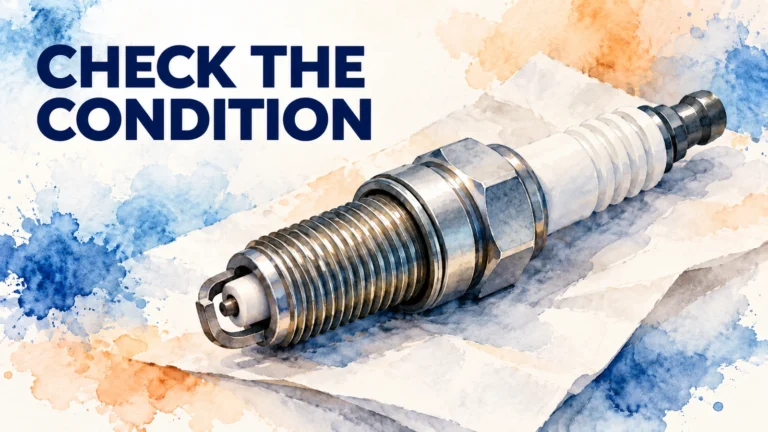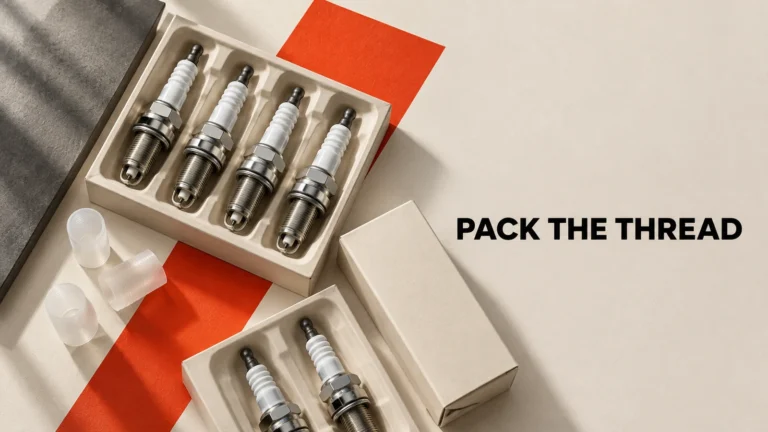
This guide helps MAKEXCAR buyers compare brand codes without inventing a conversion table. It does not approve a hotter or colder plug for a specific engine, and it does not assign a heat range to any MAKEXCAR SKU without part-specific documentation.
What a heat range describes
Heat range concerns the operating temperature of the spark plug's firing end, especially the insulator nose and electrode area. NGK explains that a hotter design retains more heat at the ceramic tip because the path to the shell is longer; a colder design transfers heat away more readily. The rating is about thermal behavior in an application. It is not a measure of spark energy, ignition voltage or combustion temperature supplied by the plug.
A suitable firing-end temperature must be high enough to limit deposit build-up and low enough to avoid overheating and pre-ignition. NGK's technical overview discusses both sides of this balance. A plug that runs too cold in its application can foul; one that runs too hot can reduce the margin against damaging hot spots. Those are broad principles, not a diagnosis from a code alone. Operating conditions and engine health also influence what the firing end experiences.
Buyers should resist the shorthand that a “higher number” always means a hotter plug. Number direction belongs to the brand's own system. NGK's public spark-plug basics state that, within its scale, lower heat-rating numbers are hotter and higher numbers are colder. That statement is about NGK's marking system. It does not mean another manufacturer's identical digit denotes the same thermal design or application.
Why brand numbers cannot be compared by eye
Manufacturers encode several properties into a complete spark-plug number: thread size, hex, reach, seat, firing-end projection, resistor or terminal features, electrode design and heat range. The heat-range digit is only one field. DENSO's official part-number guide places its heat-range field alongside thread, reach and special-design fields and includes a cross-brand chart. The chart is a catalog aid, not permission to ignore the rest of the part specification.
NGK also distinguishes the plug part number from a stock number used for inventory. Its numbering guide says the stock number does not tell a buyer the heat range. A purchaser copying a short warehouse number into a heat-range spreadsheet may therefore be comparing unrelated identifiers. Ask for the complete manufacturer part number and the current catalog page before decoding it.
Even a published cross-reference can be limited by product family or revision. A broad comparison chart may group heat ranges approximately, while the actual order must satisfy a specific engine's plug geometry, thermal requirement and service information. Treat the chart as a route to candidate part numbers, then confirm those candidates in each manufacturer's live application lookup. Do not approve interchange merely because a pair of code digits appears in the same row.
Anchor the comparison to the OE application
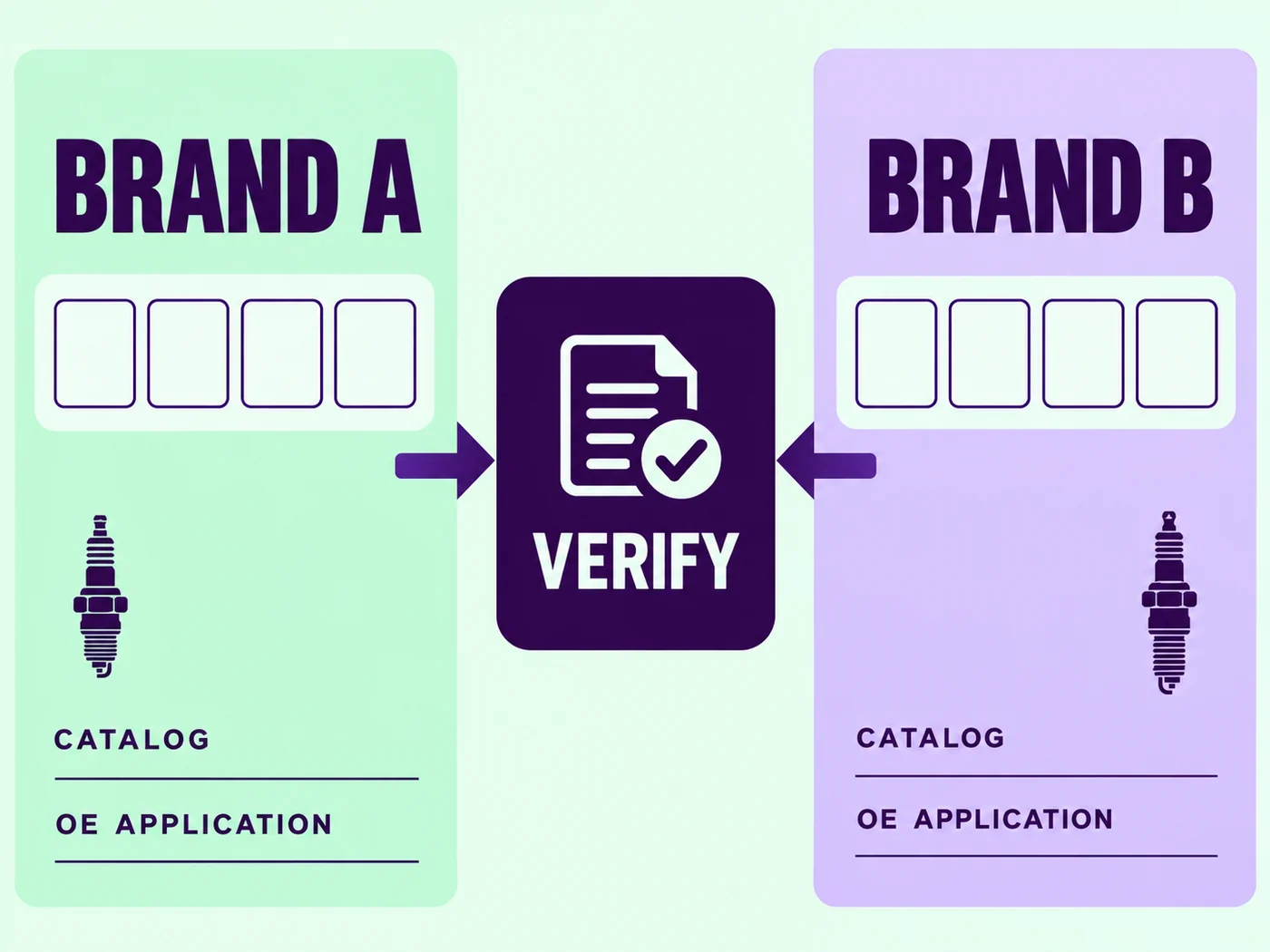
Collect the destination market, vehicle make and model, production date range, engine code, fuel type where relevant, and original plug reference. One model may use several engines or revisions that call for different plug configurations. The OE part number and vehicle service information should be the starting point. If a plug has been superseded, ask for the current replacement reference and the application note that explains the change.
For the offered plug, record the exact maker and full part number rather than an informal heat-range label. Verify the application in the maker's current catalog. A brand's part code can be read only using that brand's numbering rules; the approved vehicle application is a stronger basis for selecting an alternative than a self-made numeric formula. Where a catalog gives no clear match, send the OE reference and vehicle details to the supplier for written confirmation.
If an engine has been modified, the factory selection may need technical review, but buyers should not make that decision from a general blog chart. NGK notes that certain modified or special-use engines may require a different thermal rating, and that simply installing a hotter plug to mask fueling or oil-consumption issues can reduce safety margin. Such decisions belong to the engine builder and application engineer with evidence from the actual operating conditions.
Check fit and configuration beyond thermal rating
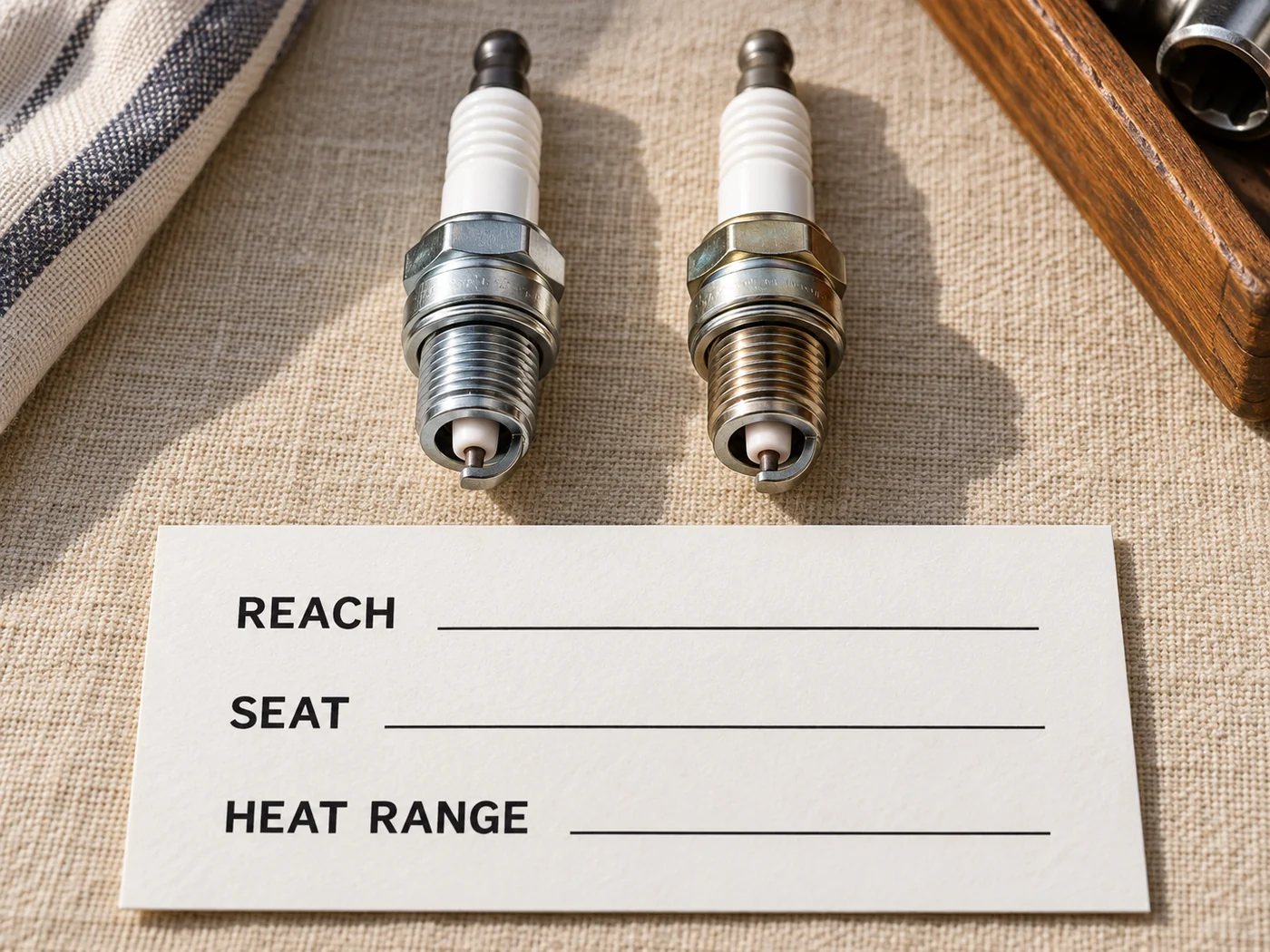
Thermal equivalence cannot compensate for an incorrect thread, reach or seat. The plug must match the cylinder-head interface and intended firing position. Compare thread diameter and pitch, reach, gasket or tapered seat, hex access, projection, electrode arrangement and terminal form using controlled specifications. A plug with the expected heat code but a different reach may be unsuitable or dangerous in the target head.
Check the top terminal and ignition connection. A removable terminal nut, fixed terminal or special connection may change whether the installed coil boot or lead makes correct contact. Also confirm the specified gap policy and any product-specific pre-set condition in the maker's documentation; do not assume a universal adjustment. These fields should appear next to the heat-range comparison, not as an afterthought once stock is ordered.
Construction details may also matter. NGK's heat-range explanation lists insulator geometry, thermal conductivity, electrode construction and firing-end projection among factors affecting thermal behavior. This reinforces why a single numeric field cannot describe the complete plug. The buying decision needs both the application's thermal requirement and the actual design represented by the offered part number.
| Comparison field | What to verify | Why code-only matching fails |
|---|---|---|
| OE application | Market, engine, production range, original reference | Same model name may contain multiple engines |
| Heat range | Maker's code explanation and approved cross-reference | Number direction and scale differ by maker |
| Thread and reach | Diameter, pitch, installed reach | Thermal rating does not establish head fit |
| Seat and projection | Gasket or taper, firing-end position | External similarity can hide geometry |
| Terminal and electrode | Connection style, design, gap policy | Ignition contact and service details vary |
| Evidence revision | Catalog page, drawing and date | Old charts can omit supersessions |
The table is a request checklist, not an equivalence chart. None of its rows implies that any two plugs shown in a photograph fit the same engine. Confirm each field against a specific SKU and published application record before approving a sample or quotation.
Use the manufacturer's chart correctly
Read the chart title, publisher, date and product-family scope before reading a row. Identify whether the chart is a heat-range comparison, an OE cross-reference or an application catalog. Those are different resources. A heat-range chart may show a broad relationship among brands but omit seat, reach and terminal; an application catalog may include the geometry needed to select an actual orderable item.
When a DENSO or other manufacturer provides a cross-brand chart, use it to identify candidates, then open the candidate's full specification and application listing. Do not transcribe a whole row as a universal one-to-one interchange. A given code can appear with special designs or several product families. Record the exact source URL or catalog revision in the purchasing file so another reviewer can reproduce the selection.
If two catalogs disagree, verify whether they reference the same OE part, market and engine revision. Check for product supersessions, discontinued lines or a chart intended for a different region. Ask the manufacturer or supplier for a written part-specific explanation. The answer should name both full part numbers and the target vehicle, not just two heat-range digits.
Do not diagnose fouling from heat range alone
A dark or deposit-covered spark plug may raise a heat-range question, but the condition can also reflect fueling, oil consumption, ignition condition, short-trip use and other factors. NGK's technical discussion lists several contributors to fouling and overheating. A buyer should not replace the specified plug with a hotter one simply because a returned sample looks sooty. Capture operating context and request a technical diagnosis before changing a controlled application.
The same caution applies to an overheated appearance. A hot-running plug can be one cause, but combustion conditions, cooling, timing, installation and fuel quality may also matter. Keep the complaint record separate from a catalog-code comparison. The catalog answers what the product is intended to fit; the vehicle investigation answers why a used part looks a certain way.
For a return or sample trial, document the full plug number, cylinder position, vehicle and engine, mileage or test duration, observed deposit or damage, service history and any engine modifications. Photos should show the firing end and body marking clearly. This evidence allows the technical team to decide whether the original specification, operating conditions or another fault should be examined. It does not turn a photograph into an approval for a new heat range.
Frequently asked buyer questions
Does the same heat-range number mean the same plug in two brands?
No. Each maker defines its own code and may use a different numeric direction or scale. Use the manufacturer's current catalog and application data to find an orderable equivalent. Confirm the full plug geometry and terminal, not only the thermal category.
Does a colder plug make a stronger spark?
Heat range describes heat transfer from the firing end, not spark energy. A colder selection may be appropriate for certain engineered applications, but it is not a generic performance upgrade. Follow the OE requirement unless qualified application evidence supports a change.
Can a cross-brand heat chart approve a replacement by itself?
No. A heat chart can identify candidates for further review. Verify the exact engine application and the offered part's thread, reach, seat, projection and terminal. Keep the chart's publisher and revision with the approval record.
Build the RFQ around the complete plug
When reviewing MAKEXCAR Spark Plugs, provide the destination market, make, model, production range, engine code, OE reference and current plug number. Ask for the exact offered SKU, maker's heat-range explanation, application record, cross-reference source and full dimensional and terminal specifications. If the engine is modified, disclose the modification and request technical review rather than guessing a colder code.
Use the contact page to request a part-specific quotation or documentation. A reliable purchase decision connects the vehicle requirement to a complete orderable plug and a traceable catalog source. It does not convert one isolated digit into a universal answer.