China Oil Filter: Factory Direct vs Trading Company - $0.40-$0.80 Price Gap, Quality Control & MOQ Differences Explained (2026 Buyer's Guide)
Factory direct vs trading company for China oil filters: Save $0.40-$0.80 per unit. Learn how to identify real manufacturers, verify certifications, negotiate MOQ, and avoid middleman markups in 2026.
博客
3/1/2026
China Oil Filter: Factory Direct vs Trading Company - Complete 2026 Buyer's Guide
Introduction: The $8,000 Mistake That Changed Everything
When Michael Torres, a wholesale distributor from Texas, placed his first 10,000-unit oil filter order from China in early 2025, he thought he had found the perfect supplier. The company had a professional website, claimed to be an "ISO-certified manufacturer," and offered competitive pricing at $1.45 per unit FOB Ningbo. The communication was smooth, samples looked good, and the deal seemed solid.
Six months later, Michael discovered the truth during a factory audit trip to China. His "manufacturer" was actually a trading company operating from a small office in Yiwu—no production equipment, no quality control lab, just a sales team and a network of subcontractors. The filters he had been buying for $1.45 were manufactured by a factory 200 kilometers away that sold the exact same product for $0.95 per unit.
The cost of this mistake:
Overpayment: $5,000 on his initial order ($0.50 × 10,000 units)
Lost profit opportunity: $15,000 over three subsequent orders
Quality inconsistency: 4.2% defect rate vs factory's standard 0.8%
Delayed problem resolution: Trading company blamed factory, factory had no direct contact with end customer
Michael's story is not unique. According to industry estimates, 60-70% of "manufacturers" on B2B platforms like Alibaba are actually trading companies posing as factories. For wholesale distributors importing oil filters from China, understanding the difference between factory direct sourcing and working with trading companies can mean the difference between healthy profit margins and barely breaking even. citation
The Reality of China's Oil Filter Supply Chain (2026):
Total manufacturers: Approximately 2,800 oil filter factories in China
Active trading companies: 15,000+ companies selling oil filters (not manufacturing)
Price markup: Trading companies typically add 25-55% to factory cost
Average savings (factory direct): $0.40-$0.80 per unit for standard passenger car filters
Annual savings potential: $12,000-$24,000 on 30,000-unit annual volume
What This Guide Covers:
This comprehensive guide will teach you how to distinguish real manufacturers from trading companies, understand the true cost structure of both sourcing models, identify when each approach makes sense for your business, and negotiate directly with factories to maximize your profit margins while maintaining quality standards.
Whether you're a first-time importer or an experienced distributor looking to optimize your supply chain, this guide provides the tools, checklists, and real-world strategies you need to make informed sourcing decisions in China's complex oil filter market.
Understanding the Factory vs Trading Company Distinction
What is a Factory Direct Manufacturer?
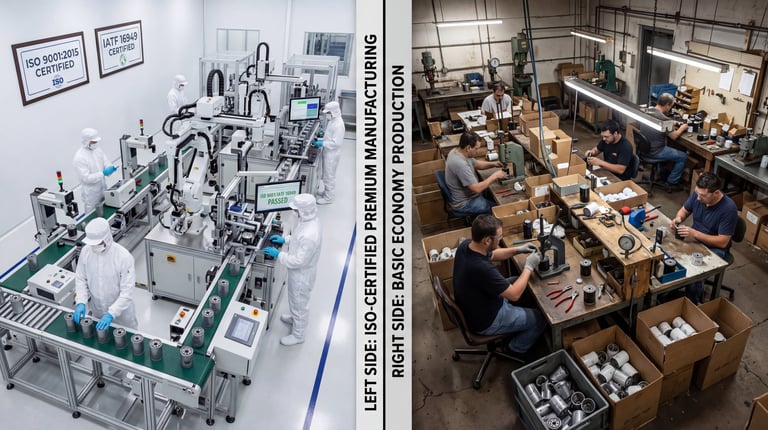
A factory direct manufacturer is a company that owns and operates production facilities where oil filters are physically manufactured. These companies control the entire production process from raw material procurement to finished product quality control.
Characteristics of Real Oil Filter Factories:
1. Physical Production Facilities
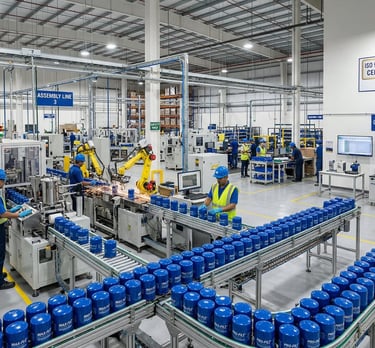
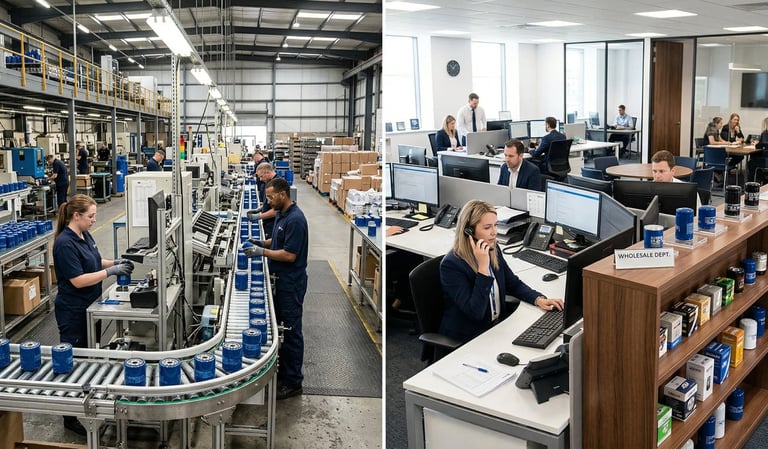
Real manufacturers own or lease industrial facilities equipped with:
Filter assembly lines: Automated or semi-automated production equipment
Pleating machines: Equipment that creates the accordion-fold filter media
Welding stations: Seam welding equipment for canister assembly
Thread cutting machines: Precision equipment for filter mounting threads
Quality control laboratory: Testing equipment for filtration efficiency, pressure drop, burst strength
Raw material storage: Warehouse space for filter media, steel, rubber compounds
Finished goods warehouse: Storage capacity for completed filters
Typical Factory Size and Capacity:
Small factory: 2,000-5,000 m² facility, 50-150 employees, 500,000-1.5 million units/year
Medium factory: 5,000-15,000 m² facility, 150-400 employees, 1.5-5 million units/year
Large factory: 15,000-50,000 m² facility, 400-1,200 employees, 5-20 million units/year
2. Manufacturing Certifications
Real factories invest in quality management certifications:
ISO 9001: Quality management system (basic requirement)
IATF 16949: Automotive industry quality standard (gold standard)
ISO 14001: Environmental management system
ISO 4548-12: Oil filter testing standard compliance
Certification Investment:
Initial certification cost: $15,000-$45,000
Annual surveillance audits: $5,000-$12,000
Recertification (every 3 years): $10,000-$25,000
Trading companies rarely invest in these certifications because they don't manufacture products themselves.
3. Technical Capabilities
Real manufacturers employ technical staff:
Engineers: Product design, mold development, process optimization
Quality control technicians: Testing, inspection, failure analysis
R&D team: New product development, material testing
Production managers: Process control, efficiency improvement
4. Direct Cost Control
Factories control their cost structure:
Raw material procurement (filter media, steel, rubber)
Labor costs (production workers, technicians)
Equipment depreciation and maintenance
Utilities (electricity, water, compressed air)
Quality control and testing
This direct control allows factories to offer lower prices and maintain consistent quality.
What is a Trading Company?
A trading company is an intermediary business that sources products from manufacturers and resells them to international buyers. Trading companies do not own production facilities or manufacture products themselves.
Characteristics of Trading Companies:
1. Office-Based Operations
Trading companies typically operate from:
Small offices: 100-500 m² office space in commercial buildings
Limited staff: 5-30 employees (mostly sales and administration)
No production equipment: Computers, phones, sample display area only
Third-party warehousing: May rent warehouse space or ship directly from factories
2. Multi-Product Portfolio
Trading companies typically sell:
Diverse product range: Oil filters, air filters, fuel filters, brake parts, etc.
Multiple manufacturers: Source from 5-20 different factories
Flexible sourcing: Can switch factories based on price or availability
No manufacturing expertise: Limited technical knowledge of production processes
3. Service-Oriented Model
Trading companies provide:
Sourcing services: Finding factories that meet buyer requirements
Communication facilitation: English-speaking staff, international business experience
Order consolidation: Combining products from multiple factories into one shipment
Export documentation: Handling customs paperwork, shipping arrangements
Quality inspection: Third-party inspection services (additional cost)
4. Markup-Based Pricing
Trading companies earn profit through markup:
Factory purchase price: $0.85-$2.20 per unit (depending on specifications)
Trading company markup: 25-55% ($0.21-$1.21 per unit)
Final price to buyer: $1.06-$3.41 per unit
Additional fees: Inspection fees, documentation fees, rush order surcharges
The Gray Area: Factory-Trading Hybrids
Some companies operate in both capacities:
1. Factories with Trading Divisions
Large manufacturers may have:
Own production: Manufacturing their core product lines
Trading division: Sourcing complementary products from other factories
Example: Oil filter factory that also sells air filters and fuel filters from partner factories
Advantage: Can offer one-stop shopping while maintaining quality control on core products
Risk: May not disclose which products are manufactured in-house vs sourced externally
2. Trading Companies with Production Partnerships
Some trading companies have:
Exclusive agreements: Long-term partnerships with specific factories
Quality control presence: Staff stationed at partner factories
Co-branding: Products labeled with trading company's brand
Investment in tooling: Ownership of molds and production fixtures
Advantage: More control over quality and pricing than typical trading companies
Risk: Still adds markup compared to direct factory sourcing
Price Structure Breakdown: Where Your Money Goes
Understanding the cost structure of both sourcing models is essential for making informed decisions and negotiating effectively.
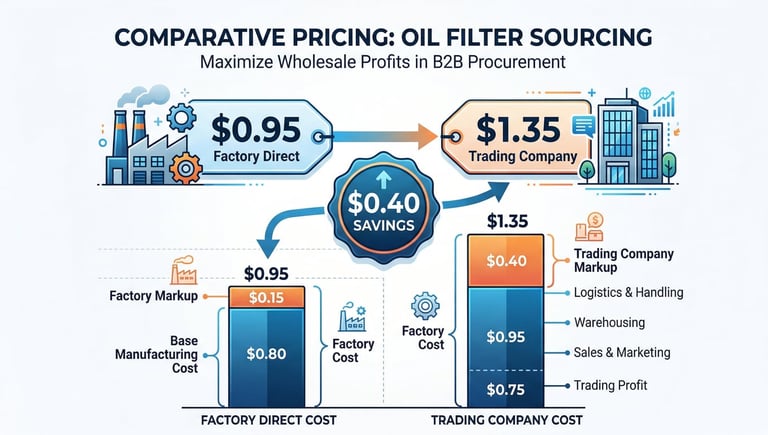
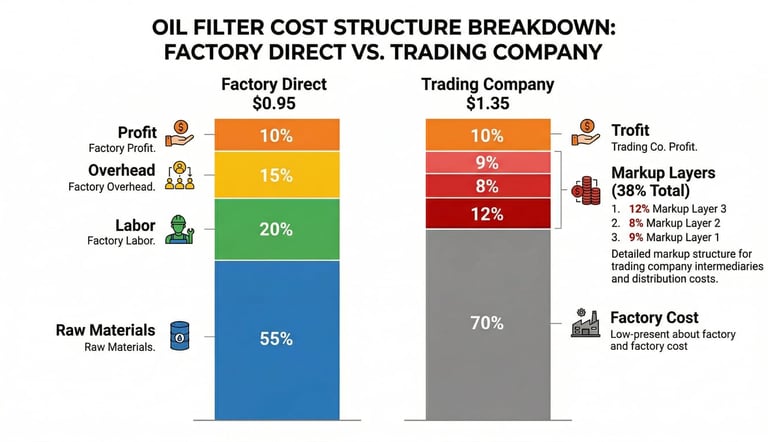
Factory Direct Pricing Structure
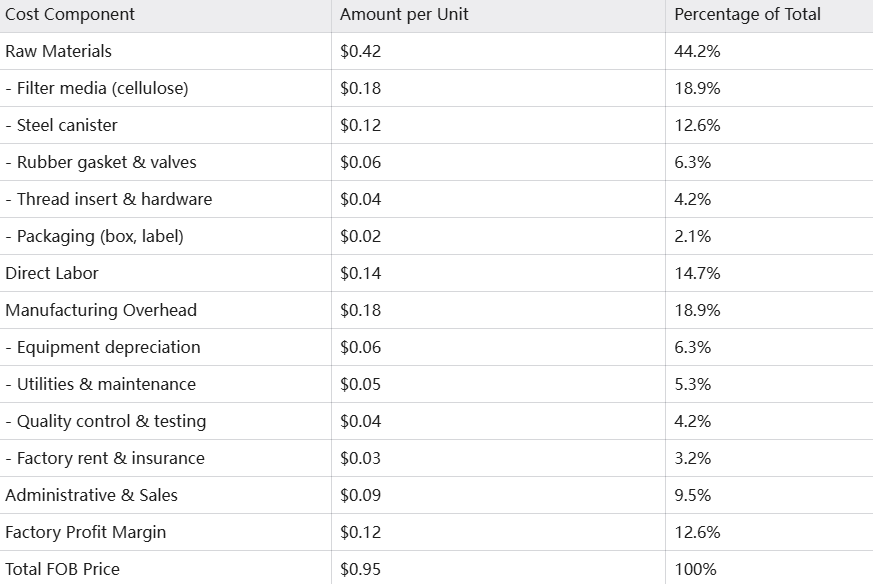
Example: Standard Passenger Car Oil Filter (Spin-On Type)
Factory FOB Price: $0.95 per unit (MOQ: 5,000 units)
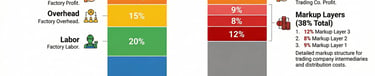
Cost Breakdown:
Key Insights:
Material costs dominate: 44% of the price is raw materials, which factories purchase in bulk at negotiated rates
Labor is relatively low: China's manufacturing labor costs remain competitive at 15% of total cost
Factory profit is modest: 12-15% profit margin is typical for established manufacturers
Quality control is built-in: Testing and inspection costs are included in the base price
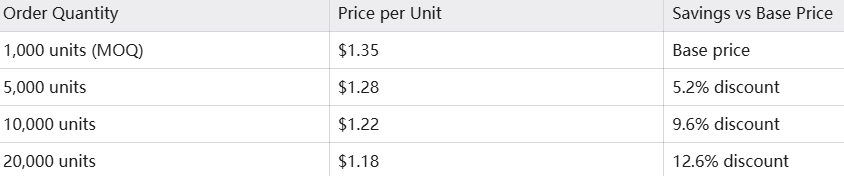
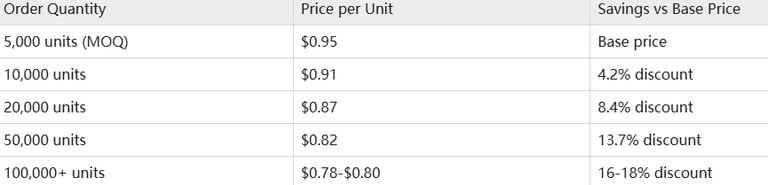
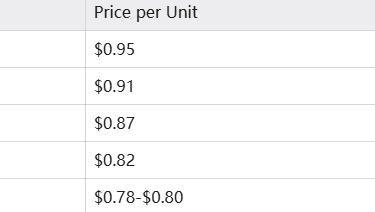
Volume-Based Pricing (Factory Direct):
Factories offer tiered pricing based on order quantity:
Why Volume Discounts Exist:
Setup cost amortization: Production line setup costs spread over larger quantities
Material bulk purchasing: Factory can negotiate better raw material prices with larger orders
Production efficiency: Longer production runs reduce per-unit labor and overhead costs
Relationship building: Factories offer better pricing to secure long-term, high-volume customers
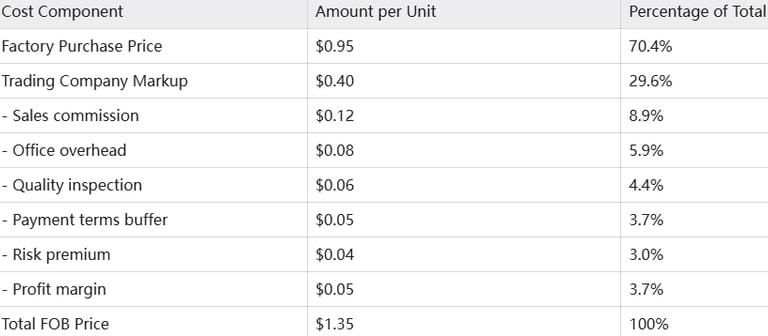
Trading Company Pricing Structure
Example: Same Standard Passenger Car Oil Filter
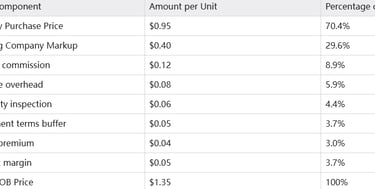
Trading Company FOB Price: $1.35 per unit (MOQ: 1,000 units)
Markup Breakdown Explained:
Sales Commission (8.9%):
Trading companies employ sales staff who earn commissions on orders
Typical commission: 5-10% of order value
Includes costs of international business development, trade show attendance, marketing
Office Overhead (5.9%):
Rent for office space in commercial areas
Administrative staff salaries
Communication costs (phone, internet, email, video conferencing)
Business licenses and registration fees
Quality Inspection (4.4%):
Third-party inspection services (SGS, Intertek, Bureau Veritas)
Pre-shipment inspection cost: $250-$350 per inspection
Amortized across order quantity: $0.05-$0.07 per unit for 5,000-unit orders
Payment Terms Buffer (3.7%):
Trading companies often extend payment terms to buyers (30-60 days)
Must pay factories upfront or within 15 days
Cost of capital and cash flow management
Currency exchange risk hedging
Risk Premium (3.0%):
Buffer for potential quality issues, returns, or disputes
Insurance costs
Legal and compliance expenses
Warranty claims handling
Profit Margin (3.7%):
Net profit after all expenses
Lower than factory profit margin due to competitive pressure
Typical trading company net margin: 3-8%
Trading Company Volume Pricing:
Trading companies have less flexibility on volume discounts:
Why Trading Company Discounts Are Limited:
Fixed overhead costs: Office rent and staff salaries don't decrease with volume
Factory pricing constraints: Trading companies pay factory prices that have their own volume tiers
Service costs remain constant: Inspection, documentation, and communication costs don't scale down significantly
Direct Price Comparison: Factory vs Trading Company
Scenario 1: Small Order (1,000 units)
Advantage: Trading Company (only option for small quantities)
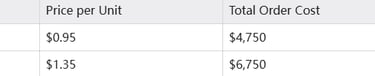
Scenario 2: Medium Order (5,000 units)
Advantage: Factory Direct (saves $0.40 per unit, $2,000 total)
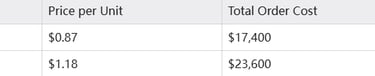
Scenario 3: Large Order (20,000 units)
Advantage: Factory Direct (saves $0.31 per unit, $6,200 total)
Scenario 4: Very Large Order (100,000 units)
Advantage: Factory Direct (saves $0.29 per unit, $29,000 total)
Annual Cost Impact Analysis:
Distributor Profile: Mid-sized automotive parts distributor importing 30,000 oil filters annually
Factory Direct Sourcing:
Unit cost: $0.89 (average across 3 orders of 10,000 units each)
Annual cost: $26,700
Shipping & duties: $4,500
Total landed cost: $31,200
Trading Company Sourcing:
Unit cost: $1.24 (average across 3 orders of 10,000 units each)
Annual cost: $37,200
Shipping & duties: $4,500
Total landed cost: $41,700
Annual Savings (Factory Direct): $10,500 (25% reduction)
Break-Even Analysis:
For a distributor selling filters at $8.50 retail:
Factory Direct Model:
Landed cost per unit: $1.04
Gross profit per unit: $7.46 (87.8% margin)
Break-even volume: 420 units (to cover $3,000 sourcing trip cost)
Trading Company Model:
Landed cost per unit: $1.39
Gross profit per unit: $7.11 (83.6% margin)
No sourcing trip required
Conclusion: Factory direct sourcing pays off after selling 420 units, with significantly higher margins on all subsequent sales.
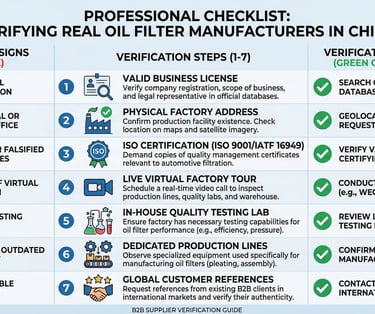
How to Identify Real Manufacturers vs Trading Companies
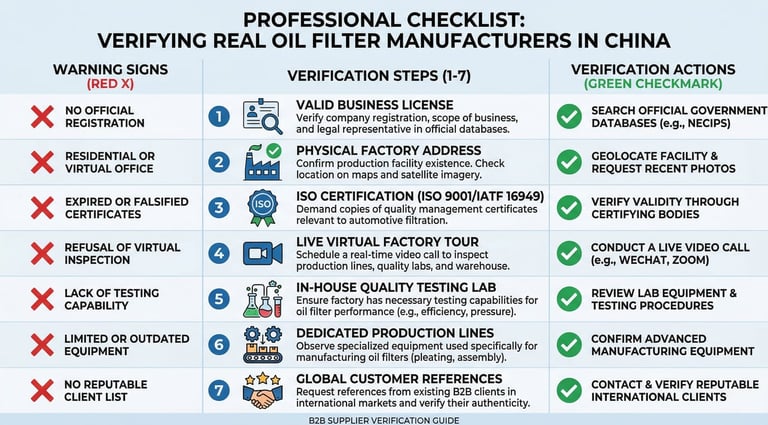
Distinguishing between genuine factories and trading companies requires systematic verification. Here are proven methods used by experienced importers.
Red Flags: Signs You're Dealing with a Trading Company
1. Company Name Indicators
Trading Company Names Often Include:
"International Trade Co., Ltd."
"Import & Export Co., Ltd."
"Trading Company"
"Commerce Co., Ltd."
"Business Development Co., Ltd."
Factory Names Typically Include:
"Manufacturing Co., Ltd."
"Factory"
"Industrial Co., Ltd."
"Machinery Co., Ltd."
"Technology Co., Ltd." (if they have R&D capabilities)
⚠️ Warning: Some trading companies deliberately use "Manufacturing" in their name to appear as factories. Name alone is not conclusive evidence.
2. Product Range Too Diverse
Trading Company Pattern:
Sells 50-200+ different product categories
Example: Oil filters, brake pads, spark plugs, wiper blades, LED lights, seat covers, floor mats, etc.
Claims to "manufacture" products that require completely different production equipment and expertise
Real Factory Pattern:
Focused product range: Oil filters, air filters, fuel filters (related filtration products)
May offer 500-2,000 SKUs within their specialty
Deep technical knowledge of their specific product category
Example Red Flag:
A company's Alibaba page shows:
Oil filters (500 models)
Brake discs and drums
LED headlights
Car audio systems
Leather seat covers
Reality: No single factory manufactures all these products. This is clearly a trading company sourcing from multiple manufacturers.
3. Office Address, Not Factory Address
How to Check:
Google Maps verification:
Copy the company address from their website or business card
Search on Google Maps
Look for industrial buildings vs commercial office towers
Satellite view inspection:
Switch to satellite view
Real factories have:
Large single-story buildings (production halls)
Loading docks and truck access
Outdoor storage areas
Parking for workers (50-200+ vehicles)
Trading companies have:
Office buildings in commercial districts
No production facilities visible
Limited parking
Street view verification:
Use Google Street View (if available in China)
Look for factory signage, security gates, industrial environment
4. Website and Marketing Materials
Trading Company Indicators:
Generic product photos (stock images from manufacturers)
No photos of production equipment or factory floor
Photos show office environment only
"We can source any product you need" messaging
Emphasis on "one-stop shopping" and "wide product range"
Factory Indicators:
Photos of production lines and equipment
Quality control laboratory images
Raw material storage areas
Employee photos in factory uniforms
Technical specifications and testing data
Certification documents displayed (ISO 9001, IATF 16949)
5. Communication Style and Expertise
Trading Company:
Sales-focused communication
Limited technical knowledge
Needs to "check with factory" for technical questions
Quick to offer lowest price without understanding requirements
Flexible on specifications (can source from different factories)
Real Factory:
Technical staff available for detailed discussions
Can answer specific questions about materials, processes, testing
May push back on unrealistic specifications
Explains why certain features cost more
Focused on their core product expertise
6. Business License and Registration
How to Verify:
Request the company‘s business license (营业执照) and check:
Business Scope (经营范围):
Trading company: "Import and export of goods," "Sales of automotive parts"
Factory: "Manufacturing of automotive filters," "Production of filtration equipment"
Registered Capital (注册资本):
Trading company: Typically ¥500,000-¥5,000,000 ($70,000-$700,000)
Factory: Typically ¥5,000,000-¥50,000,000 ($700,000-$7,000,000) due to equipment investment
Registration Date:
Established factories: 10-30+ years in business
New trading companies: 1-5 years (easier to start, lower barriers to entry)
Verification Methods: Confirming Factory Status
Method 1: Request Factory Photos and Videos
What to Request:
Production line photos:
Wide-angle shots showing entire production area
Close-ups of key equipment (pleating machines, welding stations)
Workers operating machinery
Date stamp or company sign visible in photos
Quality control lab:
Testing equipment (burst pressure tester, flow bench, filtration efficiency tester)
Technicians performing tests
Test reports being generated
Raw material storage:
Rolls of filter media
Steel coils or pre-cut canisters
Rubber compound materials
Packaging materials
Live video tour:
Request a video call (WeChat, WhatsApp, Zoom)
Ask them to walk through the factory in real-time
Request to see specific areas or equipment
Ask workers questions during the tour
Red Flags During Video Verification:
Pre-recorded video (not live)
Refusal to show certain areas
No workers visible (suggests borrowed footage)
Equipment looks unused or dusty
Cannot answer questions about production capacity or processes
Method 2: Third-Party Factory Audit
Professional Audit Services:
SGS (Société Générale de Surveillance)
Cost: $800-$1,500 per audit
Report includes: Factory size, equipment list, capacity verification, quality system review
Turnaround: 5-7 business days
Intertek
Cost: $750-$1,400 per audit
Specializes in automotive parts suppliers
Provides detailed technical assessment
Bureau Veritas
Cost: $700-$1,300 per audit
Strong presence in China
Can verify ISO/IATF certifications
TÜV Rheinland
Cost: $900-$1,600 per audit
German engineering standards
Highly regarded for technical assessments
What Auditors Verify:
Factory ownership and legal status
Production equipment and capacity
Quality control systems and testing equipment
Employee count and technical staff qualifications
ISO/IATF certification validity
Raw material sourcing and inventory
Production process flow
Finished goods warehouse and shipping capabilities
When to Use Audits:
Before placing large orders (>$20,000)
When establishing long-term supplier relationships
If supplier claims seem too good to be true
When supplier refuses video verification
Method 3: In-Person Factory Visit
Planning Your Visit:
Advance Preparation:
Schedule visit 2-4 weeks in advance
Request detailed agenda (production tour, quality lab visit, management meeting)
Prepare technical questions specific to oil filter manufacturing
Bring sample products from competitors for comparison
Arrange translator if needed (don't rely solely on supplier's translator)
What to Observe:
Production Floor:
Scale of operations (number of production lines)
Equipment age and condition
Worker skill level and training
Production efficiency and organization
Safety standards and cleanliness
Quality Control:
Testing equipment sophistication
Frequency of testing (every batch vs random sampling)
Test record documentation
Defect tracking and corrective action systems
Management and Staff:
Technical expertise of engineering team
Quality manager qualifications
Willingness to discuss challenges and limitations
Long-term vision and investment plans
Red Flags During Factory Visits:
Supplier tries to avoid factory visit ("not necessary," "too far," "production is stopped this week")
Takes you to a different factory than their registered address
Factory looks too small for claimed capacity
No workers present or minimal activity
Equipment appears unused or for show
Cannot produce test reports or quality records
Management cannot answer basic technical questions
Method 4: Certification Verification
ISO 9001 Verification:
Request certificate copy
Check certificate number on issuing body's website:
Verify:
Certificate is current (not expired)
Scope includes "oil filter manufacturing"
Facility address matches supplier's address
IATF 16949 Verification:
Check IATF Global Oversight database: https://www.iatfglobaloversight.org/
Search by company name or certificate number
Verify certification status and scope
Confirm facility location
⚠️ Warning: Trading companies sometimes show certificates from factories they work with, implying they are certified. Always verify the certificate holder name matches the supplier's legal company name.
Method 5: Online Research and Due Diligence
Chinese Business Verification Platforms:
Tianyancha (天眼查) - https://www.tianyancha.com/
Comprehensive business information database
Shows: Registration details, shareholders, business scope, legal cases, certifications
Reveals: Whether company is manufacturer or trading company
Cost: Free basic search, ¥365/year ($50) for detailed reports
Qichacha (企查查) - https://www.qichacha.com/
Similar to Tianyancha
Cross-reference information between platforms
Check for discrepancies
What to Look For:
Business scope: Should explicitly mention “manufacturing” (生产) not just “sales” (销售)
Registered capital: Higher capital suggests real factory investment
Patent registrations: Factories often have patents for mold designs or processes
Legal disputes: Check for quality disputes or contract violations
Related companies: Look for subsidiary companies or trading divisions
International Verification:
Import/Export Records:
Check if company appears in import databases
Verify claimed export volume matches records
Services: ImportGenius, Panjiva (subscription required)
Customer References:
Request contact information for existing customers
Verify references independently (don't just use contacts supplier provides)
Ask about: Quality consistency, communication, problem resolution, pricing stability
Industry Reputation:
Search company name on automotive forums and Reddit
Check for complaints or warnings
Look for positive reviews from verified buyers
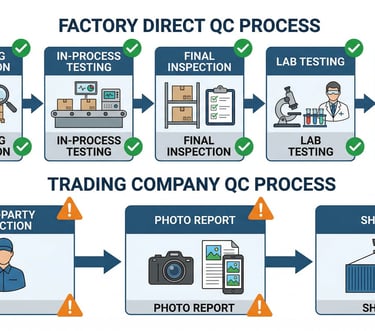
Quality Control: Factory Direct vs Trading Company
Quality control capabilities differ significantly between factories and trading companies, directly impacting product consistency and defect rates.
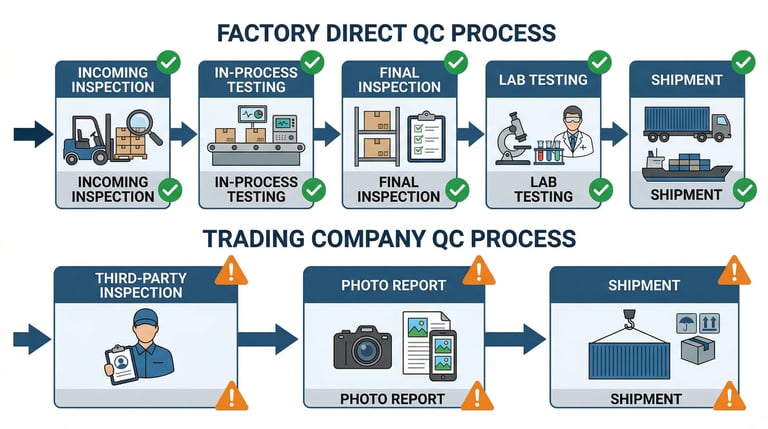
Factory Direct Quality Control
Built-In Quality Systems:
Real manufacturers have quality control integrated into their production process:
Incoming Material Inspection (IQC)
Factories inspect raw materials before production:
Filter media: Thickness, porosity, tensile strength testing
Steel: Gauge thickness, material composition verification
Rubber compounds: Hardness, temperature resistance, oil compatibility
Rejection rate: 1-3% of incoming materials fail inspection
Cost: Built into factory overhead, no additional charge to buyer
In-Process Quality Control (IPQC)
Quality checks during production:
Pleat count verification: Every 100th filter checked for correct pleat count
Weld integrity: Visual and pressure testing of seam welds
Thread quality: Gauge testing of mounting threads
Anti-drainback valve: Functionality testing on sample units
Frequency: Every 2-4 hours during production run
Cost: Included in manufacturing cost
Final Quality Control (FQC)
Pre-shipment inspection:
Visual inspection: 100% of filters checked for cosmetic defects
Functional testing: 1-5% of batch tested for performance
Packaging verification: Correct labeling, box integrity
Documentation: Test reports generated for each production batch
Cost: Included in factory price
Laboratory Testing
Factories with IATF 16949 certification maintain testing labs:
Equipment Investment:
Burst pressure tester: $15,000-$30,000
Flow bench (pressure drop testing): $20,000-$40,000
Filtration efficiency tester (ISO 16889): $80,000-$150,000
Environmental chamber (temperature testing): $25,000-$50,000
Total lab investment: $150,000-$300,000
Testing Frequency:
New product development: Comprehensive testing of all parameters
Production validation: Testing every 10,000-20,000 units
Customer complaints: Root cause analysis and corrective action
Test Reports Available:
ISO 4548-12 compliance reports
Burst strength test results
Filtration efficiency data (Beta ratio)
Pressure drop curves
Anti-drainback valve performance
Temperature cycling results
Cost: Test reports provided free with orders >5,000 units
Traceability Systems
IATF 16949-certified factories maintain:
Batch tracking: Each production run assigned unique batch number
Material traceability: Link between finished product and raw material lots
Quality records: Inspection data stored for 3-5 years
Recall capability: Can identify and isolate defective batches
Benefit: If quality issues arise, factory can quickly identify root cause and affected units
Trading Company Quality Control
Trading companies do not manufacture products, so their quality control is external and reactive:
Pre-Shipment Inspection (PSI)
Trading companies hire third-party inspection services:
Typical PSI Process:
Inspector visits factory before shipment
Checks random sample (usually 2.5-4% of order quantity per AQL 2.5 standard)
Visual inspection for defects
Basic dimensional measurements
Packaging and labeling verification
Photo report provided to buyer
Cost: $250-$400 per inspection (passed to buyer or built into price)
Limitations:
Snapshot inspection (does not catch process issues)
No testing of performance parameters (filtration efficiency, burst strength)
Inspector may not have deep technical knowledge of oil filters
Cannot verify raw material quality
Factory Audit (Optional)
Some trading companies conduct factory audits:
Verify factory capabilities
Review quality systems
Check production capacity
Cost: $500-$1,000 per audit (usually absorbed by trading company)
Frequency: Once per year or when adding new factory to supply base
Limitations:
Trading company has limited leverage to enforce quality improvements
If factory quality declines, trading company must find alternative factory
No direct control over production processes
Complaint Handling
When quality issues arise:
Trading Company Process:
Buyer reports defect to trading company
Trading company contacts factory
Factory investigates and responds
Trading company relays information to buyer
Negotiation for compensation or replacement
Challenges:
Communication delays (3-party communication)
Finger-pointing between trading company and factory
Trading company may prioritize relationship with factory over buyer
Limited technical expertise to resolve complex quality issues
Factory Direct Process:
Buyer reports defect directly to factory
Factory quality team investigates immediately
Root cause analysis conducted
Corrective action implemented
Direct compensation or replacement arranged
Advantage: Faster resolution, direct accountability
Quality Comparison: Real-World Data
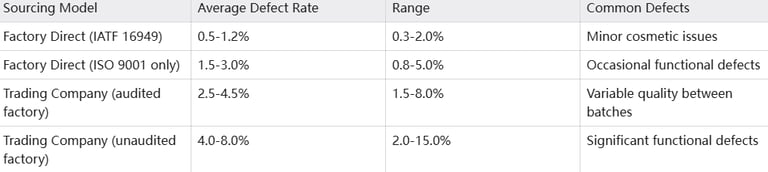
Defect Rate Analysis (Based on Industry Surveys):
Defect Types and Impact:
Cosmetic Defects (Low Impact):
Paint scratches or chips
Dented canisters (not affecting function)
Label misalignment
Box damage
Impact: Customer complaints, potential returns, but no safety risk
Functional Defects (High Impact):
Faulty anti-drainback valve (oil drains back to pan)
Inadequate filtration efficiency (engine wear)
Weak seam welds (potential filter burst)
Incorrect thread size (won't fit vehicle)
Impact: Engine damage, warranty claims, liability risk, customer loss
Quality Consistency Over Time:
Factory Direct:
Consistent quality across orders (same equipment, same workers, same materials)
Gradual quality improvement through process optimization
Predictable defect patterns (easier to manage)
Trading Company:
Variable quality if trading company switches factories
Inconsistent specifications between batches
Difficult to predict quality issues
Case Study: Quality Issue Resolution
Scenario: Buyer receives 10,000 oil filters with 3.5% defect rate (350 defective units). Defect: Anti-drainback valve not sealing properly.
Factory Direct Resolution:
Day 1: Buyer emails factory quality manager with photos and description
Day 2: Factory reviews production records, identifies affected batch
Day 3: Factory conducts root cause analysis (rubber compound supplier changed formula)
Day 4: Factory proposes solution: Replace all 350 units + additional 200 units as compensation, air freight at factory expense
Day 7: Replacement units arrive
Day 10: Factory implements corrective action (new supplier qualification process)
Total resolution time: 7 days
Buyer cost: $0 (factory covers all costs)
Long-term outcome: Quality improved, defect rate dropped to 0.6% on subsequent orders
Trading Company Resolution:
Day 1: Buyer emails trading company sales rep with photos
Day 2: Trading company forwards complaint to factory
Day 4: Factory responds to trading company (denies defect, claims buyer mishandled products)
Day 5: Trading company relays factory response to buyer
Day 6: Buyer provides additional evidence
Day 7: Trading company negotiates with factory
Day 10: Factory agrees to 50% replacement (175 units)
Day 12: Trading company arranges sea freight shipment of replacements
Day 45: Replacement units arrive (sea freight delay)
Total resolution time: 45 days
Buyer cost: Shipping cost for returning defective units ($180)
Long-term outcome: Buyer unsure if root cause was addressed, considers switching suppliers
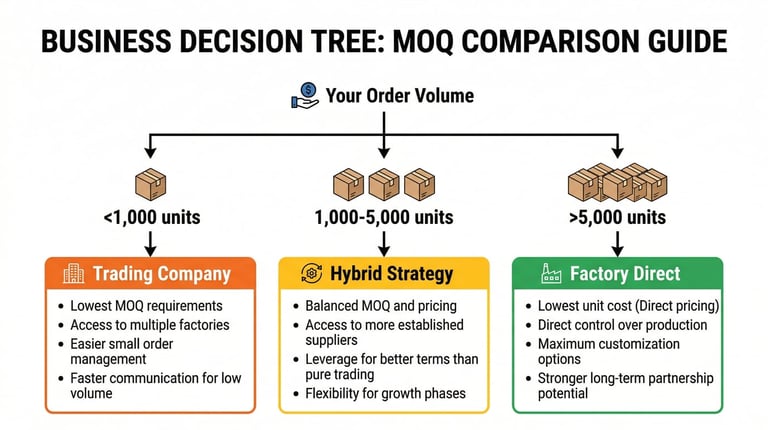
MOQ (Minimum Order Quantity) Differences
Minimum order quantity requirements differ significantly between factories and trading companies, affecting which sourcing model is practical for your business.
Factory Direct MOQ Requirements
Typical Factory MOQ Structure:
Standard MOQ (Single SKU):
Small factories: 3,000-5,000 units per SKU
Medium factories: 5,000-10,000 units per SKU
Large factories: 10,000-20,000 units per SKU
Why Factories Have MOQ Requirements:
Production Setup Costs:
Line changeover time: 2-4 hours
Equipment adjustment and calibration
First article inspection
Material handling and staging
Cost per setup: $300-$800
Amortization Example:
Setup cost: $500
If MOQ = 5,000 units: $0.10 per unit
If order = 1,000 units: $0.50 per unit (uneconomical for factory)
Material Procurement:
Factories purchase raw materials in bulk
Filter media sold in rolls (enough for 5,000-10,000 filters)
Steel coils pre-cut in batches
Minimum order from material suppliers
Production Efficiency:
Short production runs disrupt workflow
Workers need time to reach optimal speed
Quality stabilizes after first 500-1,000 units in a run
MOQ Flexibility:
Factories may reduce MOQ under certain conditions:
Scenario 1: Multiple SKUs in One Order
Order 2,000 units each of 3 different SKUs = 6,000 total units
Factory accepts because total volume justifies setup costs
Typical requirement: Minimum 2-3 SKUs, 1,500-2,500 units each
Scenario 2: Standard vs Custom Products
Standard products: Lower MOQ (3,000-5,000 units) because factory produces regularly
Custom products: Higher MOQ (5,000-10,000 units) because requires dedicated production run
Scenario 3: Repeat Orders
First order: 5,000 units MOQ
Subsequent orders: 3,000 units MOQ (factory willing to accept smaller reorders from established customers)
Scenario 4: Off-Season Production
Factories may accept smaller orders during slow periods (typically January-February, July-August)
MOQ may drop to 2,000-3,000 units
Scenario 5: Trial Orders
Some factories offer trial order programs for new customers
Trial MOQ: 1,000-2,000 units at higher price
Purpose: Allow buyer to test quality before committing to full MOQ
Price premium: 15-25% higher than standard MOQ price
Trading Company MOQ Requirements
Typical Trading Company MOQ:
Standard MOQ (Single SKU):
Small trading companies: 500-1,000 units per SKU
Large trading companies: 1,000-2,000 units per SKU
Why Trading Companies Have Lower MOQ:
Flexible Sourcing:
Can combine your order with orders from other buyers
Places larger order with factory, then splits shipment
Absorbs some setup cost across multiple customers
Inventory Buffer:
Some trading companies maintain stock of popular SKUs
Can fulfill small orders from inventory
Replenishes inventory with larger factory orders
Business Model:
Targets small and medium buyers who cannot meet factory MOQ
Willing to accept lower margins on small orders to build relationships
Hopes to grow account over time
MOQ Flexibility:
Trading companies are generally more flexible:
Mixed SKU Orders:
Can order 500 units each of 5 different SKUs
Total order: 2,500 units across multiple products
Trading company combines with other orders to meet factory MOQ
Sample Orders:
Will provide 10-50 samples for testing
Cost: $5-$15 per sample (higher than bulk price)
Some trading companies offer free samples (2-5 units) to serious buyers
Rapid Reordering:
No minimum for reorders if trading company has stock
Can order 100-500 units as needed
Useful for testing market demand before committing to larger quantities
MOQ Comparison: Which Model Fits Your Business?
Business Profile 1: New Distributor (Testing Market)
Situation:
First time importing from China
Uncertain about market demand
Limited capital ($5,000-$15,000 available)
Want to test 3-5 different SKUs
Recommendation: Trading Company
Rationale:
Lower MOQ allows testing multiple products
Reduced financial risk
Can validate quality and market demand before scaling up
Example Order:
500 units each of 4 SKUs = 2,000 total units
Cost: $1.35 per unit × 2,000 = $2,700
Shipping: $800
Total investment: $3,500
Business Profile 2: Established Distributor (Proven Demand)
Situation:
Selling 1,000-2,000 filters per month
Identified top 3-5 best-selling SKUs
Ready to commit to larger inventory
Capital available: $20,000-$50,000
Recommendation: Factory Direct
Rationale:
Proven demand justifies MOQ commitment
Significant cost savings ($0.40-$0.80 per unit)
Better quality control and consistency
Direct relationship with manufacturer
Example Order:
5,000 units of top SKU = 5,000 units
Cost: $0.95 per unit × 5,000 = $4,750
Shipping: $950
Total investment: $5,700
Savings vs trading company: $2,000 on first order
Annual savings: $8,000-$12,000 (assuming 3-4 orders per year)
Business Profile 3: Large Distributor (High Volume)
Situation:
Selling 5,000-10,000 filters per month
Established customer base
Need consistent supply and quality
Capital available: $100,000+
Recommendation: Factory Direct (Multiple Factories)
Rationale:
Volume justifies direct relationships with 2-3 factories
Maximum cost savings through volume discounts
Diversified supply chain reduces risk
Can negotiate custom specifications and private labeling
Example Order:
20,000 units across 4 SKUs (5,000 each)
Cost: $0.87 per unit × 20,000 = $17,400
Shipping: $2,800
Total investment: $20,200
Savings vs trading company: $6,200 per order
Annual savings: $25,000-$37,000 (assuming 4-6 orders per year)
Business Profile 4: E-Commerce Seller (Dropshipping/FBA)
Situation:
Selling on Amazon, eBay, or own website
Need small quantities of many SKUs
Fast inventory turnover
Limited warehouse space
Recommendation: Trading Company or Hybrid Model
Rationale:
Need flexibility to test new products quickly
Cannot commit to large MOQ for unproven SKUs
May use trading company for new products, factory direct for best sellers
Hybrid Strategy:
Trading company: 500-1,000 units of new/test products
Factory direct: 5,000+ units of proven best sellers
Optimize cost structure while maintaining flexibility
When to Choose Factory Direct vs Trading Company
Both sourcing models have legitimate use cases. Understanding when each approach makes sense will help you optimize your supply chain strategy.
Choose Factory Direct When:
1. You Have Proven Demand
If you're already selling oil filters and have established demand:
Monthly sales: 1,000+ units per month
Identified best sellers: Know which 3-5 SKUs sell consistently
Predictable reorder cycle: Can forecast 3-6 months ahead
Benefit: Cost savings justify MOQ commitment and inventory holding costs
2. Quality is Critical
If your customers demand high quality and consistency:
Professional repair shops: Reputation depends on parts quality
Fleet customers: Downtime costs make quality paramount
Warranty obligations: You provide warranty on products sold
Benefit: Direct quality control access and faster problem resolution
3. You Want Private Labeling
If you're building your own brand:
Custom packaging: Your brand name and logo
Specification control: Define exact quality standards
Exclusive designs: Unique features or appearance
Benefit: Factories can customize products; trading companies typically cannot
4. You Have Capital and Warehouse Space
If you can invest in inventory:
Capital available: $10,000-$50,000 for initial orders
Warehouse space: Can store 5,000-20,000 units
Inventory management: Systems to track stock levels
Benefit: Lower per-unit costs offset inventory holding costs
5. You're Committed to Long-Term Sourcing
If you plan to import regularly:
Long-term business plan: Committed to automotive parts distribution
Growing customer base: Expanding sales channels
Willing to invest in relationships: Time to develop factory partnerships
Benefit: Factories prioritize long-term customers with better pricing and service
6. You Can Conduct Due Diligence
If you have resources for supplier verification:
Factory visit budget: $2,000-$5,000 for sourcing trip
Audit services: $800-$1,500 for third-party verification
Time investment: 2-3 months for supplier qualification
Benefit: Direct verification ensures you're working with real manufacturers
Choose Trading Company When:
1. You're Testing the Market
If you're new to oil filter distribution:
First-time importer: Learning the business
Market validation: Testing product-market fit
Limited experience: Uncertain about specifications and demand
Benefit: Lower MOQ reduces financial risk during learning phase
2. You Need Small Quantities
If your volume doesn't justify factory MOQ:
Monthly sales: <500 units per month
Diverse product mix: Need many SKUs in small quantities
Seasonal business: Demand fluctuates significantly
Benefit: Flexible ordering without excess inventory
3. You Want One-Stop Shopping
If you need multiple product categories:
Full product range: Oil filters, air filters, fuel filters, brake parts, etc.
Simplified logistics: Single shipment from one supplier
Consolidated invoicing: Easier accounting and payment
Benefit: Trading companies can source diverse products from multiple factories
4. You Have Limited Capital
If budget is constrained:
Startup capital: <$10,000 available for inventory
Cash flow concerns: Cannot tie up money in large inventory
Risk averse: Want to minimize financial exposure
Benefit: Lower order minimums preserve cash flow
5. You Lack Import Experience
If international trade is new to you:
No customs broker: Don't know how to clear customs
Documentation uncertainty: Unfamiliar with import paperwork
Logistics complexity: Overwhelmed by shipping arrangements
Benefit: Trading companies handle export documentation and logistics
6. You Need English Communication
If language is a barrier:
No Chinese language skills: Cannot communicate with factory staff
Technical discussions: Need clear communication about specifications
Problem resolution: Want English-speaking support
Benefit: Trading companies typically have English-fluent sales staff
7. You Want to Minimize Time Investment
If you have limited time for supplier management:
Busy with other aspects of business: Sales, marketing, operations
No staff for sourcing: One-person operation
Want turnkey solution: Prefer to outsource supplier management
Benefit: Trading companies handle factory communication and coordination
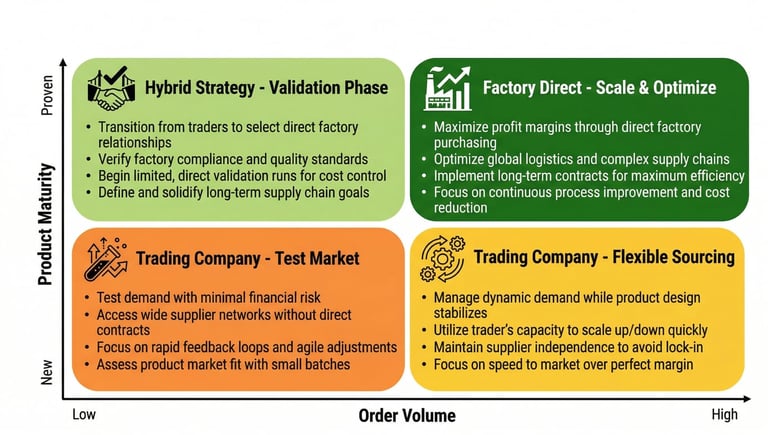
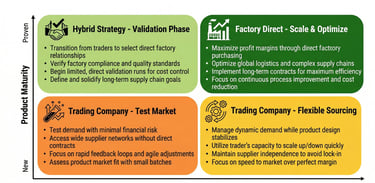
Hybrid Strategy: Best of Both Worlds
Many successful distributors use a combination approach:
Strategy 1: Volume-Based Split
High-volume SKUs (top 20%): Source factory direct
Example: 5 best-selling filters, 5,000 units each, $0.95 per unit
Annual volume: 25,000 units
Annual cost: $23,750
Savings vs trading company: $10,000/year
Low-volume SKUs (bottom 80%): Source from trading company
Example: 50 slower-moving filters, 200-500 units each
Annual volume: 15,000 units
Annual cost: $20,250 ($1.35 per unit)
Cost premium vs factory direct: $6,000/year
Net benefit: Save $4,000/year while maintaining broad product range
Strategy 2: Product Category Split
Core competency (oil filters): Factory direct
Deep relationship with 1-2 specialized factories
Best pricing and quality control
Custom specifications and private labeling
Complementary products (air filters, fuel filters): Trading company
Convenient sourcing without managing multiple factories
Acceptable quality for non-core products
Simplified logistics
Strategy 3: Geographic Split
Domestic market (high volume): Factory direct
Container loads shipped to main warehouse
Lowest cost structure for primary market
Export markets (lower volume): Trading company
Smaller shipments to international locations
Trading company handles export documentation
Flexibility to test new markets
Strategy 4: Development Cycle Split
New product introduction: Trading company
Test market with 500-1,000 units
Validate demand before committing to MOQ
Quick iteration if product doesn't sell
Proven products: Factory direct
Once product proves successful, switch to factory direct
Reorder 5,000+ units at lower cost
Build long-term supply relationship
MakeXCar: Factory Direct Advantages
As a verified oil filter manufacturer, MakeXCar offers the benefits of factory direct sourcing with flexibility typically only available from trading companies.
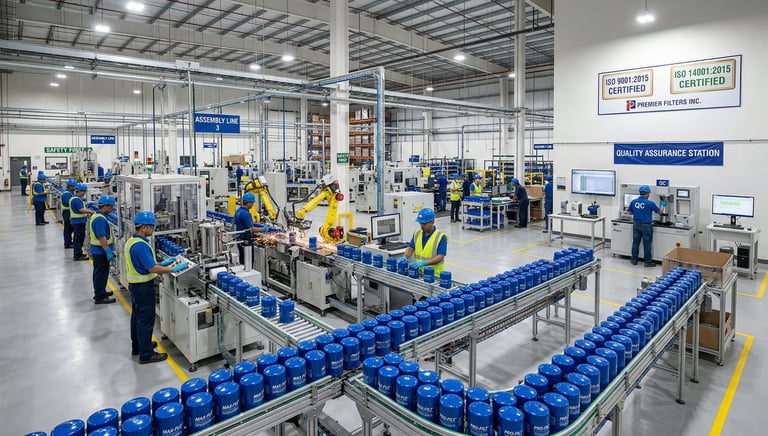
Our Manufacturing Capabilities
Production Facility:
Location: Ruian City, Zhejiang Province (China's oil filter manufacturing hub)
Factory size: 12,000 m² production facility
Established: 2008 (18 years of manufacturing experience)
Employees: 180 staff (including 15 engineers and 12 QC technicians)
Annual capacity: 6 million oil filters across all product lines
Production Equipment:
8 automated filter assembly lines
4 pleating machines (German technology)
6 seam welding stations
12 thread cutting machines
2 automated packaging lines
Quality Control Laboratory:
ISO 16889 filtration efficiency tester
Burst pressure testing equipment
Flow bench for pressure drop measurement
Environmental chamber for temperature testing
Microscope for media analysis
Certifications:
ISO 9001:2015 (Quality Management System)
IATF 16949:2016 (Automotive Quality Management)
ISO 14001:2015 (Environmental Management)
ISO 4548-12 compliant (Oil Filter Testing Standard)
Verification: All certificates available for review, factory audits welcome
Product Range
Oil Filter Categories:
Passenger Car Oil Filters:
Spin-on filters: 350+ SKUs
Cartridge filters: 180+ SKUs
Coverage: Asian, European, American vehicles
Applications: Gasoline and diesel engines
Heavy-Duty Oil Filters:
Truck and bus applications
Construction equipment
Agricultural machinery
Industrial engines
Performance Oil Filters:
High-flow designs
Extended service intervals
Racing applications
Synthetic media options
Quality Standards:
Filtration efficiency: β20 ≥ 150 (99.3%+ efficiency at 20 microns)
Burst strength: 400+ PSI (exceeds ISO 4548-12 minimum)
Anti-drainback valve: Silicone rubber, -40°F to 350°F temperature range
Bypass valve: ±1.5 PSI tolerance, stainless steel spring
Factory Direct Pricing
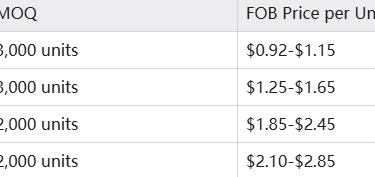
Standard Pricing (2026):
3,000 units
$0.92-$1.15
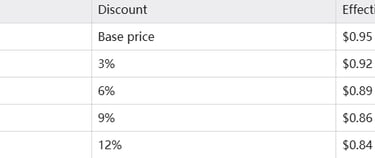
Volume Discounts:
Price Comparison:
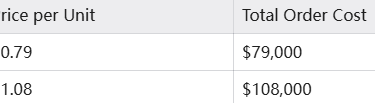
MakeXCar Factory Direct vs Trading Company (10,000-unit order):
MakeXCar: $0.89 per unit = $8,900 total
Typical trading company: $1.24 per unit = $12,400 total
Your savings: $3,500 (28% cost reduction)
Flexible MOQ Programs
Standard MOQ: 3,000 units per SKU
Flexible Options:
Multi-SKU Orders:
Minimum 2,000 units per SKU
Minimum 3 SKUs per order
Total order minimum: 6,000 units
Example: 2,000 units each of 3 different filters
Trial Order Program:
New customer special: 1,000 units minimum
Price: +15% premium ($1.09 vs $0.95 standard)
Purpose: Quality validation before full MOQ commitment
Limit: One trial order per customer
Mixed Product Orders:
Combine oil filters + air filters + fuel filters
Minimum 1,500 units per product category
Total order minimum: 5,000 units
Example: 2,000 oil filters + 2,000 air filters + 1,000 fuel filters
Repeat Customer Program:
After first order of 3,000+ units, subsequent orders: 2,000 units minimum
Loyalty pricing: Additional 2% discount
Priority production scheduling
Dedicated account manager
Quality Assurance
Our Quality Promise:
Comprehensive Testing:
100% visual inspection of finished products
5% random sampling for functional testing
ISO 16889 filtration efficiency testing (every 10,000 units)
Burst strength testing (every 5,000 units)
Test reports provided with every shipment
Defect Rate Guarantee:
Target defect rate: <1.0%
If defect rate exceeds 2.0%, we replace entire batch at our expense
No-questions-asked return policy for manufacturing defects
Traceability:
Every filter marked with production batch code
Complete traceability from raw materials to finished product
Quality records maintained for 5 years
Warranty:
12-month warranty from production date
Covers manufacturing defects and material failures
Replacement or refund at buyer's choice
Customer Support
Dedicated Services:
English-Speaking Team:
Sales managers fluent in English
Technical engineers available for specification discussions
Quality team responsive to inquiries
Fast Response Time:
Email inquiries: Response within 12 hours
Technical questions: Response within 24 hours
Quality issues: Response within 6 hours
Customization Services:
Private label packaging (your brand name and logo)
Custom box design (minimum 5,000 units)
Specification modifications (minimum 10,000 units)
New product development (mold cost: $2,000-$5,000)
Logistics Support:
FOB, CIF, or DDP terms available
Assistance with customs documentation
Recommended freight forwarders
Container loading supervision
Factory Visit Welcome
We Encourage Factory Audits:
What We Offer:
Comprehensive factory tour (production floor, QC lab, warehouse)
Meeting with management and technical team
Review of quality records and test reports
Sample product testing and evaluation
Discussion of custom requirements
How to Arrange:
Contact us 2-4 weeks in advance
We can arrange hotel and transportation
Factory visit typically takes 3-4 hours
Bring competitor samples for comparison testing
Location:
Address: Ruian City, Zhejiang Province, China
Nearest airport: Wenzhou Longwan International Airport (30 minutes)
Nearest port: Ningbo Port (2 hours) or Shanghai Port (4 hours)
Why Choose MakeXCar?
1. True Factory Direct Pricing
No middleman markup
Transparent cost structure
Volume discounts available
2. Verified Manufacturing Capability
IATF 16949 certified
18 years of production experience
6 million units annual capacity
3. Quality You Can Trust
<1% defect rate
Comprehensive testing
ISO 4548-12 compliant
4. Flexibility of a Trading Company
Lower MOQ options (1,000-unit trial orders)
Multi-SKU order flexibility
English-speaking support team
5. Long-Term Partnership Focus
Dedicated account managers
Priority production for repeat customers
Continuous quality improvement
6. Custom Solutions
Private label packaging
Specification modifications
New product development
Contact MakeXCar:
Website: www.makexcar.com
Email: sales1@makexcar.com
WhatsApp: +86 19941234680
Response time: Within 12 hours
Conclusion: Making the Right Sourcing Decision
The choice between factory direct sourcing and working with trading companies is not binary—it's a strategic decision based on your business stage, volume, capital, and risk tolerance.
Key Takeaways:
Factory Direct is Best When:
You have proven demand (1,000+ units/month)
Quality control is critical to your business
You can commit to MOQ (3,000-5,000 units)
You have capital and warehouse space
You want to build a long-term supply chain
Cost savings justify the time investment
Trading Companies Make Sense When:
You're testing the market (<500 units/month)
You need diverse products in small quantities
You have limited capital (<$10,000)
You lack import experience
You want turnkey logistics support
Convenience outweighs cost savings
Hybrid Strategy Offers Balance:
Factory direct for high-volume SKUs (top 20%)
Trading company for low-volume SKUs (bottom 80%)
Optimize cost while maintaining product range flexibility
The $0.40-$0.80 Per Unit Question:
For a distributor importing 30,000 filters annually:
Factory direct savings: $12,000-$24,000 per year
Investment required: $3,000-$5,000 (factory visit, audits, higher MOQ)
Payback period: 2-3 months
5-year value: $60,000-$120,000 in cost savings
The Real Cost of Trading Companies:
It's not just the price premium—it's also:
Slower problem resolution (3-party communication)
Inconsistent quality (if trading company switches factories)
Limited customization options
No direct relationship with manufacturer
Reduced profit margins
The Real Value of Factory Direct:
Beyond cost savings:
Direct quality control access
Faster problem resolution
Customization and private labeling
Long-term partnership and priority service
Deeper understanding of product capabilities
Competitive advantage through better margins
Your Next Steps:
If You're Ready for Factory Direct:
Calculate your annual volume and identify top SKUs
Request quotes from 3-5 verified manufacturers
Verify certifications (ISO 9001, IATF 16949)
Request samples and test reports
Conduct factory audit (in-person or third-party)
Start with trial order or minimum MOQ
Evaluate quality and service before scaling up
If You're Starting with Trading Companies:
Choose reputable trading companies with verified track records
Request factory information and audit reports
Start with small orders to test quality
Monitor defect rates and consistency
Plan transition to factory direct once volume justifies it
MakeXCar Can Help:
Whether you're ready for full factory direct sourcing or need a flexible starting point, MakeXCar offers:
True factory direct pricing ($0.92-$1.15 per unit)
Flexible MOQ options (starting at 1,000 units for trial orders)
IATF 16949 certified quality (<1% defect rate)
English-speaking support team
18 years of manufacturing experience
Contact us today for a customized quote and free samples.
The difference between factory direct and trading company sourcing can mean the difference between thriving and merely surviving in the competitive automotive parts distribution market. Make the choice that positions your business for long-term success.
Related Articles:






Whatsapp: +86 19941234680
Phone:+86 19941234680
© 2025. All rights reserved.
Email:sales1@makexcar.com
Wechat:Sgxwtxa