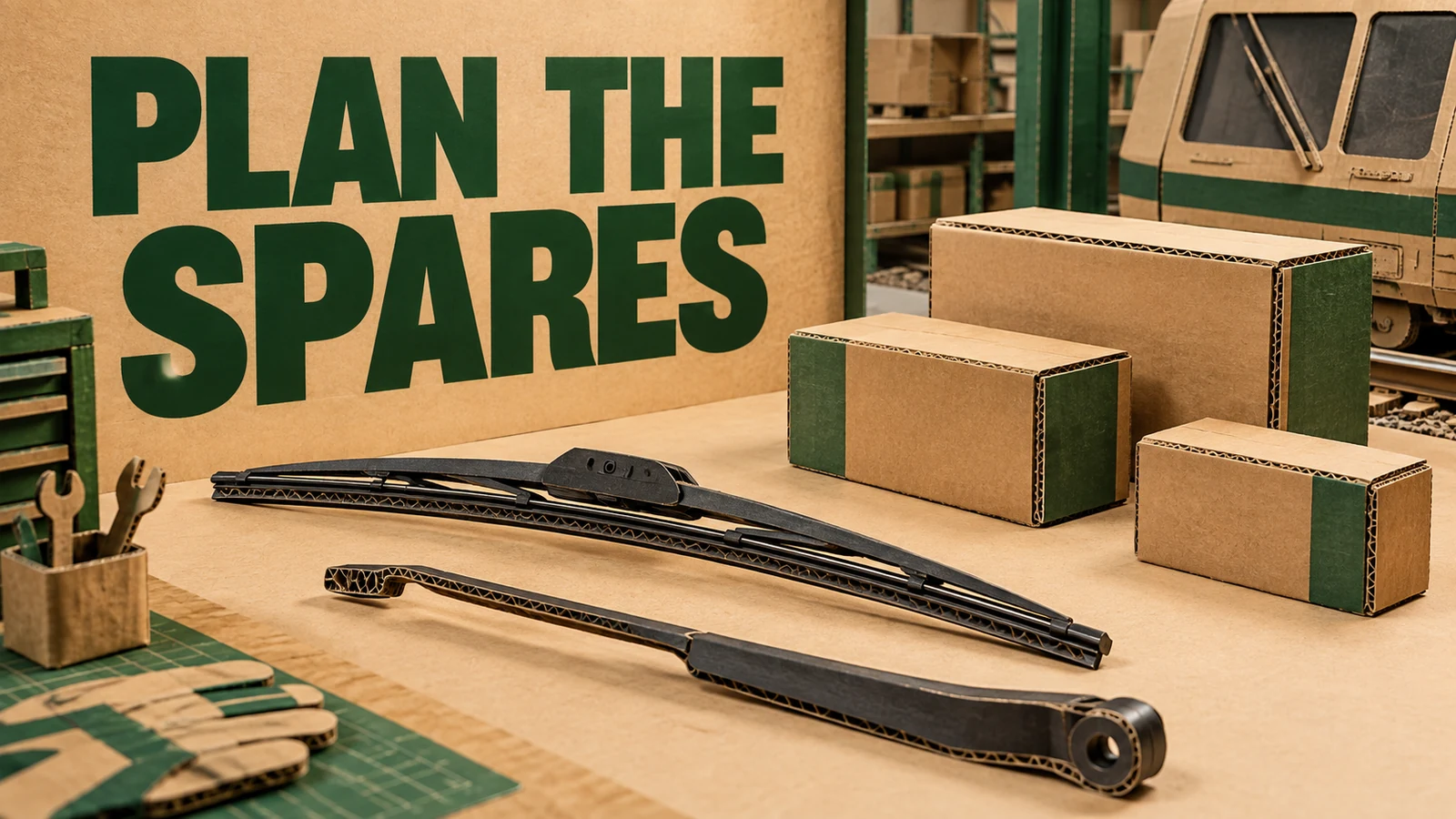
This guide gives procurement teams an original spare-parts request and record structure. It does not approve a replacement, define a maintenance interval or instruct technicians to dismantle a rail wiper. Actual service decisions require the applicable system documents and authorized technical process.
Identify the installed system before asking for a spare
Collect the system reference, available serial identifier, configuration revision and vehicle or window identification from the actual records. Preserve the source of each field. If a label is missing or unreadable, record that limitation and ask what additional evidence the supplier needs.
Do not order from a photograph alone when the system identity remains unresolved. Similar external shapes can prompt a useful question, but they do not establish a replacement relationship. Keep the image connected to the vehicle and window record it describes.
Separate installed-system information from a proposed replacement reference. A supplier may offer a newer item or assembly, but the relationship needs an explicit explanation and technical review. Do not overwrite the old identifier merely because the new quotation looks more complete.
Use supplier identification examples within their scope
SPEICH's spare-parts guidance asks customers to provide the motor serial number and describes identifying information on its system labels. This is a supplier-specific example of ordering through system identity. It does not show that a MAKEXCAR system uses the same label, numbering convention or replacement parts.
For your inquiry, ask which identifier the actual supplier requires and where it is documented. Retain the answer with the quotation. A consistent identification record helps the next buyer repeat the request without relying on someone's memory of the original installation.
List the components without assuming every item is replaceable
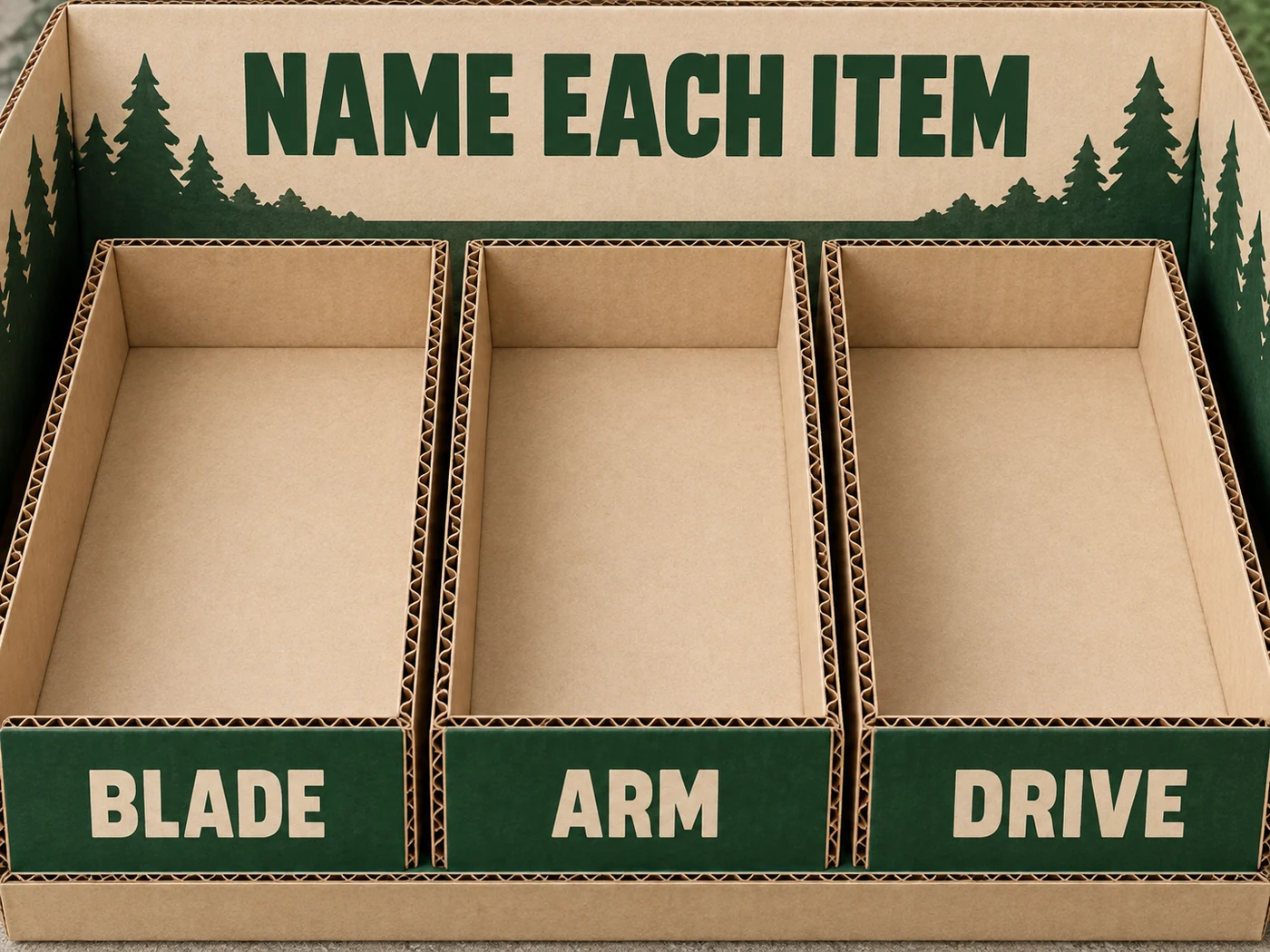
Start with the component groups relevant to the installed system: blade, arm, drive and control items where applicable. Ask for the actual spare-parts list or illustrated breakdown. Do not convert those groups into a promised bill of materials before the supplier confirms the configuration.
For each requested item, record whether it is offered individually, as a kit or only within a larger assembly. The word spare does not automatically mean that every internal component is supplied separately. Keep inaccessible or unsupported replacement questions open.
Ask the technical reviewer to distinguish the purchasing scope from the service procedure. A separately sold item still needs an applicable replacement basis. This article does not approve disassembly, modification or reuse of an installed component.
Retain the replacement relationship and its qualifications
Link the proposed spare reference to the installed reference using the actual supplier statement and supporting documents. Record any conditions, additional items or configuration changes mentioned. Avoid reducing a qualified relationship to a broad catalogue label saying interchangeable.
If a part has been superseded, ask for the relationship between the earlier and current references. A new part number may require additional documentation or a changed supply scope. Do not infer that every old installation accepts the new item without the applicable review.
Keep separate rows when different windows or vehicle configurations use different references. Combining them into a single fleet spare can conceal the evidence needed to select the correct item at receiving or during a later inquiry.
Clarify blade, arm and drive supply scope
For a blade request, identify the offered assembly and its documented connection to the relevant system. Retain the required reference rather than relying solely on a stated length. Any fastening or accessory included in the offer should be visible in the actual contents record.
For an arm request, ask whether the offered reference includes all items named in the quotation or only the principal arm component. Do not assign a spring force, geometry or mounting relationship from a generic product image.
For a drive or control request, keep electrical and functional details with the applicable system documentation. A proposed spare should not acquire an invented voltage, connector pinout or control behavior simply because a similar item appeared in another supplier's catalogue.
Ask for lead time as a reference-specific statement
Request the supplier's current lead-time statement for the exact reference and quantity. Identify what starts the quoted period, what the stated delivery point is, and any dependency explicitly included in the offer. Keep production availability separate from transit or receiving expectations.
SPEICH's support FAQ describes spare-parts delivery time as varying with the product and shipping requirements. This illustrates why a buyer should retain a scoped supplier response rather than assume one fixed delivery time for every spare. It is not a MAKEXCAR delivery commitment.
Do not turn a previous shipment's timing into a standing promise. Refresh the quotation when the reference, quantity or required date changes, and document any uncertainty the supplier identifies.
Build an original spare-parts planning worksheet
The fields below are a purchasing aid, not a completed maintenance plan or universal rail standard. Populate them from actual system records and supplier responses. Keep unanswered questions visible so the technical and purchasing teams can resolve them.
| Field | Record to request | Question it answers |
|---|---|---|
| Installed identity | System, serial and configuration record | Which installation is concerned? |
| Position | Vehicle and window identification | Where is the item used? |
| Spare reference | Offered item and revision | What is being quoted? |
| Relationship | Replacement statement and conditions | What supports applicability? |
| Contents | Individual item, kit or assembly list | What is included? |
| Supply | Lead time, basis and dependencies | What timing is actually stated? |
| Support | Availability and change-notice response | What remains to be planned? |
| Review | Technical conclusion and outstanding items | What can the buyer rely on? |
Maintain the source quotation beside the worksheet. A summary should make the information easier to find while preserving the original qualifications. If two offers differ, compare their scope and timing basis before treating the price difference as the only issue.
Discuss support duration without inventing a guarantee
Ask what availability information the supplier can provide for the required service period. Record whether the response is a current stock statement, a production capability statement or an explicit contractual commitment. These are different forms of information.
Request the process for notifying buyers about discontinued or changed references where it matters to the project. Do not assume a notification period or support duration that has not been agreed. Keep any proposed last-order arrangement tied to its actual terms.
Where a spare is unavailable, ask for the documented options and the review needed for each. A larger replacement assembly may change the purchasing scope. Its commercial availability alone does not establish that the installed system can accept it.

Connect spare planning to actual maintenance evidence
Use the applicable maintenance documentation and operating records to determine what planning questions need attention. This guide does not specify replacement intervals or stock quantities. Those decisions need the actual service requirements and project review.
If procurement is asked to hold a spare kit, retain the approved contents and the basis for the quantity. Keep a recommendation distinct from an accepted purchasing instruction. An attractive generic kit photograph should not replace the actual list.
At receiving, compare the supplied reference and contents with the agreed record, and preserve any discrepancy. Do not label a shipment compatible merely because its carton matches the wording of the purchase order.
Maintain the record when configurations or references change
Record which earlier installations and spare entries may be affected by a change. Ask the supplier for the actual relationship between revisions and retain the technical review. Avoid silently replacing all fleet records with one new reference.
Keep historical identifiers where they are needed to explain an earlier quotation or installation. Make the current record clear without deleting the evidence behind a previous decision. This helps the next request identify which system is being discussed.
The cardboard illustrations in this article are conceptual planning aids. They show no actual spare compatibility, technical wiring or supply commitment. Use real records to populate the fields they introduce.
Common questions about rail wiper spare parts
Can a blade length identify the correct spare?
Retain the system and blade reference plus the applicable replacement evidence. Length alone does not establish a complete relationship to the installed configuration.
Is every drive component supplied separately?
Ask for the actual spare list and quoted contents. Do not assume internal items are individually offered or serviceable from a generic assembly description.
Does a support statement guarantee delivery timing?
Keep the exact reference, quantity and quoted timing basis. General support language does not replace a current scoped supply commitment.
What if the original spare is discontinued?
Request documented alternatives and their conditions, then obtain the appropriate technical review. A new reference or larger assembly should not inherit approval automatically.
Prepare an installation-specific spare-parts inquiry
Review the current MAKEXCAR other wiper parts category and collect the system identifier, vehicle/window record and requested component scope. State which replacement relationship or supply term remains unclear.
Send the worksheet and available system documents through MAKEXCAR's contact page. Ask for an exact offered reference, contents and current supply response. A traceable spare-parts inquiry helps procurement plan the next step without inventing a serviceability or availability promise.