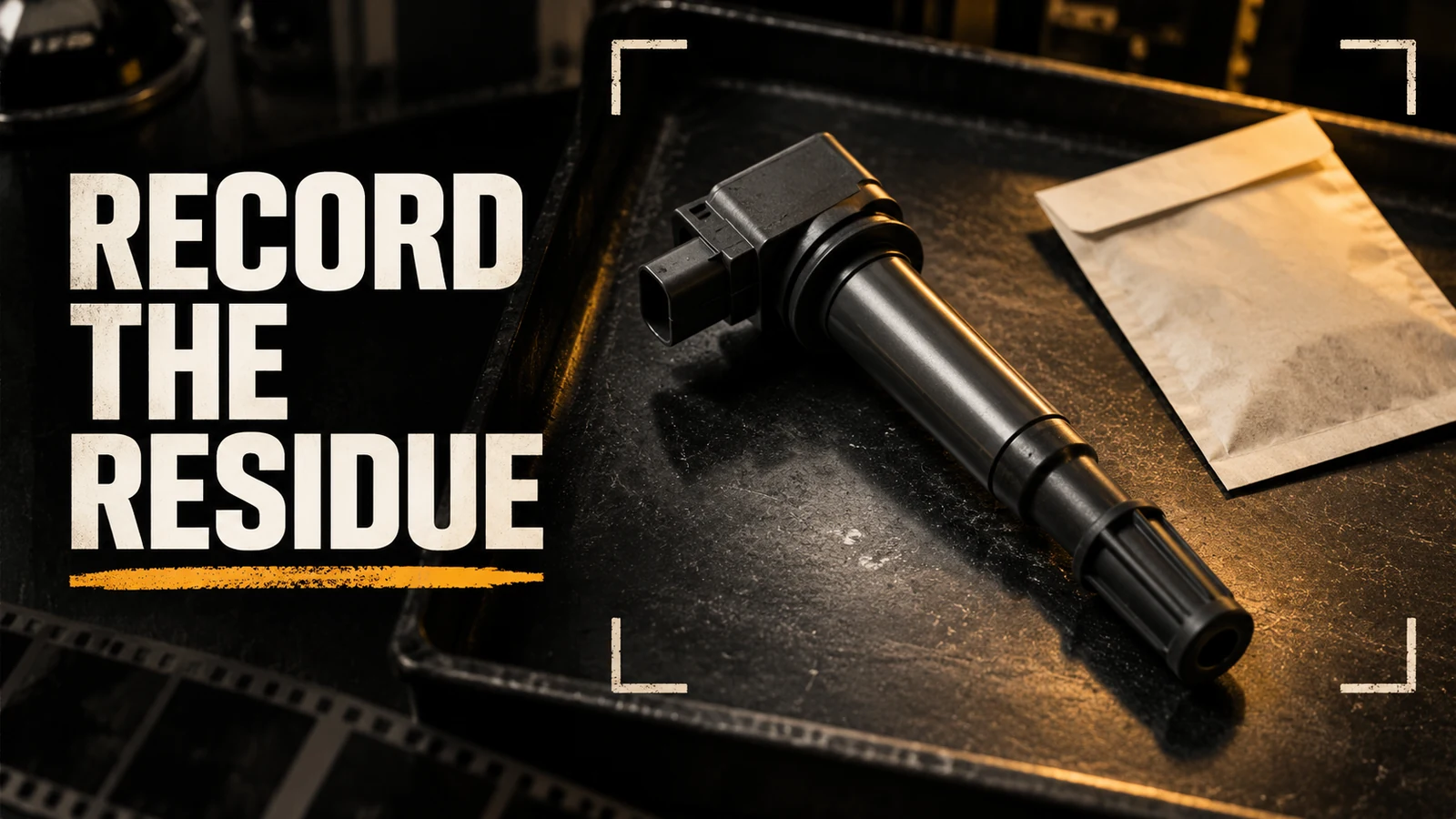
This guide helps distributors and purchasing teams prepare a contamination evidence file. It addresses the records that travel with a returned coil, rather than prescribing vehicle diagnosis, cleaning or repair. The workshop should use the applicable vehicle information for those activities; a buyer's evidence checklist cannot replace it.
What the manufacturer guidance actually supports
DENSO's ignition coil fault-finding guidance includes oil or water contamination among observations to check. It also cautions that an ignition error may arise from another system problem and recommends careful root-cause determination, referring first to the vehicle manufacturer's ignition-system instructions. This supports documenting contamination as part of an investigation. It does not supply a universal rule for accepting or rejecting a coil warranty claim.
Use that distinction when opening the case. A report can state that a workshop observed residue at a particular location while leaving its significance under review. Do not change the sentence into “contamination proves the coil was defective” or “contamination automatically voids the warranty.” Either decision needs the actual findings and applicable commercial terms.
Give every photograph a location and a part identity
Start with the returned reference, order line and case identifier. Include the markings actually present on the coil and the supplier label if retained. A warehouse stock code may help locate the transaction, but it should not silently replace the manufacturer's or supplier's part reference. If a marking is unreadable, record that limitation.
For vehicle observations, ask the workshop to name the location using its documented vehicle convention. “Wet near the coil” is difficult to review. “Workshop photo showing residue in the reported plug-well location, before the recorded cleaning operation” gives the reviewer a defined observation and its place in the record. Do not assign cylinder numbering from a photograph or assume that numbering conventions are identical across applications.
Retain the original image and provide a separately annotated copy if arrows or labels are needed. An annotation should identify a visible area without hiding it. Link both files to the same case so the reviewer can distinguish the original capture from the buyer's explanatory additions.
Build a photo sequence rather than sending one close-up
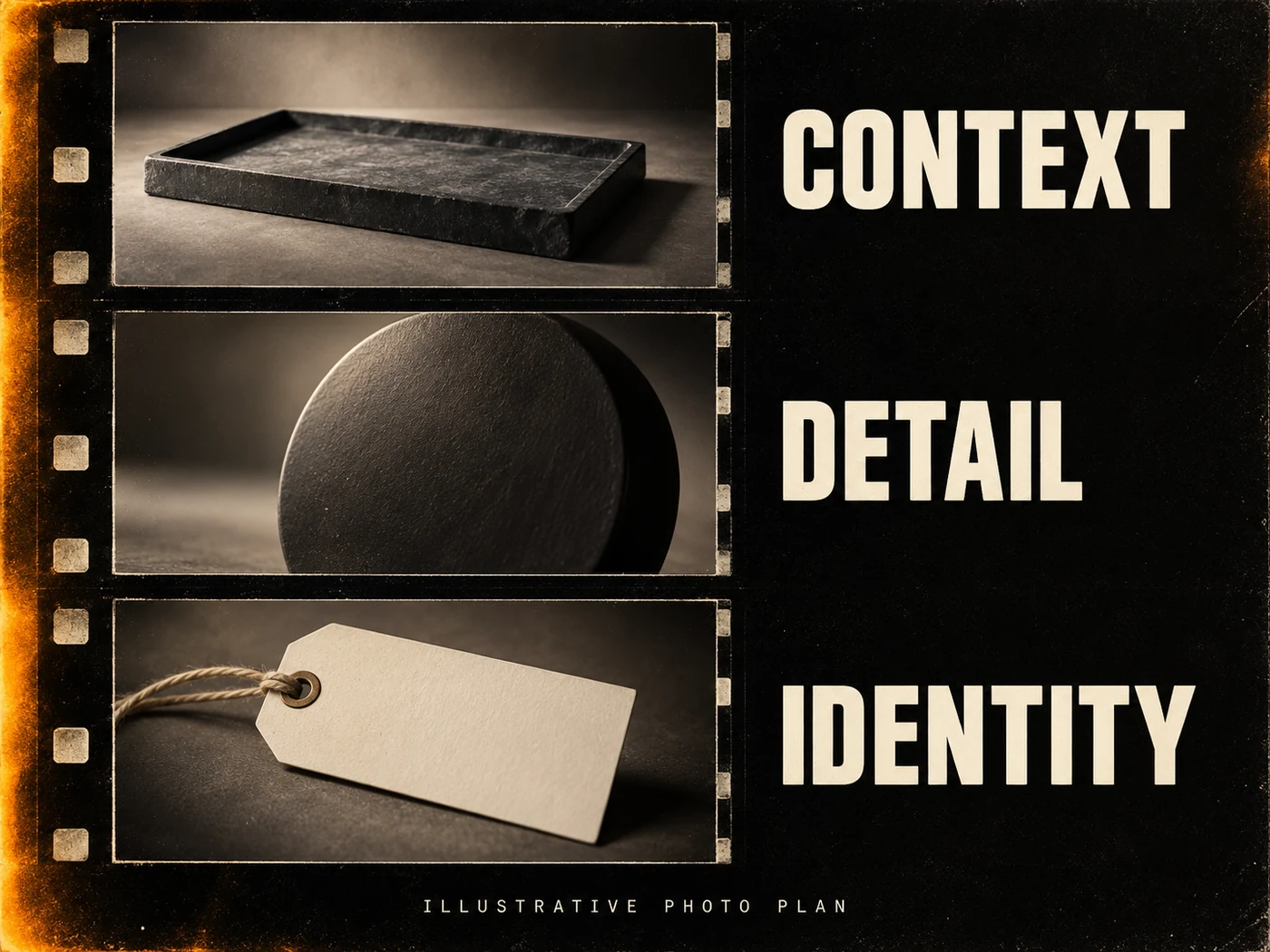
A useful sequence includes context, detail and identification. The context view locates the observation; the detail view shows what the workshop reports seeing; the identification view connects the relevant part to the order. These views answer different questions. Several highly cropped images of the same reflective surface may still leave the reviewer unable to connect the residue to the returned item.
Ask for photographs available from the workshop's normal documented inspection. Do not request extra disassembly solely to satisfy an office checklist. If access was restricted, state what was visible and what was not inspected. That limitation is more useful than a confident description of an inaccessible area.
Record capture dates, who supplied the images and whether they show the condition before or after any documented intervention. Lighting can change apparent color, and cropping can remove context. Preserve the files received from the workshop instead of distributing only screenshots compressed through several messaging applications.
Describe the residue before deciding what it is
Use an observation field and a separate identification field. The observation might say that a shiny film or droplets were visible in the photographed area. The identification field should state whether the workshop identified the material, how that conclusion was obtained and which report supports it. If no identification was made, write “material not confirmed.”
Color alone is a weak basis for a purchasing team to classify a substance. An image cannot establish the full history of the part or whether the photographed liquid reached another area. Forward the workshop's actual conclusion when available, using attribution, rather than presenting an office interpretation as a test result.
Avoid sending an improvised sample or prescribing a sampling method. Ask the supplier what evidence its assessment requires and let the responsible workshop decide how to obtain it under applicable procedures. Record whether the supplier requested a sample, photographs or the complete returned component.
Use a compact evidence index
The following index is a suggested buyer record, not a mandatory manufacturer warranty form. Adapt it to the supplier's case requirements. Missing information should remain visibly missing rather than being filled with assumptions from another return.
| Record | Useful entry | Limit to state |
|---|---|---|
| Part identity | Actual reference, markings, order and case number | Unreadable or absent marking |
| Observation location | Workshop location and linked overview | Area not accessible |
| Residue appearance | Visible film, droplets or deposit as reported | Substance not identified |
| Identification | Workshop conclusion and supporting report | No confirmed material finding |
| Condition history | Capture timing and documented interventions | Earlier condition unavailable |
| Assessment findings | Report reference and author | Cause remains unresolved |
| Return request | Supplier case instructions and requested remedy | Decision not yet issued |
One index can link to several attachments without repeating every paragraph of the workshop report. Give each attachment a stable filename and short description. Avoid embedding the only copy of a useful photo inside an editable spreadsheet where its original resolution and context can be lost.
Document what happened to the part after observation
A returned component may have been wiped, cleaned, removed, repacked or otherwise handled between the first observation and the supplier's inspection. Record documented changes and their timing. The condition at receipt should not be presented as identical to the condition in an earlier workshop image when the record shows an intervention between them.
If a part has already been cleaned, explain that plainly and retain any earlier evidence that exists. Do not stage contamination for a replacement photograph. The supplier can then assess the limitations of the remaining material and request clarification rather than interpreting a recreated scene as a genuine record.
Before shipment, obtain the supplier's return authorization, packaging requirements and permitted handling instructions. Record the dispatch reference and the identification method agreed for the item. An editorial guide cannot determine suitable packaging for every contaminated component or override the supplier's process.
Separate observations, assessment and the requested remedy
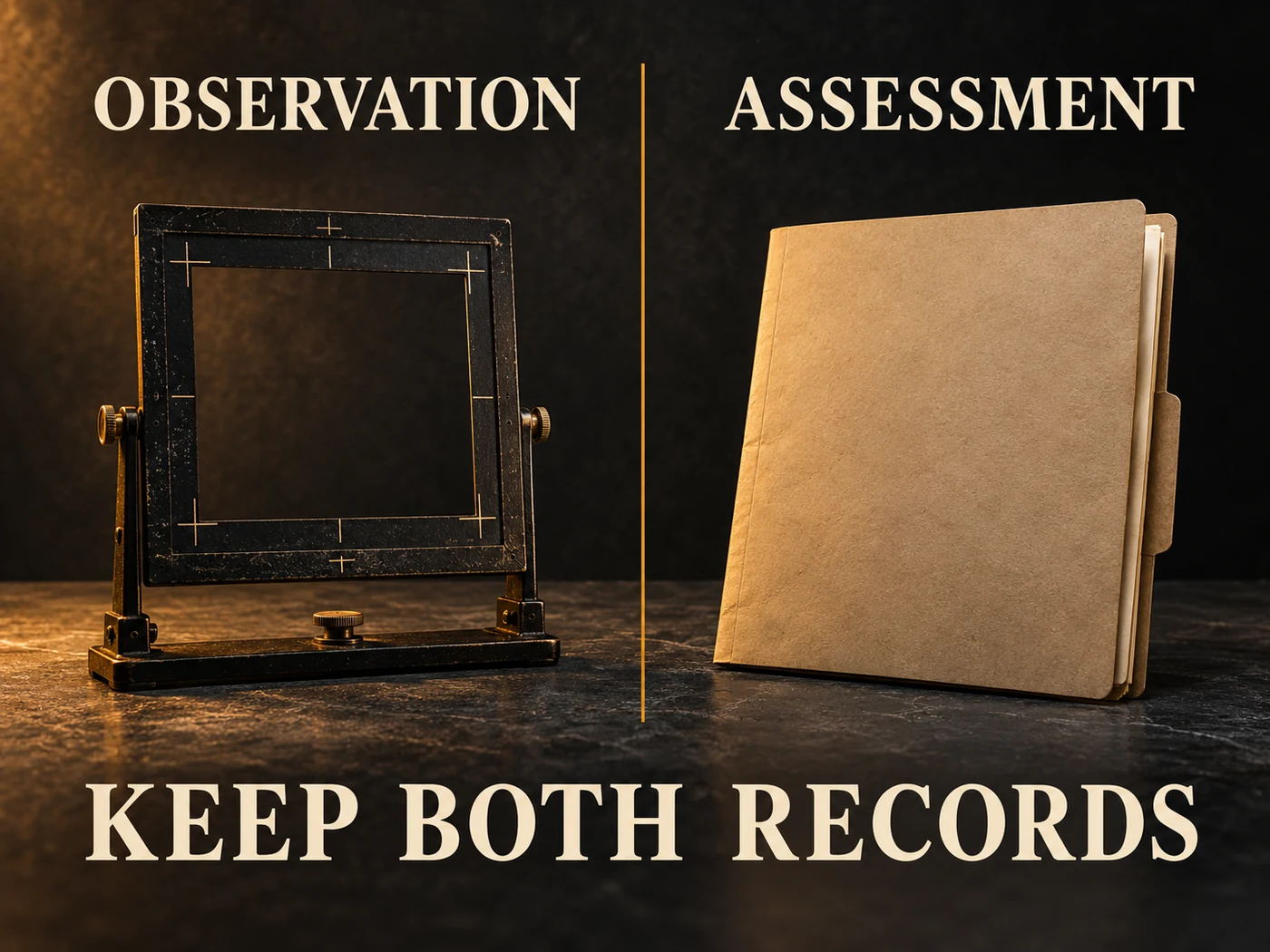
Keep three sections in the case summary. First describe what was observed and where. Then identify the workshop or supplier findings, including unresolved points. Finally state the commercial request, such as technical review or consideration of a return. This makes the case easier to route without assuming that the requested remedy is already justified.
A useful opening might be: “The attached workshop images show the reported residue at the stated location. Material identity and the relationship to the reported symptom remain under assessment. Please advise which additional evidence your review requires.” This is an illustrative wording example, not a real claim or a supplier commitment.
When a supplier issues an assessment, retain its exact case reference and distinguish that result from the buyer's summary. If the conclusion depends on missing vehicle information, request the specific item identified in the response. Sending another unlabelled photograph may not resolve the missing application or diagnostic evidence.
What a group of similar returns can tell a buyer
Several reports describing wet plug wells should be indexed individually before being grouped. Count returned units, affected order lines and documented observations separately. One customer message can cover multiple units, while several messages may concern the same item. Without that distinction, a spreadsheet can exaggerate the scale of the issue.
Group cases by explicit shared information: reference, shipment, application or workshop finding. Mark unknown fields instead of treating them as matches. A repeated description is a reason to ask a focused question; it is not, on its own, proof that a production lot shares a defect.
Keep any supplier response connected to the cases it actually reviewed. A decision on one returned unit should not automatically become a decision for other references, vehicles or shipments. Ask whether further review is required before applying the conclusion more broadly.
Questions buyers often ask
Does a wet plug-well photo establish a defective ignition coil?
It records an appearance at the reported location. Connect it to the actual part, workshop findings and relevant assessment before drawing a failure conclusion. The photo alone does not establish cause or claim eligibility.
Should we call the residue oil if it looks oily?
Describe the visible appearance and attribute any identification to its supporting workshop record. If identification is unconfirmed, retain that status. Do not turn an informal description into a laboratory or diagnostic result.
What if the workshop already cleaned the area?
Record the cleaning and its timing, keep earlier images if available and tell the supplier which condition is shown in each attachment. Do not recreate the earlier condition to fill a gap.
Can one supplier decision cover all similar returns?
Confirm the decision's scope. Match the reviewed references and cases before using the result elsewhere. Similar descriptions do not establish that every case has the same technical or commercial outcome.
Prepare a precise ignition coil inquiry
Browse the current MAKEXCAR ignition coil category for the recorded references available for review. For a sourcing or after-sales inquiry, provide the actual reference, vehicle information, order line and a concise indexed evidence file. Separate unconfirmed observations from documented findings so the recipient can request the missing information directly.
Use the MAKEXCAR contact page to explain the question and the response needed. An inquiry does not itself approve fitment, a technical diagnosis or a warranty remedy. Those conclusions depend on the actual product information, assessment and agreed terms for the case.