For distributors, this distinction prevents a misleading comparison between an ordinary support listing and a powered actuator quotation. This guide explains how to build the identification record and define supply scope. Powered components are discussed for comparison only; this article does not claim that MAKEXCAR sells powered tailgate actuators or conversion kits.
Begin with component role, then identify the vehicle system
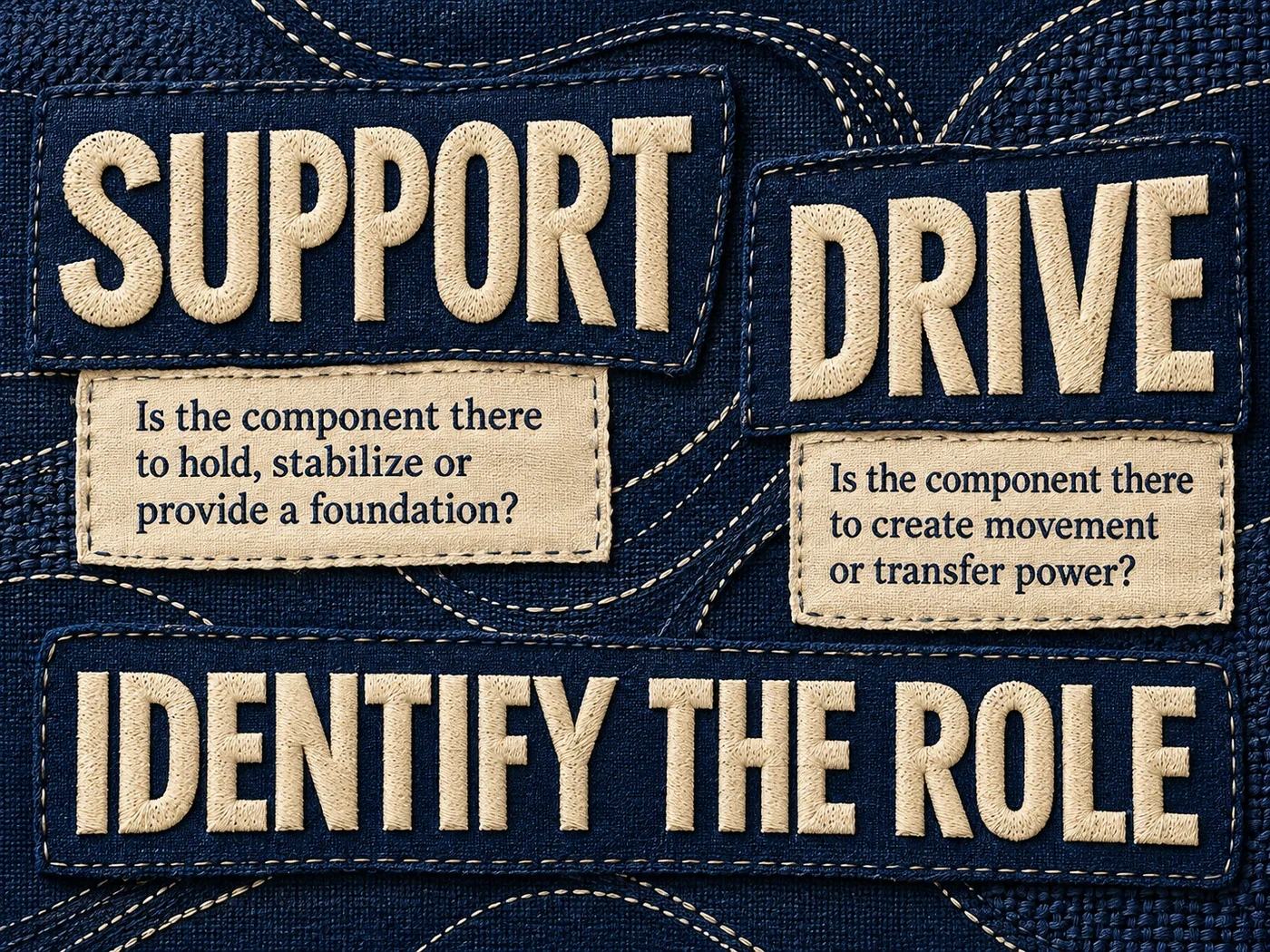
A useful inquiry asks two separate questions: what equipment does the vehicle have, and what does this particular component do within that equipment? The answer to the first question does not automatically settle the second. Avoid turning “powered tailgate” into a complete part description. A system can contain multiple components with different responsibilities, and the actual arrangement must come from the selected vehicle documentation.
Record how the tailgate equipment is identified in the vehicle specification or parts catalog. If the buyer only reports how it currently behaves, preserve that as a symptom rather than an equipment classification. A tailgate that is being moved manually today might have an unresolved system fault. Conversely, a photograph of one cylindrical component does not demonstrate an electrically driven system.
Assign the inquiry a clear identification status: confirmed by application documentation, provisionally identified from a readable reference, or awaiting equipment evidence. This simple distinction helps purchasing teams avoid passing a guess into the warehouse as approved fitment.
Understand the comparison without assuming universal layouts
Stabilus describes its Automotive POWERISE products as electromechanical drives within a coordinated tailgate system. Its explanation connects drive operation with counterbalancing, kinematics and the components used. This is a manufacturer-specific example of why a powered drive is more than a support described by length and force. It is not evidence that every vehicle uses the same design or that a visually similar replacement is compatible.
Use the Stabilus Automotive POWERISE description as background for the distinction. For a buying decision, request the parts catalog and service information for the actual application. Do not transfer the manufacturer's listed functions, drive arrangement or model capabilities to an unverified aftermarket item.
For a mechanical support inquiry, the commercial record should identify the support reference and its defined mechanical specification. For a powered drive inquiry, the record must identify the actual drive and the relevant system version. Neither path can be replaced by a label such as premium, automatic or heavy duty.
Vehicle equipment matters beyond make and model
A make, model and broad year range are a starting point, not a final match. Ask which catalog information distinguishes the tailgate equipment on that application. Preserve the relevant build identifier, market, body configuration and equipment description where the source requires them. Do not invent a universal option-code list; the identifying fields depend on the vehicle and the reference system being used.
When a distributor combines several applications into one order line, review the evidence for each application group. A broad vehicle family name should not hide unresolved equipment differences. If the supplier claims one reference covers multiple versions, request the documented coverage and any exclusions before consolidating the stock item.
Keep the catalog evidence attached to the inquiry rather than relying on a copied fitment sentence. A dated screenshot or extract with the reference and equipment context allows another reviewer to understand the match later. Record where the information came from and which version was used.
Read original references and position before comparing photographs
Request a legible image of the complete original marking, together with the mounting position and an overview of the assembly. Transcribe the marking as found, including suffixes that might appear insignificant. If a character is unreadable, mark it as unreadable rather than filling it from a similar internet listing. A guessed suffix can turn an uncertain inquiry into a confidently wrong purchase.
Photographs should support the reference match. They can show visible end fittings, housing form and the presence of an external connection, but they cannot establish hidden functions or the full electrical specification. Ask for the named connector identification in the application documentation when a powered component is involved. Connector appearance alone is insufficient evidence of its assignments.
Do not assume that opposite sides use interchangeable components. Confirm the catalog position and quantity. If a quotation includes a pair, identify each member separately where the application requires it. A pair is a supply quantity, not proof that the two members share one reference.
Define exactly what the quotation supplies
The phrase tailgate strut can be used loosely across commercial listings. Replace it with a named supply scope. State whether the price covers a mechanical support, an electromechanical drive assembly, or a separately identified component. List the included end fittings, brackets, connection leads or other accessories only when they are confirmed in the quotation.
For comparison-only powered inquiries, distinguish the actuator from associated controls and other system parts. Do not assume a drive quotation contains a controller, switch, latch or complete installation package. Ask the supplier to state exclusions as clearly as inclusions. This is especially useful when the buyer is comparing a single-item quotation with a bundled offer.
The purchase order should carry the agreed scope instead of a shortened sales label. Align the sample label, packing description and order reference with that scope. A sample may look familiar while arriving without an expected fitting; a clear item definition makes that discrepancy visible before bulk approval.
| Identification field | Evidence to request | What it resolves |
|---|---|---|
| Vehicle equipment | Application catalog or equipment record | Which tailgate configuration is being identified |
| Component role | Named component in application documentation | Support, drive or another assembly member |
| Original reference | Readable complete marking and catalog match | The precise reference under discussion |
| Position and quantity | Catalog position and quoted item list | Which side and how many components |
| Mechanical specification | Selected reference drawing and specification | Dimensions, fittings and defined support properties |
| Powered interface | Selected application connector and system documentation | Interface identification without guessed assignments |
| Supply scope | Written inclusions and exclusions | What is actually included in the price |
Mechanical support checks still need a reference
Once the item is confirmed as a mechanical gas support, compare its defined length, travel, end fittings and force specification against the selected reference. Keep measurement definitions with the figures. A listing that gives a length without explaining the reference points leaves the comparison incomplete. An apparently equal force marking also needs its rating definition.
These checks identify questions for the supplier; they do not create a substitute specification from photographs. Use the application drawing or approved specification as the comparison basis. If the original record is incomplete, request clarification instead of choosing the nearest-looking item and describing it as an upgrade.
Visit the published MAKEXCAR Gas Struts category for relevant mechanical support inquiries. Confirm an individual listing's application and supply scope before ordering. The existence of this category does not establish coverage for every tailgate configuration mentioned here.
Powered interfaces cannot be inferred from a plug photograph
For a powered drive, keep electrical interface questions separate from ordinary mechanical dimensions. The buyer needs the actual application reference, named interface and system requirements. Do not infer voltage, pin assignments, communication behavior or controller compatibility from wire count, connector color or a photograph of another model.
Any installation, initialization or diagnostic requirement must be taken from the selected vehicle's service procedure and the supplied component documentation. This guide deliberately supplies no wiring instructions or universal programming sequence. Procurement should capture the relevant documents and make their review part of application approval.
A supplier's statement that a component has the same connector should be recorded as a claim awaiting supporting documentation. Ask what reference and equipment version the claim covers. Keep the answer with the quotation so that the receiving team does not mistake visual similarity for system compatibility.

Replacement and conversion are different buying requests
Replacing a component already specified for the vehicle starts with the installed system and its documented reference. Converting equipment starts with a proposed change to that system. A replacement quotation should not quietly become a conversion promise because the item has a powered appearance or the customer wants button-operated movement.
Stabilus specifically limits its discussed automotive electromechanical drives to replacement within factory or series applications and states they are not intended for retrofitting. That boundary belongs to those products. It reinforces the need to obtain explicit supplier and application documentation for any separately proposed conversion rather than treating a replacement drive as a universal kit.
In this article, conversion equipment remains outside the MAKEXCAR supply claim. If a buyer's request is actually for a conversion, record that intent and clarify the commercial scope before responding. Do not offer an unverified mechanical support as a way to create powered operation.
A buying scenario: resolve the ambiguous line item
Consider a hypothetical inquiry headed “rear lift support, automatic tailgate.” It includes a vehicle family name and a cropped photograph, but no readable reference. The buyer asks whether a mechanical support listing can replace it. There is no adequate basis to answer yes or no for that application.
The next useful action is to request the equipment record, original marking, component position and catalog identification. If those records identify a mechanical support, proceed with its reference-specific checks. If they identify a powered drive, compare the actual drive scope and interface documentation. If the documents conflict, keep the line unresolved and ask the buyer to reconcile them.
This scenario illustrates an inquiry workflow, not an actual customer case or compatibility finding. Its value is the decision boundary: a clear request for missing evidence prevents an ambiguous description from becoming a bulk order.
Frequently asked procurement questions
Use the following cases to decide which evidence gap to resolve before comparing quotations. They are illustrative purchase situations, not completed customer cases or application findings.
The equipment description and part photograph disagree
The inquiry names a powered tailgate, while the photograph shows a tube without a visible external connection. That observation does not establish the component role: a cropped photograph may omit a connection, and the requested component may be a separate mechanical support within the equipment. Obtain an assembly overview and the catalog entry that identifies this position. Route the quotation according to that documented component identity. If the buyer instead asks to change the equipment, treat the request as conversion scope and obtain separate documentation.
The quoted pair has only one reference
A hypothetical order needs 20 vehicle sets, and the selected catalog explicitly identifies two position-specific members per set. The required supply is therefore 20 × 2 = 40 individual components, comprising 20 of each identified member. This arithmetic uses invented demand and a stipulated catalog arrangement; it is not a statement that every tailgate has two supports. If the quotation says 20 pieces, clarify whether it means individual components or complete sets. Resolve the unit and member references before calculating the total price.
The offer combines a drive with an undefined package
A seller describes an actuator plus accessories, but the attachment lists no accessories. Hold the bundled comparison until the seller identifies the included components and exclusions. A lower price cannot be interpreted as a cheaper equivalent system while the supply scope is unknown. Keep any service or initialization requirements in a separate document field; a list of included hardware does not prove those requirements have been met.
Send an inquiry that can be checked
Copy these fields into the inquiry attachment. Blank fields remain unresolved inputs, rather than approval. For a mechanical support request, include only the applicable mechanical-reference documents. When a powered item is being discussed for comparison, collect its application documentation without suggesting that it is a MAKEXCAR stock item.
Vehicle and equipment: [make/model/build context; equipment description; catalog source and date]
Requested component: [named role; complete original marking; catalog reference; position; image filenames]
Quantity basis: [individual components or defined sets; member references and quantity per set; required total]
Quotation scope: [included fittings or other named components; exclusions; unresolved scope questions]
Review documents: [reference drawing or specification; applicable interface/service documents; responsible application reviewer]
Use MAKEXCAR contact for a relevant mechanical support inquiry, with the documented reference and scope attached. The next useful response identifies the proposed item and addresses the outstanding fields. Where equipment evidence contradicts the requested reference, resolve that conflict before approving the sample or bulk line.