What needs to be agreed before the replacement arrives?
A purchasing discussion usually begins with the part reference, vehicle and price. For an electronically controlled window, the handoff also needs to address any setup requirements and the review of the equipped functions. Leaving those questions until the customer reports a problem makes it harder to establish what was promised and what was actually checked.
This article is a procurement and service-handoff guide. It does not provide a reset sequence, an obstacle test or an installation procedure for an unidentified vehicle. The purpose is to connect the offered component to the correct information, responsible people and completion record before accepting the replacement work.
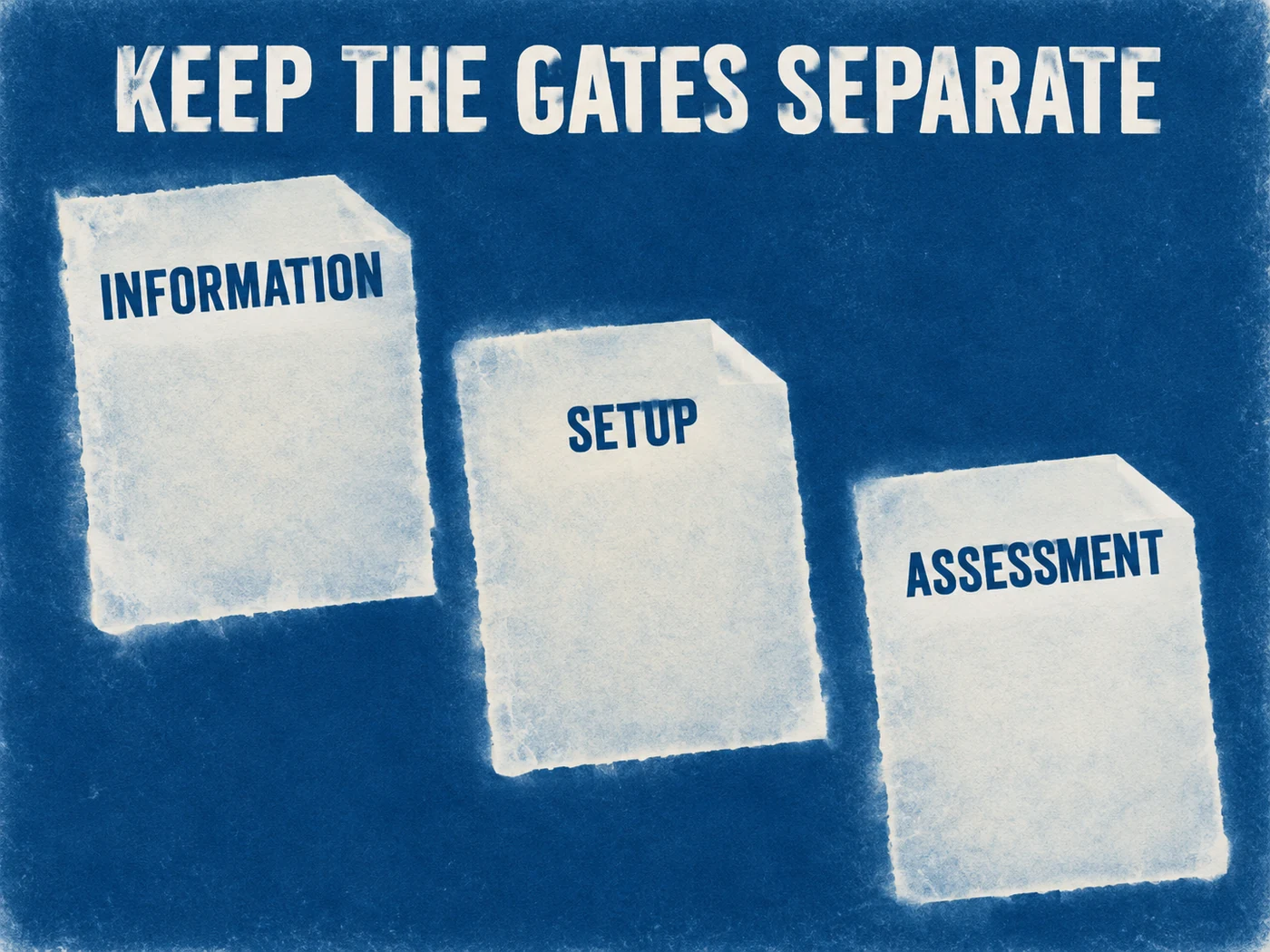
Keep three decisions separate: whether the part is the documented replacement, whether the applicable setup has been performed, and whether the required functions have been assessed. Evidence for one does not automatically answer the others. A sample that moves the glass may still leave an equipped automatic or protection function unresolved.
Why initialization needs an application-specific source
The official Ford Focus owner manual, CG3929en, edition 202201, provides a bounded example in its window section on printed pages 117–118. It describes resetting bounce-back memory after battery disconnection and warns that the function is unavailable until reset. This example applies within that manual’s vehicle scope; it does not establish a replacement procedure or requirement for another vehicle or MAKEXCAR SKU.
The lesson for the buyer is to request the actual source and identify the event that triggers the requirement in the application under review. Do not replace that check with a general instruction that all regulators need the same reset. The component replaced, the vehicle equipment and the relevant service information should determine the answer.
Record the document title, vehicle applicability, revision or retrieval date and the person responsible for using it. If the information concerns an owner-operated feature rather than a replacement operation, ask the service team to establish whether it is the appropriate source for the work being performed. A related manual page is background until its applicability is confirmed.
Define functions without assuming every vehicle has them
The same Ford manual describes a window stopping and reversing when it detects an obstruction during closing. This source-specific description supports distinguishing ordinary movement from a protection-function assessment. It does not establish identical equipment at every door or confirm the functions of a MAKEXCAR replacement.
Ask which functions are fitted at the specified door position. Use the vehicle information rather than extrapolating from another door or a broadly similar model. Keep automatic raising and lowering separate when the application distinguishes them. State the actual terminology in the relevant source so that supplier and service records can be compared.
The terms anti-pinch, anti-trap and bounce-back can appear in different documents. Do not assume that a shared label means the same implementation or checking method. Request the applicable description and procedure. A general product claim does not replace an application-specific assessment of the equipped system.

Allocate responsibilities in the purchasing record
The following table is an editorial allocation tool. It does not create a legal division of liability or replace the parties' agreement. Adapt it to the actual supplier, distributor, installer and vehicle owner involved, then identify a named contact for each open item.
| Record and suggested owner | Why it matters | Next request if missing |
|---|---|---|
| Part identity: supplier with buyer input | An application statement must cover the actual offered assembly. | Request SKU, scope and supported vehicle/door qualifiers. |
| Applicable information: service team with unit documents | A related owner-manual example may not govern the replacement operation. | Ask for the selected source and its applicability decision. |
| Setup requirement and work: qualified service contact | A shipment record cannot establish whether required setup was performed. | Request the requirement decision and source-linked work record. |
| Equipped function assessment: qualified service contact | Ordinary movement does not document every automatic or protection function. | Request the relevant assessment record and unresolved conditions. |
| Open items: buyer coordinating named contacts | A catalog clarification and a service finding resolve different questions. | Name the missing evidence, responsible contact and current disposition. |
The supplier should explain what information accompanies the offered unit and what application statement the quotation supports. The buyer should provide accurate vehicle and component identification. The qualified service team should confirm and carry out the applicable work. These tasks need a coordinated handoff rather than an assumption that the next party will fill every gap.
If the customer has not yet appointed a service team, identify that gap before describing the replacement as ready for use. A distributor can deliver a properly identified component while the vehicle-level setup and assessment remain pending. The order record should preserve that distinction.
Keep completion records separate without averaging them
A handoff can identify the correct component and record a setup operation while leaving an equipped function assessment open. Name that unresolved record and assign a contact. A percentage of completed tasks cannot establish the status of the missing function or replace its supporting evidence.
For a hypothetical handoff, the supplier has confirmed the SKU and the technician has recorded an applicable setup operation, but no function-assessment record is attached. Ask the service contact for the relevant assessment and its stated conditions. Do not describe the missing record as proof of failure, or ordinary glass movement as proof that every required function was assessed.
Each completion statement should link to its own evidence. A note that setup was performed identifies the selected source and actual work. A separate assessment note identifies the equipped functions reviewed and the resulting observations. This gives the next reviewer useful information instead of an unsupported done label.
Separate setup completion from function assessment
A procedure record shows what was performed. A function assessment shows what was observed under the conditions specified by the applicable information. These records answer different questions, even when the same technician creates both during one service visit.
CARDONE's 2020 PT42-0007 publication directs installers to complete vehicle service information and information supplied with the unit, and discusses checking window functions after installation. This article uses that source only to support obtaining the correct instructions and recording the relevant functions. Its numbered guidance is not reproduced as a universal testing method.
Do not improvise a protection check using a hand, another body part or an arbitrary object in the window path. The qualified service team needs the application-specific method and conditions. Purchasing staff should request the resulting record rather than inventing a test to compensate for missing documentation.
If ordinary travel is available but an automatic function behaves differently, record that observation precisely. It is not, by itself, proof of a defective regulator or proof that a reset will fix the issue. The service team should assess the condition using the appropriate information and preserve the findings for the supplier discussion.
Keep unresolved conditions attached to the order
An open-item record should identify the vehicle, replaced assembly, offered SKU, source references and reported behavior. Include the date and the person who provided each observation. If an issue first appeared after an intervention, record what changed without treating the sequence alone as evidence of the cause.
Ask the relevant party for a specific response. A supplier may need to clarify the offered component's application or supplied instructions. A service team may need to clarify the procedure used or the equipped function assessment. Keep those questions separate so that a catalog reply does not appear to close a service issue.
When the component, documentation or application changes during the inquiry, revisit the affected decision. A revised SKU or a different door position can make an earlier confirmation inapplicable. Preserve the superseded answer and the new disposition so the approved record remains understandable.
For repeat orders, retain the agreed handoff format with the product reference and document revision. Reusing the format is useful; automatically reusing a previous vehicle's conclusions is not. Every shipment and service record should identify the actual application or stated scope it covers.
Resolve three incomplete service handoffs
A generic reset note has no application source
In this hypothetical case, a work note says reset completed without naming the vehicle information used. Request the source identifier, applicability decision and actual work record from the service contact. Keep the Ford battery-disconnection example as background; it cannot establish that this unidentified replacement required the same operation.
Ordinary movement replaces an equipped-function assessment
A hypothetical reply reports that the window moves up and down but does not address a function identified in the application record. Ask for the relevant source-linked assessment and any remaining issue. Do not invent an obstacle check or request a body-part demonstration to fill the gap. The qualified service team should establish the applicable method.
The supplier confirms the part while vehicle work remains open
A hypothetical supplier reply supports the offered SKU's identity but the customer has not appointed a service contact. Record the component confirmation separately and identify who will establish the vehicle-level requirement and completion record. A documented part purchase does not close an unassigned service task.
Send a fillable replacement and handoff inquiry
Use the relevant MAKEXCAR Window Regulators category for the component family. It does not establish equipped functions, a reset requirement or completed checks for the customer's vehicle.
Send these fields through Contact MAKEXCAR, replacing brackets with available records and identifying unknown information.
Application and unit: [vehicle market, model/build qualifiers, door position, original reference, proposed assembly scope and quantity].
Supplier information requested: [offered SKU, supported application and documentation supplied with the actual unit].
Service applicability: [named service contact, selected source, equipped functions and decision about required setup for the actual work].
Completion records: [source-linked setup work if required, separate function assessment and its stated observations].
Open-item reply: [missing information, responsible contact, requested evidence and current disposition].
Agree who provides each record before the handoff. Retain the current source and reference if the offer or application changes, then revisit the affected decision. This connects the component purchase and vehicle-level work through specific evidence rather than a broad completion claim.