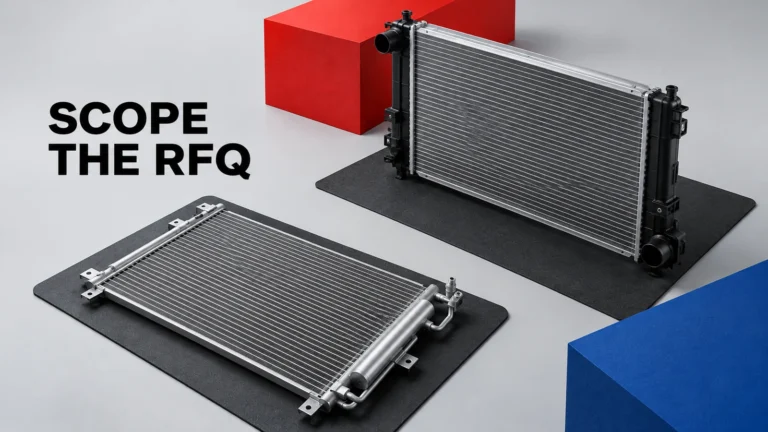
Most modern automotive radiators combine a metal core with tanks, headers, seals and mounting features. Aluminum is common for tubes and fins because it offers low mass and efficient heat transfer. Copper and brass designs are still found in some applications and repair contexts. Plastic tanks are also common and must be evaluated together with the crimp, gasket and mounting design.
Material is only one part of the specification
When comparing radiators, record core length, width and thickness, tube and fin design, tank material, inlet and outlet locations, transmission or oil-cooler provisions, sensor ports, drain features and mounting brackets. A material label cannot confirm capacity or fitment.
Aluminum versus copper and brass
Aluminum can reduce weight and support compact packaging. Copper and brass may be selected for specific legacy applications or repair practices. The correct choice depends on the vehicle’s cooling package, corrosion control, joining method and service requirements. Ask for the supplier’s stated material and construction rather than assuming from appearance.
Questions for a radiator RFQ
- What vehicle, engine and transmission configuration is required?
- Are the tanks, brackets, fan shroud and cooler fittings included?
- What leak-test pressure and method were used?
- Which drawing and OE references control the quoted version?
- How are fins, necks and mounting points protected in export packing?
Review the Cooling & A/C range and send the application record for a quotation. Performance and fitment must be confirmed against the vehicle and the supplied specification.