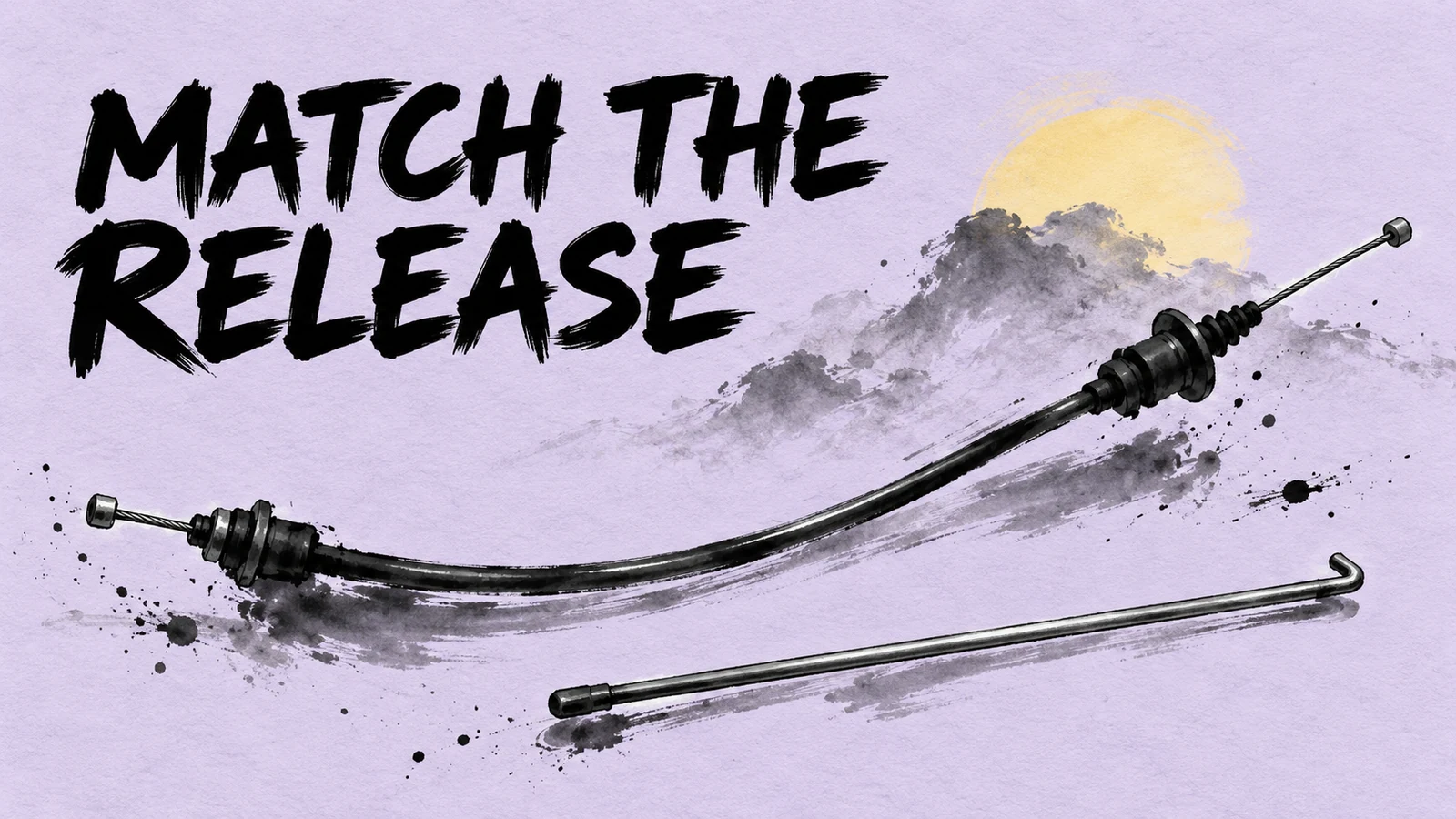
Identify which release connection the customer needs
A door-parts inquiry may refer to a release cable, a rod, a latch assembly or a smaller attachment component. Start by identifying the actual requested unit. Keep its location and connection role attached to the reference rather than reducing the inquiry to a generic cable description.
Record the vehicle market, model, build interval, door position and equipment qualifiers required by the applicable catalog. Ask the customer for the original component label or reference and clear photographs of the relevant connection areas. These inputs help the supplier explain what it proposes to supply.
Do not diagnose the customer's complaint from the name of a connection. A handle that does not produce the expected response is an observation for qualified service review. The sourcing record should identify the supported replacement request rather than assuming the cable, rod or latch is responsible.
Compare cables and rods as documented assemblies
Use the actual documentation to establish whether the requested connection is described as a cable assembly, a rod or another component. Preserve the applicable end, support and attachment information. A drawing or source-linked catalog entry is more useful than an unsupported general statement that one type will replace another.
For a cable offer, ask which parts of the cable assembly are supplied and which attachment features are included. For a rod offer, request the relevant end and retention details. Do not treat either category as having one universal connection arrangement.
A photograph can show visible shape and locate a component label. It does not establish the required movement, adjustment range, material specification or suitability of an attachment. Keep the observation beside the relevant document and list any unanswered interface question.
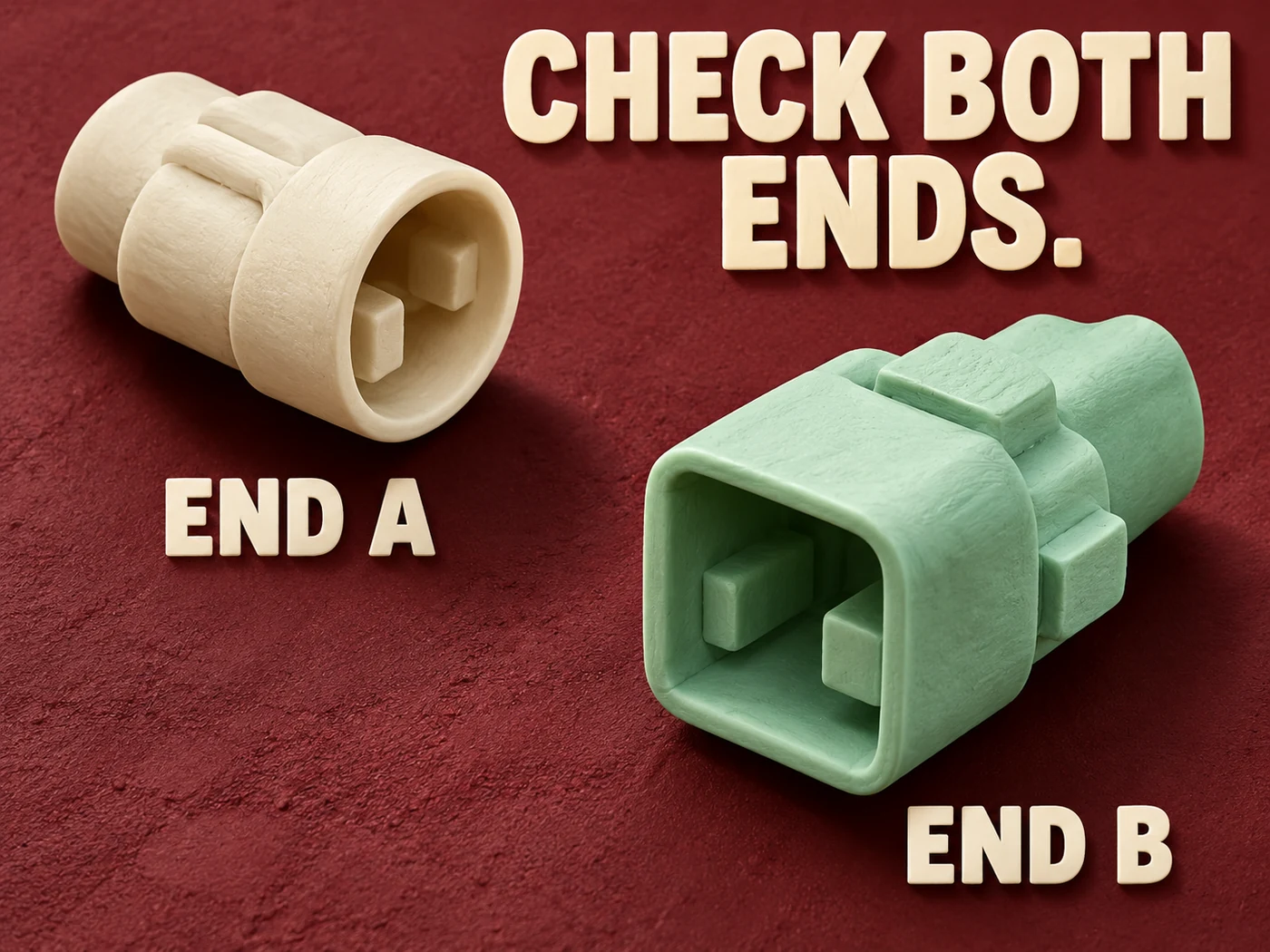
Review both ends instead of one familiar fitting
The supplier should address each end of the requested component. Record the documented end type, mating interface and applicable retention details separately. A familiar-looking end on one side cannot establish that the other side fits the intended arrangement.
A bounded catalog example illustrates the information to request. Dorman's official 912-604 cable entry lists different descriptions for its two ends: a retainer at one end and a ball/cylinder at the other. Those fields describe that catalog entry only. They are not specifications for a MAKEXCAR unit or evidence of interchangeability.
The example matters because a short product title cannot preserve every interface. Ask the supplier to connect its end descriptions to the offered SKU and the relevant drawing. If the drawing uses end identifiers, retain those identifiers rather than renaming them according to an unmarked photograph.
Do not infer retention from color or an apparently similar clip. Record the visible part as an observation, then request its documented role and supply scope. This article does not recommend bending a rod, modifying an end or substituting a generic retainer.
Include support and attachment features in the inquiry
A cable's inquiry should preserve the relevant housing and support information as well as its end descriptions. Ask which documented attachment points and seating features apply to the proposed assembly. Missing information should remain open rather than disappearing behind a matching length.
Keep any bracket or retainer statement explicit. A product photograph can include a component that is not supplied with the offer. Request a written contents statement and distinguish the quoted assembly from vehicle components expected to be retained.
For a rod, ask for the documented end geometry and applicable retention information. Do not assume a visible bend can be changed without affecting the intended interface. The relevant application information should establish the proposed part, not a workshop alteration intended to force a resemblance.
Use length data with a defined measurement basis
Length is useful only when the compared records describe the same quantity. Request the source's definition and reference points. The buyer should distinguish an overall dimension, a defined component dimension and any other documented measure rather than grouping them under one unspecified length field.
The Dorman 912-604 entry lists a length of 18 inches. Using the exact unit relationship of 25.4 millimeters per inch, 18 × 25.4 = 457.2 millimeters. This is a conversion of that published catalog number, not a measurement of a MAKEXCAR component or a confirmed end-to-end definition.
The conversion does not add accuracy to the original record. Do not present 457.2 millimeters as a newly measured tolerance or claim that a candidate with that number is interchangeable. The underlying dimension definition and application evidence still need to match.
| Length record | Value or question | What it establishes |
|---|---|---|
| Dorman 912-604 catalog length | 18 in | Published value for that entry |
| Unit conversion of the same number | 18 × 25.4 = 457.2 mm | Equivalent units, not a new measurement |
| Measurement reference points | Request the applicable definition | Whether compared records use the same basis |
| Offered MAKEXCAR SKU | Request its actual documented data | No specification transferred from the example |
If a customer provides a ruler photograph, retain the image and its stated method. An approximate reading can help describe the question, but it should not replace a dimensioned source when the interface decision depends on defined reference points or tolerances.
Keep movement and adjustment questions separate
An overall length does not answer every functional question. If the application review requires movement or adjustment information, ask for the relevant documented quantity and its conditions. Do not invent a required stroke or an acceptable adjustment range from a photograph.
The supplier's answer should identify whether the proposed assembly is supplied in a defined configuration and what information governs its application. Preserve any stated exclusions. A general statement that a cable is adjustable does not establish an approved range or make it suitable for every related vehicle.
This article provides no universal adjustment sequence, routing instruction or retainer-release method. Those decisions belong to the applicable part and vehicle information. The purchasing task is to obtain enough documented interface evidence for a qualified review.

Connect each RFQ field to a decision
Use the worksheet to establish what the supplier can support for its offered unit. The reason column explains why a matching name or length is insufficient. These are editorial procurement recommendations, not an engineering standard or installation checklist.
| Field to retain | Why it changes the comparison | Next request if unresolved |
|---|---|---|
| Application and requested unit | Door position and assembly scope distinguish superficially similar offers. | Request the source-linked application basis and written contents. |
| End A and End B | One familiar fitting does not establish the opposite mating interface. | Request both documented end details with drawing identifiers. |
| Supports and retainers | A photographed accessory may be excluded from supply. | Separate included attachment pieces from retained vehicle parts. |
| Length value, units and reference points | Equal numbers can describe different measured quantities. | Ask for the dimension definition and relevant drawing revision. |
| Offer reference and document version | An earlier interface answer may not cover a changed assembly. | Confirm which SKU and quotation the evidence supports. |
Keep unknown fields visible rather than treating a priced offer as an approved replacement. When the supplier answers a field, record the cited document and its version beside the answer. A family-level explanation should remain a family explanation until it is connected to the proposed unit.
A workable comparison uses the same quantity and scope in each column. If one supplier provides an overall length and another gives a differently defined component dimension, leave the length comparison unresolved. Converting both numbers to millimeters cannot repair a difference in reference points.
Compare the supplied scope before comparing price
Ask each supplier to answer the same worksheet against its offered unit. One price may cover a complete cable assembly; another may refer to a smaller connection component. Preserve that scope difference before treating the quotations as comparable.
Keep brackets, retainers and any excluded pieces visible in the order description. Do not assume that a photographed accessory or a part shown beside the cable is included. The accepted contents statement should identify the actual supplied unit.
If the supplier changes the proposed SKU or drawing revision, ask whether the earlier interface answer still applies. Connect the current quotation to the current evidence. A copied length or end description should not silently follow a changed assembly.
Record receiving discrepancies against the accepted evidence
At receiving, compare the label, SKU, supplied contents and visible end features with the accepted order record. Preserve a missing retainer, different end shape or unexplained length description as a specific discrepancy. Clear photographs help the supplier identify which question needs an answer.
Receiving identity does not replace application or service approval. Do not modify the delivered unit to conceal a mismatch. Refer the actual component and documentation to the qualified review responsible for the replacement requirement.
Resolve three incomplete connection offers
Equal converted lengths, different dimension definitions
In this hypothetical case, one offer gives a length in inches and another gives a millimeter value that looks equal after conversion. Only one record identifies its reference points. Ask the second supplier for its dimension definition before comparing the numbers. The arithmetic can be correct while the purchasing comparison is still incomplete.
A clear first end and an undocumented second end
A hypothetical photograph clearly shows one familiar fitting but hides the opposite connection. Request the missing end view and the applicable drawing identifier. Keep the documented end description separate from the photograph's visible appearance. A confirmed End A does not close the End B question.
A pictured retainer is absent from the quotation
A hypothetical catalog image shows a retainer beside the assembly, while the quoted contents do not mention it. Ask whether that piece is included, excluded or shown only as a reference. Record the answer against the current offer before comparing prices or ordering. Do not substitute a generic clip to make the scope appear complete.
Send a fillable release-connection inquiry
Start with the relevant Door Locks & Actuators category. Send these fields through Contact MAKEXCAR, replacing brackets with available records and marking missing information unknown.
Application and location: [vehicle market, model, build qualifiers, door position and catalog basis].
Requested scope: [cable, rod, complete assembly or attachment component; original reference and quantity].
Both connections: [End A and End B identifiers, clear photographs and source-linked interface descriptions].
Attachments and dimensions: [included supports and retainers, length value, units, reference points and drawing revision].
Reply requested: [offered SKU, current contents statement and the specific unresolved end, scope or dimension question].
Keep the supplier's answer connected to its quoted reference. Ask for a revised confirmation if the assembly or document version changes. This provides a traceable purchasing record without treating a generic catalog example, converted length or visible resemblance as application approval.