Start with the claim and the exact specimen
Write down precisely what the supplier claims. “Completed a cycle test” and “met the specified performance limits after cycling” are different statements. The first may describe an event; the second refers to an evaluation against limits. Neither statement tells you which configuration was tested unless the report connects it to a part number and revision.
Identify the offered shock absorber, its recorded position, the quoted design revision and the sample or batch designation. Ask whether the tested specimen corresponds to that configuration or to another member of a product family. If the supplier provides a family report, request the explanation for applying it to the offered item. A similar photograph is not that explanation.
Keep the commercial reference and the test reference in separate fields. The catalog helps locate the item; the report establishes the scope of the durability evidence. Mixing these fields makes a valid report for one configuration appear to support every part sharing an application label.
Connect the durability report to the offered reference
Use the exact item in the MAKEXCAR Shock Absorbers category when requesting a durability report. A position label and product photograph help identify the inquiry; they do not define the tested specimen or schedule. Keep the product reference, drawing revision and test-sample mapping on the quotation line.
If a report is proposed for several commercial references, request the stated coverage and its basis for each offered configuration. Shared category or position wording does not establish a common design or result. Keep any uncovered member as an open evidence question rather than assigning it a passing outcome from another item.
A durability schedule is more than a cycle total
MTS's damper-testing software overview identifies separate functions for cycle counts, specimen-temperature monitoring, performance results and result limits. It describes configurable waveforms and test conditions rather than one universal durability program. These equipment capabilities provide context for reading a report; they do not establish the conditions used on a MAKEXCAR item or certify its retained performance.
Request the actual schedule used for the offered configuration. Look for the displacement definition, frequency or speed information, waveform, stage sequence and completed cycles at each stage. If a report uses amplitude, establish whether that means movement from the centre to an extreme or a total travel range. Preserve the author's definition rather than silently converting a cropped number.
A summary with “cycles passed” may omit the conditions that distinguish a demanding stage from a different stage. Keep the complete stage table and its notes. Ask how interruptions, restarts and incomplete stages were recorded. Do not add nominal stage counts when the report identifies only partially completed work.
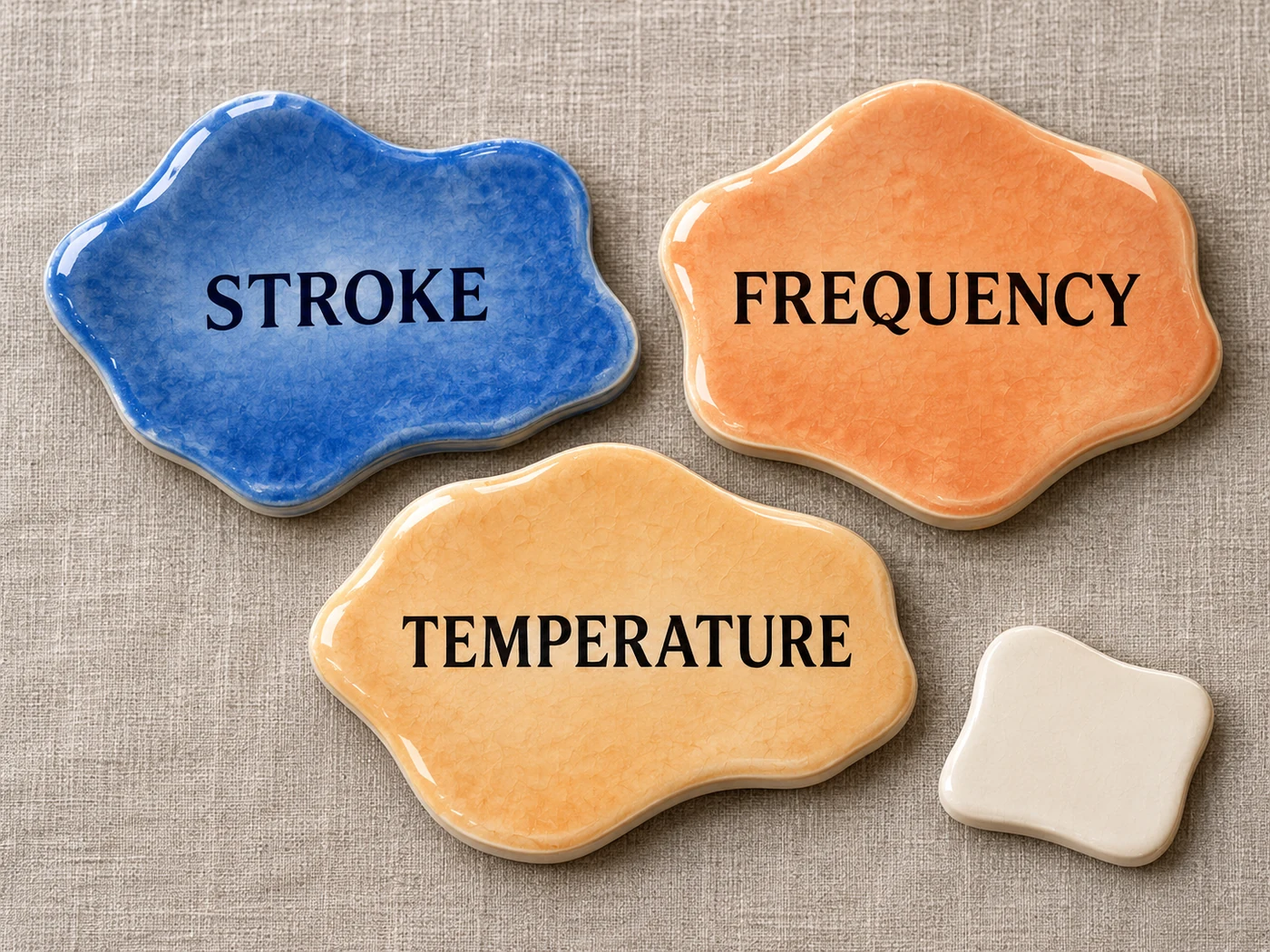
Use a stage-and-result worksheet
Retain the completed schedule and performance results together. A buyer can use these fields to request the exact missing report pages instead of asking only for a larger headline count.
| Field | Why it matters | Action if unresolved |
|---|---|---|
| Specimen/configuration mapping | Identifies what was tested and offered | Request sample identifiers and coverage for each quotation reference |
| Stage movement definition | Explains what one cycle represents | Obtain displacement/waveform/frequency definitions and stage sequence |
| Completed counts and interruptions | Separates planned from executed work | Request completed totals, restart notes and per-sample status |
| Recorded conditions | Defines the basis of the run and performance checks | Obtain temperature/mounting/measurement notes relevant to the result |
| Before/after results and limits | Connects retained performance to its decision rule | Request comparable measurement points and the applicable criterion |
A hypothetical comparison: equal counts, different schedules
Consider two invented report summaries, used solely to illustrate document review. Report A records 120,000 completed cycles at 2 Hz. Report B records 120,000 completed cycles at 4 Hz. These numbers are not measurements, specifications or recommended settings for any catalog item.
| Illustrative record | Completed cycles | Constant frequency assumed | Calculated cycling time |
|---|---|---|---|
| Hypothetical A | 120,000 | 2 cycles per second | 60,000 seconds, about 16.67 hours |
| Hypothetical B | 120,000 | 4 cycles per second | 30,000 seconds, about 8.33 hours |
The calculation is cycles divided by cycles per second. It assumes uninterrupted cycling at the stated constant frequency and excludes pauses or other stages. Doubling the frequency halves the calculated cycling time in this example. It does not show that B is twice as severe, twice as durable or equivalent to A.
The summaries still omit displacement, waveform, temperature and acceptance limits. Even equal cycle totals and equal calculated time would not resolve those omissions. Use the arithmetic to check the internal consistency of a supplied record, not to rank durability from a headline.
Find the before-and-after performance evidence
Ask what was evaluated before cycling, during any intermediate checks and after the completed schedule. Retained performance needs a defined comparison: which measured characteristic, which operating point, which unit and which permitted range? A final photograph of an intact component does not answer every performance question.
Keep compression and rebound results identifiable if the report separates them. Match each result to its stated measurement conditions and the applicable acceptance criterion. Do not compare a force value at one operating point with a value recorded under a different condition simply because both use newtons.
Request the report's conclusion as well as its supporting results. If it says “pass,” locate the criterion that produced that decision. If the criterion is absent, record the result as a reported conclusion with unresolved limits rather than inventing an acceptable percentage change. This keeps purchasing review distinct from an unsupported engineering approval.
Check temperature, specimen handling and interruptions
Ask for the temperature conditions stated in the method and the temperature information actually recorded. A method requirement and an observed result are separate pieces of evidence. Preserve any explanation of excursions, cooling arrangements or invalidated portions of the run that affects the report's conclusion.
The review should also identify specimen orientation, mounting description and relevant preparation as documented by the laboratory. Do not reconstruct a test setup from a marketing photograph. Where a condition is missing, request clarification from the report author rather than assuming that an equipment capability proves the specimen experienced that condition.
Look for dated amendments and the report's revision history. An amended stage count or corrected specimen number should be traceable to the final conclusion. Keep the original limitation visible when a supplier sends only a screenshot of the revised result.

Keep specimen counts separate from movement counts
Check how many physical samples the report covers. A count of repeated movements is not a count of independent specimens. Record each sample identifier, whether it completed the program and whether its result satisfied the stated criterion. Do not silently treat a total across several samples as the completed count for every sample.
If the report summarizes a group, request the individual results or the explanation for the summary. Include any excluded or interrupted specimens in the review notes. A passing result for the tested set should retain that set's scope; it does not, by itself, establish a numerical reliability rate for every future shipment.
Do not translate cycles into road kilometres
A laboratory cycle is a movement defined by a test program. A road kilometre is a distance travelled in a vehicle under conditions that the cycle count alone does not describe. A bare count contains no established conversion factor between these quantities.
If a supplier presents a distance claim derived from a test, ask for the specific validation linking that program to the stated vehicle use. Keep the population, route or duty assumptions and exclusions with the claim. Without that evidence, retain the report as laboratory-cycle evidence and leave the road-distance conclusion unresolved.
Likewise, a cycle test does not automatically establish a warranty period or a maintenance interval. Those statements require their own applicable terms and support. The purchasing comparison becomes clearer when durability evidence, application verification and commercial warranty are three separate records.
Keep receiving observations in their own record
Record the sample received, its visible condition, its identification marks and the documents accompanying it. If the receiving team makes an informal observation, label who recorded it and what was actually observed. Do not present that note as a measured durability result or merge it into the laboratory's conclusion.
A report can remain incomplete even when the received sample looks intact. Conversely, a discrepancy in the received reference requires clarification even when the report contains a passing conclusion. Keeping the observation and laboratory records distinct makes it easier to identify whether the unanswered question concerns identity, condition, test coverage or the acceptance criterion.
Three incomplete durability submissions and the next request
The certificate lists a total but no stage table
Request the completed-stage record and its movement definitions. Ask whether the total is planned or executed, how interruptions were handled and which sample each count covers. Keep the certificate's reported claim while marking its schedule basis unresolved. Do not fill in displacement or frequency from another supplier's report to make the comparison look equivalent.
The specimen completed cycling but no after-test data is supplied
Separate completion from retained-performance evaluation. Request the measured characteristic, operating point and criterion used before and after the program. An intact photograph may support a visible-condition observation but does not close every damping-performance question. If the report only documents completion, retain that narrower scope rather than adding a performance pass.
A group total is presented as the count for every sample
Ask for individual sample identifiers, completed counts and results. Identify excluded or interrupted specimens in the review record. A combined total does not show that each sample completed that same total. Keep the tested set's scope visible, and do not turn its results into a population reliability percentage without applicable evidence.
These are editorial report-review examples, not actual MAKEXCAR test findings or customer incidents. They help identify missing evidence without prescribing a damper test program, universal cycle target or road-distance conversion.
Build the quotation request around the missing evidence
Send MAKEXCAR a sourcing inquiry with the exact claim and available report. These five fields make the durability request specific:
Offered item: [reference], [required position/application identification], [design revision], [quantity].
Specimen mapping: [sample identifiers], [tested configuration], [scope covering each offered reference].
Completed program: [stage schedule], [movement definitions], [completed counts], [interruptions/restarts or excluded samples].
Evaluation evidence: [before/after results], [same measurement conditions], [reported temperature/handling notes], [acceptance criteria].
Decision requested: [which claim needs support], [missing report pages], [separate road-distance/warranty/application questions].
Keep the clarification with the original report and quotation. A useful durability comparison identifies the work actually completed and the evidence supporting its stated result. It should not carry an unsupported cycle count or service-distance promise into the purchase record merely because the certificate presents a large number.