Start with the decision the inspection must support
Incoming inspection can address identity, quantity, packaging, specified dimensions or other agreed requirements. Those checks may use different units and methods. A carton count answers a different question from a dimensional check of individual parts. Before asking an inspector to select a sample, state the requirement and the decision that the record is expected to support.
The buyer and supplier should agree the applicable inspection arrangement for the actual order. This article explains how to make its scope readable; it does not select an AQL value, reproduce a sampling table or create acceptance limits for an unspecified product. Technical and contractual requirements remain the basis for choosing and approving an appropriate plan.
Identify the goods before defining the lot
Connect each inspection population to an identified item and specification revision. The MAKEXCAR Engine & Ignition family provides product-enquiry context; its catalog records do not supply inspection lots or quality results. A shared product family does not explain why different items would belong to the same approved lot.
Where an order contains several SKUs, keep their quantities and configurations distinct in the receiving list. A combined pass count can hide which item was actually inspected. The reviewer needs the relationship between the inspected population and the goods awaiting disposition, rather than another table of unrelated catalog references.
Make the lot boundary explicit
State the lot identifier, its size and the records used to define its boundaries. Depending on the agreed arrangement, the boundary may involve an item, revision, production batch or delivery. A shipment is a logistics grouping and may contain goods from several production lots. Conversely, one production lot may arrive in separate deliveries. Record the relationship instead of assuming those groupings are identical.
If the inspector cannot connect the goods to the proposed lot definition, resolve that uncertainty before applying the planned sample. Labels, production records and delivery documentation may help establish identity, but the buyer should ask which evidence is actually available. Do not invent a manufacturing date or batch number because a report form contains a mandatory box.
Define what counts as one sampling unit
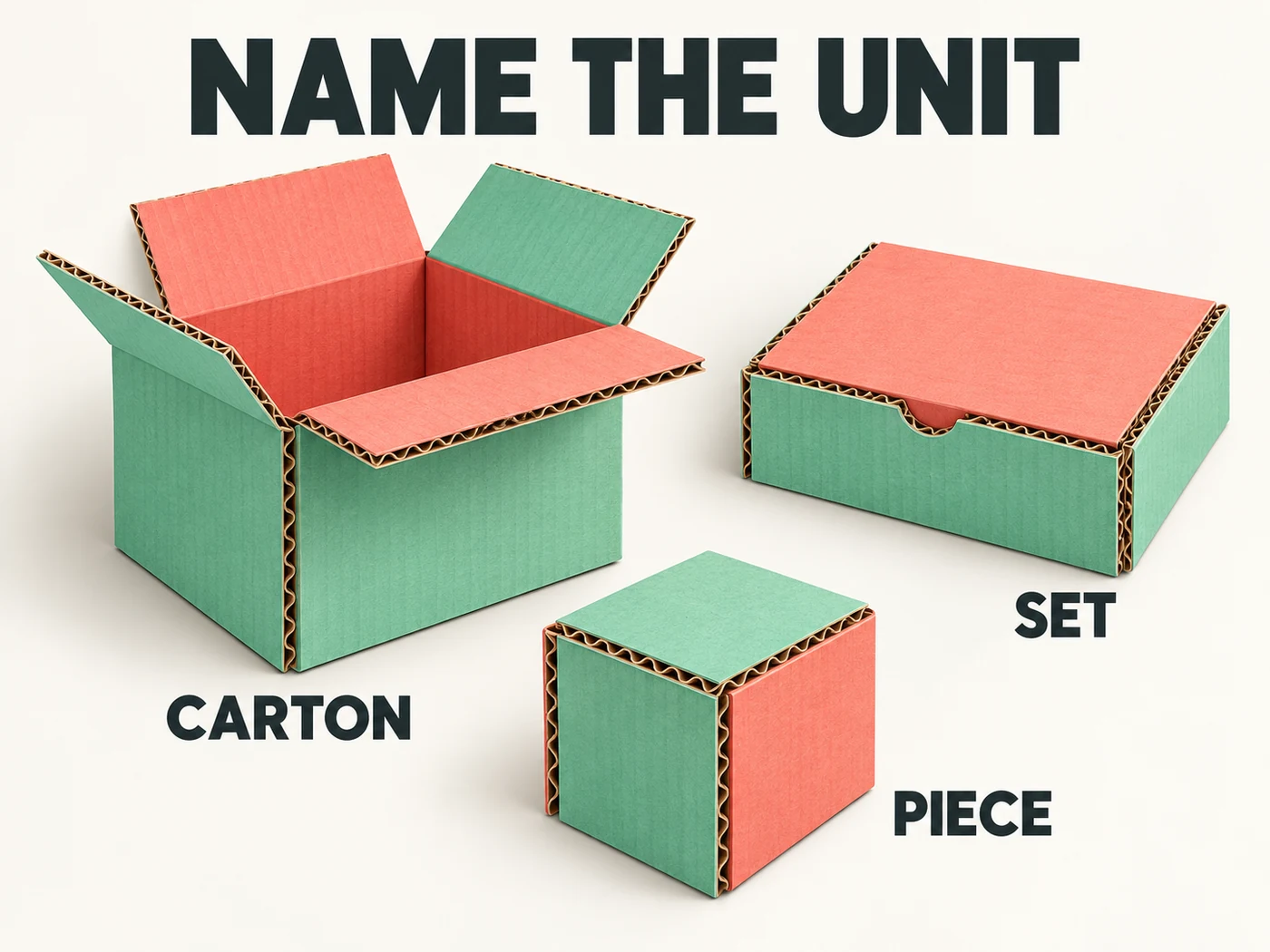
A sampling unit could be one individual part, one packaged set or another expressly defined unit. Explain which definition applies to each check. If a carton contains ten individually packaged parts, inspecting one carton does not necessarily mean that all ten parts received the same inspection. Report carton selection and piece inspection separately where both are relevant.
Sets need particular care. A pair of parts may be sold as a set while each component has its own identification and characteristics. Specify whether conformity is judged for the complete set, each component or both. The denominator in the report should follow that definition, rather than changing midway between counting sets and counting pieces.
Keep the sampling plan separate from the sample result
NIST's acceptance-sampling explanation describes selecting a random sample from a lot and using its observations for a lot-disposition decision. It also distinguishes this purpose from estimating the lot's quality. That principle does not provide a ready-made plan for a particular MAKEXCAR product or guarantee an uninspected population.
Record the approved plan reference and the acceptance basis alongside the sample size. The record should identify the checks, selection method and authorized decision rules. If the parties use a named standard, confirm the edition and the applicable plan through their qualified quality personnel. A bare notation such as “AQL inspection” leaves essential choices unresolved.
Keep the plan that was approved before inspection distinct from the result observed afterward. Changing a rule simply because the sample failed undermines the meaning of the original decision. Any authorized departure should be identified and reviewed as such, rather than silently incorporated into a report that appears to follow the original plan.
Count defects and nonconforming units carefully
Consider a wholly hypothetical inspection of 20 individual pieces. One piece has two recorded defects and another piece has one. The record contains three defects across two nonconforming pieces. Three divided by 20 gives 0.15 defects per inspected piece; two divided by 20 gives 10% nonconforming pieces in this sample. These are different quantities.
| Hypothetical observation | Calculation | Meaning |
|---|---|---|
| Three defects in twenty pieces | 3 ÷ 20 = 0.15 | Defects per inspected piece |
| Two nonconforming pieces in twenty | 2 ÷ 20 = 10% | Sample nonconforming-piece proportion |
| Lot disposition | Not calculated from these numbers alone | Requires the approved plan and scope |
These invented numbers are not MAKEXCAR results, a recommended sample size or an acceptance threshold. They do not establish the true proportion in the uninspected lot. If defect categories are used, define them from the agreed requirements and avoid treating a severity label as a universal rule for all products.

Show how the sample was obtained
A report should identify how selected units were connected to the defined lot. Ask how the approved selection method was implemented and whether all relevant goods were available. Taking the easiest accessible pieces may not follow the intended method. If cartons or storage locations limited access, record that limitation for the reviewer instead of describing the selection as unrestricted.
Retain enough unit or container identification to connect observations to the selected goods. That may use the agreed carton markings, sample labels or inspection record references. Do not claim serial traceability if the goods do not carry serial identifiers. The record should describe the identification that actually exists.
Record the method and the requirement together
For a dimensional observation, identify the feature, specified limit, unit and measurement method. For an identity check, record the required reference and the observed marking. A pass/fail column without the applicable requirement makes it difficult for another reviewer to understand the decision. Attach the governing drawing or specification revision where appropriate.
Distinguish an observation from an interpretation. A measured value, damaged package or mismatched label is an observation. Whether it violates the agreed requirement and how that affects disposition are decisions made on an identified basis. Photographs can support a record, but a photograph alone may not reveal a dimension, material property or functional performance.
Resolve scope mismatches before applying a result
If a report counts cartons while the requirement concerns individual parts, identify which parts within the selected cartons were examined. Do not multiply the carton count by its contents and describe that total as inspected pieces unless those pieces received the stated checks. Container selection and piece observation need their own fields.
If a supplier summary reports defects and the buyer worksheet counts nonconforming units, recover the unit-level observations before translating the result. Several defects can belong to one piece, so the totals are not interchangeable. Where the observations do not permit that reconstruction, retain the original metric and mark the requested count outstanding.
If the inspected population excludes a delivery portion that receiving wants to release, the report does not automatically expand to cover it. Record the excluded portion and refer the scope question to the authorized reviewer. This protects the meaning of the original evidence without assuming either conformity or nonconformity of goods that were outside the defined review.
Handle exclusions and follow-up decisions openly
Identify checks that were not performed and the reason. Destructive tests, specialist equipment or unresolved documentation may require a separate arrangement. A report covering visual and identity checks should not be presented as comprehensive functional verification. Keep additional test evidence linked to the same applicable configuration and supply scope.
If a lot requires further review, record its disposition and who authorized the next step. Reinspection, sorting or another action should follow the agreed quality process. Keep the original observations available and distinguish later results. Combining them into a new clean report without explanation can obscure what happened and which goods each decision covered.
Keep mixed cartons visible in the record
If several SKUs share an outer carton, identify the quantity and inner packaging for each item. A selected outer carton may contain multiple sampling populations. The inspector should be able to tell which individual goods contributed to each recorded result. Do not combine a fuel-pump identity observation and an ignition-coil packaging observation into one unexplained pass count.
When an inspected unit is removed for testing or retained as a reference, record that movement so the received quantity remains understandable. State whether the retained unit belongs to the released goods, a separate sample arrangement or another agreed disposition. This is an inventory and evidence question; it does not prescribe a destructive-test quantity or require every order to use the same retention practice.
Make the receiving handover usable
Receiving staff need a disposition that can be connected to the physical goods. Use the following handover fields with the inspection report. Each field closes a different scope question; an unexplained pass checkbox cannot do that work.
| Handover field | Why receiving needs it | Action if unresolved |
|---|---|---|
| Lot and order references | Identifies the population covered | Keep another delivery or revision outside that release |
| Sampling unit and inspected quantity | Explains whether the count means pieces, sets or containers | Resolve denominator before interpreting percentages |
| Plan and requirement revisions | Identifies the approved decision basis | Return an undocumented rule to the quality reviewer |
| Checks performed and exclusions | Shows which characteristics were examined | Do not label a visual result as functional verification |
| Disposition and authorizing role | Shows what receiving may do with the defined goods | Retain goods status under the agreed process until authorization |
| Retained units and follow-up record | Reconciles sample movement with the delivery record | Link removed samples and later results to their original scope |
For repeated deliveries, review the fields affected by a change in configuration, packaging or lot definition. Reusing the old plan reference may be appropriate only if the responsible quality reviewer establishes continuing applicability. Copying a previous sample quantity alone does not document that review.
Send the inspection basis with the RFQ
Use the following fillable entries in an enquiry through the MAKEXCAR contact page. Attach the proposed inspection basis and identify any item awaiting quality review. Do not insert an AQL value or acceptance number solely to complete the form.
| Enquiry entry | Buyer information |
|---|---|
| Goods and population | [SKU, revision, order quantity and proposed lot boundary] |
| Sampling unit and counts | [Piece/set/container definition; defects or nonconforming units] |
| Approved basis | [Plan reference, edition and applicable requirements] |
| Required report scope | [Checks, exclusions, selected-unit identification and disposition record] |
| Decision responsibility | [Quality reviewer and receiving handover contact] |
The useful response connects the supplied goods, selected units, observations and approved decision rules. That connection allows a reviewer to understand a disposition without assuming that a percentage proves the uninspected lot's quality. Keep the final inspection record and its population definition with the order evidence.