Name the two dimensions before comparing numbers
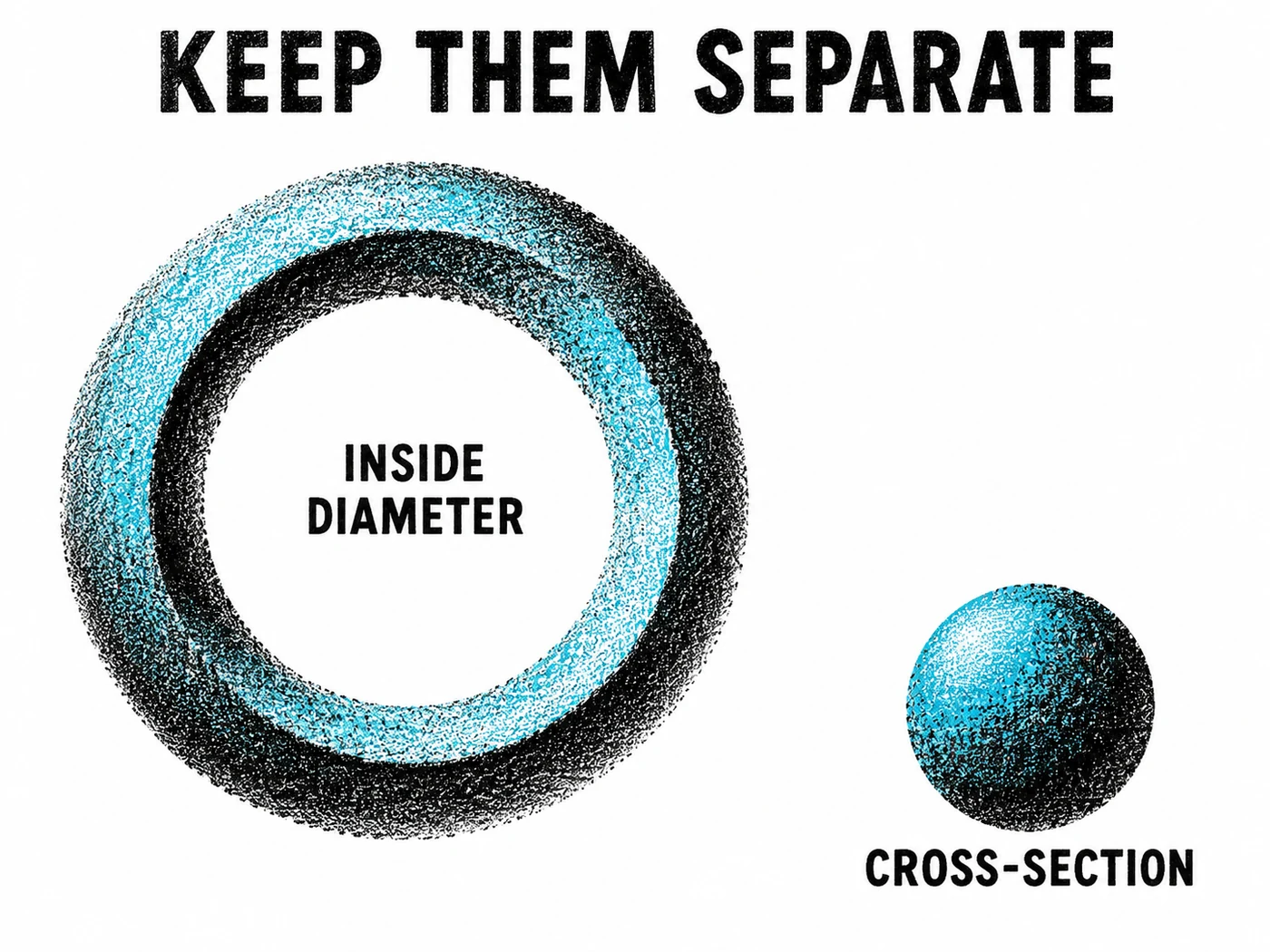
The inside diameter describes the opening inside the ring. The cross-section describes the thickness of its circular section in the dimensional context used here. They answer different questions. A supplier needs to know which value belongs to which field before it can investigate whether an offered size matches the requested record.
Trelleborg's O-Rings and Back-up Rings catalog, June 2024 edition, defines O-ring dimensions through inside diameter d1 and cross-section d2 in its general information section, page 27, Figure 1. This supports the distinction between those fields. It does not establish a size or material for a MAKEXCAR seal.
Preserve the labels used by the applicable drawing. If a supplier uses different symbols, record the meaning alongside the symbol rather than assuming that d1 or d2 always means the same thing in every document. A clearly labelled value is more useful than a compact code whose dimensional order has not been confirmed.
Why a single outside diameter can leave the size unresolved
An outside diameter describes another aspect of the ring's geometry. For an ideal circular ring with a circular cross-section, its outside diameter equals the inside diameter plus twice the cross-section. This simple relationship explains a purchasing ambiguity: different inside-diameter and cross-section combinations can produce the same outside diameter.
Consider two hypothetical dimensional descriptions. The values below are invented for explanation, not measured samples or catalog specifications. The example assumes ideal, undeformed circular geometry and uses millimeters throughout. It does not define an allowable O-ring, a groove dimension, or an acceptance tolerance.
| Hypothetical ring | Inside diameter | Cross-section | Calculated outside diameter |
|---|---|---|---|
| A | 12 mm | 2 mm | 12 + 2 × 2 = 16 mm |
| B | 10 mm | 3 mm | 10 + 2 × 3 = 16 mm |
Both calculated outside diameters are 16 mm, while the two specified dimensions differ. That equality does not make the rings interchangeable. The illustration shows only why an outside-diameter number cannot uniquely identify both required fields. Actual suitability also needs the applicable sealing interface, material and technical requirements.
Do not use this equation to estimate a replacement from a distorted used ring or a perspective photograph. A used sample can be an observation for investigation while leaving the original specification unresolved. Keep hypothetical geometry, sample measurements and drawing requirements separate in the purchasing record.
Record the condition and source of a measured sample
If the inquiry includes measurements, identify the sample, the person or record providing them, the units, and what was measured. State whether the sample is new, used, or of uncertain history. Do not present a sample observation as a production drawing value simply because it is written to several decimal places.
A measurement record should distinguish the inside-diameter observation from the cross-section observation. If only an outside diameter was recorded, say so. Do not relabel it as inside diameter to fit a spreadsheet column. The supplier should see the actual information available and the exact dimensional question that remains open.
Where the measurement method or sample condition affects interpretation, preserve that context for the technical reviewer. This article does not prescribe a universal measuring procedure or an acceptance threshold. The governing dimensional record should establish how observations are evaluated for the intended item.
Keep nominal values and tolerances together
A nominal dimension identifies a target within its specified context. The applicable tolerance defines the permitted variation in that context. Retain both when the drawing provides them. Do not invent a tolerance from the number of digits in a supplier email or from the resolution of a measuring instrument.
If a quotation names only nominal inside diameter and cross-section, ask which specification or drawing defines their tolerances. Preserve the reference and revision with the order. A similar nominal size under a different governing record should not be accepted as equivalent without the relevant technical comparison.
Keep original units when discussing alternatives. A conversion can help communication, but a rounded converted value is not automatically an orderable size or an acceptance limit. If a supplier proposes a standard size, request its complete designation and supporting record rather than choosing the closest number from an unrelated chart.
Connect the ring dimensions to the intended seat
The ring's dimensional description and the intended sealing seat belong in related but separate records. Ask which application drawing identifies the groove or mating arrangement and which seal reference it calls for. Ring dimensions alone do not establish that the seat geometry is suitable.
Do not turn the hypothetical ring example into a groove calculation. The actual application may involve requirements that are not present in a simple free-ring dimensional description. The responsible technical record must establish the relevant geometry and acceptance criteria. Purchasing staff can request that record without calculating an unsupported installation dimension.
Similarly, a known seat does not independently identify a seal compound or its media suitability. Keep material and refrigerant or oil requirements visible alongside the dimensional inquiry. This article does not select a material, recommend stretching or compression, or provide assembly instructions.
Give each size field a source and a next action
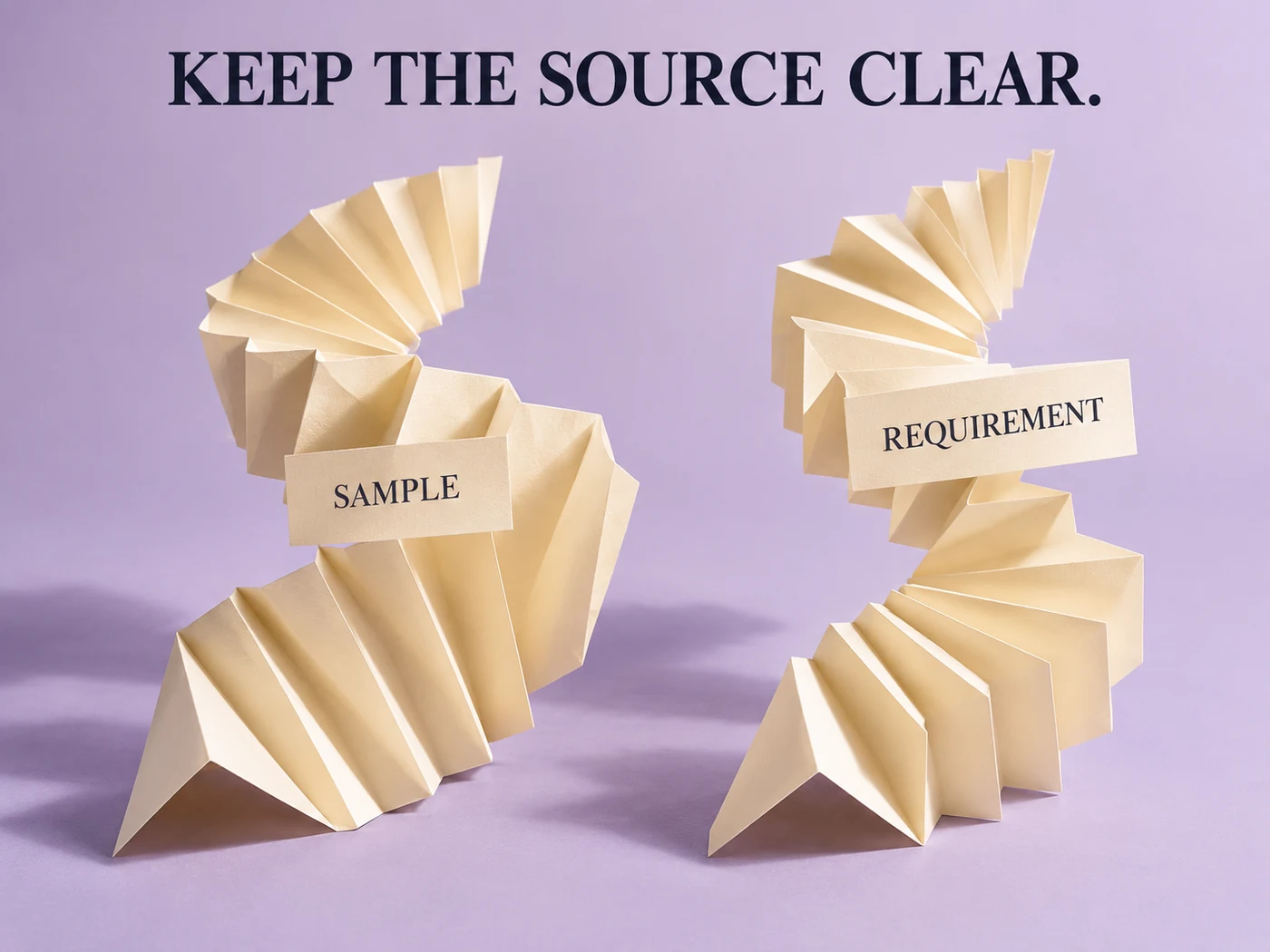
A size inquiry should separate the requirement from the sample observation and connect each value to its source. Use the following worksheet to identify what is still needed, rather than mark a ring suitable because both nominal numbers are present.
| Field to preserve | Why it matters | Action if unresolved |
|---|---|---|
| Seal reference and offered scope | Identifies which supplied ring is being discussed | Ask whether the fitting includes a documented seal |
| Inside diameter and cross-section, labelled separately | Prevents an outside diameter from filling either field | Request both values with original units |
| Nominal values, tolerances and document revision | Defines the governing dimensional requirement | Obtain the applicable specification instead of inferring limits from precision |
| Sample identity, condition and observation source | Separates a measured object from a drawing requirement | Label new/used/unknown status and request missing context |
| Seat record and material requirement | Connects ring dimensions to the intended sealing interface | Ask for applicable application and compound evidence |
This is an editorial purchasing aid, not an O-ring standard or approval form. A populated row shows that information was recorded. The responsible technical reviewer still determines whether it supports the application. Do not use the worksheet to invent groove geometry, compression or an installation method.
Keep an alternative proposal beside the original requirement. If both geometry and material change, record those changes separately. That makes it possible to ask about each difference rather than treat a new part number as a complete answer to the earlier dimensional inquiry.
Use the catalog reference without assigning a seal size
The current M30400628 fitting listing identifies a published A/C pipe-fitting reference. Its checked product body does not supply an O-ring inside diameter, cross-section, or seal specification for this article. The listing can anchor an inquiry while leaving those dimensional fields unresolved.
Ask whether a seal is included with the offered fitting and whether its identity is documented. Do not assume that a ring shown in a general photograph is the supplied part or that its apparent size establishes the dimensions. The supplier's written scope and applicable record should answer those questions.
The A/C Valves & Fittings category groups a sourcing family. It does not establish one common O-ring size across its products or a universal seal number across vehicles. Keep each candidate connected to its own reference and application.
Review a proposed size change explicitly
If a supplier proposes another inside diameter or cross-section, record both original and proposed values with their sources. Ask whether the proposed change is supported by the actual application record. A claim that the outside diameter is the same does not resolve the difference, as the hypothetical example demonstrates.
If the proposal changes the material, record that change separately from the dimensions. A combined substitution can otherwise hide behind a single revised part number. Keep the evidence for each changed field and identify the responsible technical conclusion before the commercial order is finalized.
At receipt, reconcile the delivered reference, declared contents and dimensional documents against the purchase order. Record visible discrepancies and the source of any sample observation. A receiving match does not establish installed sealing performance or replace the applicable qualified service verification.
Resolve three incomplete size descriptions
The supplier gives only an outside diameter
Ask for the separately labelled inside diameter and cross-section. The hypothetical16mm example above has two combinations, so the supplied outside value cannot fill the missing fields uniquely. Retain it as an outside-diameter statement rather than relabel it to complete the spreadsheet.
The buyer sends a photograph of a used seal
Record it as an identification observation and state its history if known. Ask for the original seal reference or applicable specification. Do not turn perspective appearance or a possibly distorted sample into a nominal production size. If measurements are supplied, keep their actual labels and source.
The proposed ring matches nominal dimensions but changes compound
Keep the dimensional match and material change as separate findings. Request the compound identity and applicable media/application evidence. Matching two numbers does not resolve the material question, and this article does not establish a universally suitable A/C seal compound.
Send a size inquiry that distinguishes requirement from observation
Use these fields with the current quotation, drawing or sample record. Identify missing entries so the supplier can investigate the specific sizing question.
Candidate: Fitting or seal reference, offered contents, intended application and quantity. Ask whether a seal is included and individually identified.
Dimensions: Inside diameter and cross-section as separately labelled fields, with original units. State explicitly if only outside diameter is known.
Requirement: Applicable drawing or specification number, revision, nominal values and tolerances where documented. Do not infer limits from decimal precision.
Observation: Sample identity, new/used/unknown condition, measurement source and photographs. Keep observed values separate from required values.
Application evidence: Relevant seat or mating record, documented material requirement and unresolved media-suitability questions. Explain any proposed dimensional or material substitution separately.
Contact MAKEXCAR with the inquiry and available records. Confirm what each size value represents before using an estimated ring size as the basis for an order.