Turn the label into a defined purchasing statement
“High carbon” can appear in a product description without a numerical definition or a referenced material specification. The buyer's first task is to establish the basis of the statement. Ask the supplier to identify the relevant specification, its revision and the exact product reference covered by it.
If the claim is comparative, ask what it is compared with. A statement that carbon content is higher needs an identified basis; it should not become an invented universal threshold. The quotation should distinguish a named product family's description from a requirement agreed for a particular supplied lot.
Write the requirement in a form another reviewer can follow. Preserve the supplier's wording, the defining document and any unresolved questions. Do not silently replace a vague phrase with a composition range taken from an unrelated internet example.
Connect the material claim to the quoted disc
Identify the proposed item in the MAKEXCAR Brake Discs category, then request the material statement for that exact reference. Dimensional data supports its own identity or drawing question; a diameter and height do not define the iron composition.
If the quotation covers several disc references, keep a material-document mapping for each item and supplied lot. A shared description does not establish one composition requirement for all items. Ask the supplier which document covers the high-carbon statement instead of filling a missing material field from another product's technical page.
Manufacturer context is useful when its boundaries remain visible
On its Prime rotor page, Brembo describes High Carbon discs in relation to its own cast-iron composition and production technology, including an increased carbon percentage. That manufacturer-specific description illustrates why the product family's source matters. It does not define a universal carbon threshold or establish that MAKEXCAR products share the same composition.
Do not transfer the page's damping, noise, ventilation or cracking claims to another supplier's disc. A material label is not permission to borrow an entire performance statement. If a quotation promises a particular outcome, request evidence for that outcome on the relevant finished product and application.
A procurement record can cite a manufacturer example as context while keeping the actual order requirement unresolved. The two records should remain visibly separate so a reader does not mistake background information for the supplied item's certificate.
A material grade and a carbon result answer different questions
The public scope of ASTM A48/A48M-22 describes general-engineering gray iron castings classified by tensile strength in separately cast test bars. It treats chemical composition as subordinate to tensile strength and notes that casting-section strength can differ from coupon values. Only that public scope is used here; the full standard has not been reviewed.
This is an example of why a grade's definition must be read rather than guessed. It is not a declaration that a MAKEXCAR disc conforms to ASTM A48/A48M-22, nor a recommendation to choose that standard for a particular brake disc. It does not supply a high-carbon purchasing threshold.
When a supplier names a grade, ask which properties and acceptance basis it defines. When the supplier provides carbon analysis, ask which material sample was analyzed and which agreed requirement the result addresses. One document should not be substituted for the other simply because both concern material.
Read the composition report as a traceable record
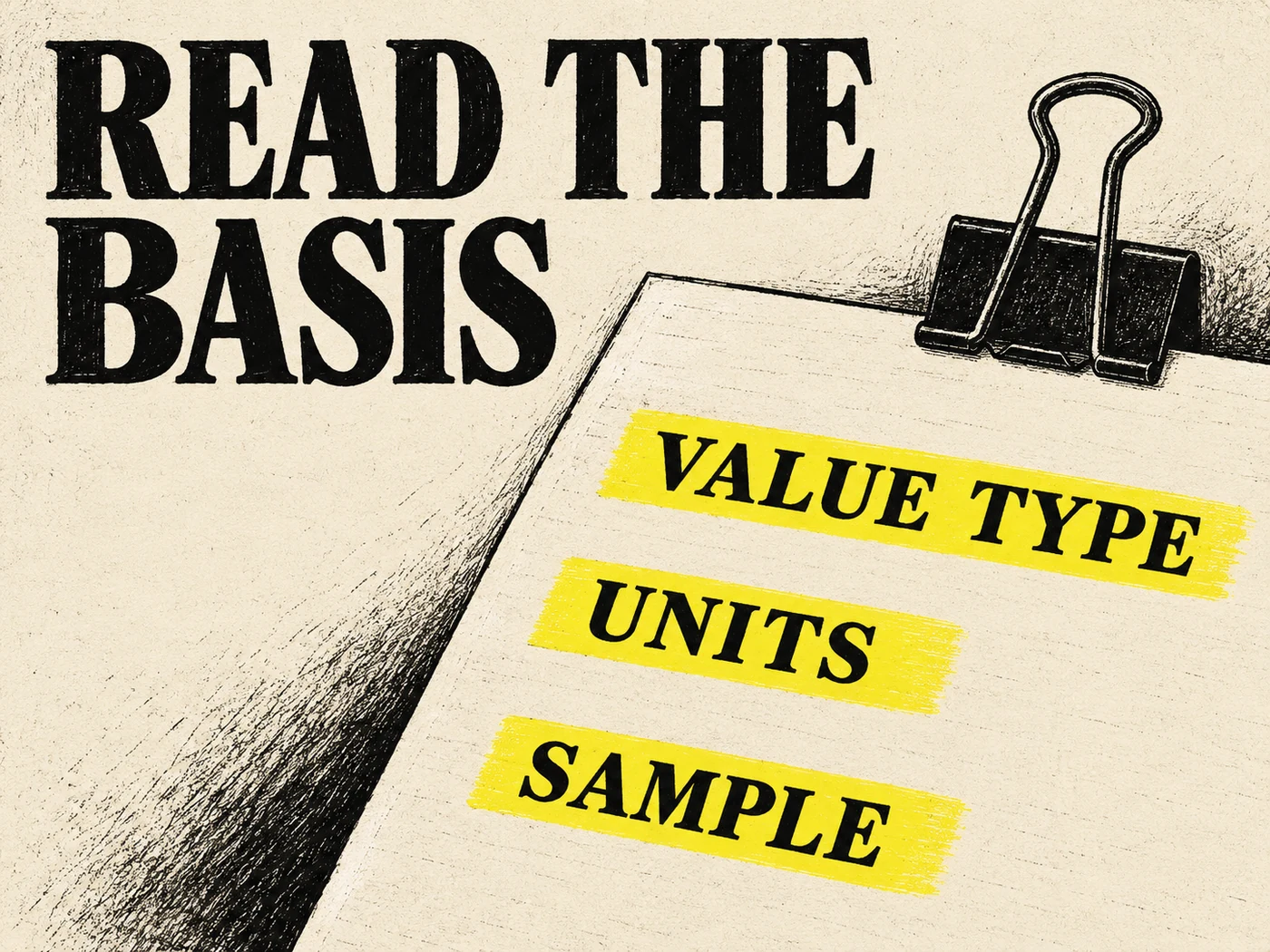
Request the report identifier, issuer, sample identification, material or heat reference, analysis basis and the connection to the quoted product. Keep the reported units and the definition of the reported carbon value visible. Ask the supplier to explain any abbreviation that affects interpretation.
The record should show how the analyzed material relates to the supplied lot. A report for unidentified iron, a different revision or an unrelated heat cannot automatically support the current order. If the linkage is missing, record the gap explicitly instead of treating the document's professional appearance as proof.
Do not invent a test method or certification requirement when none has been agreed. Request the applicable method and acceptance document, then review their relevance. The buyer should know whether the result is a measured value, a target value or a specification limit.
| Document field | Why it matters | Action if unresolved |
|---|---|---|
| Product, sample and lot linkage | Connects analysis to the supplied item | Request the reference mapping and explanation linking sample/heat to the order |
| Value type | Separates measured results, nominal targets and limits | Preserve the original label; request what the reported number represents |
| Units and composition basis | Defines numerical interpretation | Obtain the stated basis before calculating a difference |
| Analysis/report identity | Allows the result and method to be located | Request issuer, report identifier, revision and relevant method description |
| Agreed acceptance document | Defines the requirement being assessed | Resolve the agreed specification rather than inventing a high-carbon threshold |
Use numerical comparisons without inventing an acceptance limit
Consider hypothetical records with carbon values of 3.2% and 3.5% on the same stated mass-percentage basis. The numerical difference is 0.3 percentage points. Relative to 3.2%, the increase is 0.3 divided by 3.2, or approximately 9.4%. These are different ways of expressing the same comparison.
The example does not represent any MAKEXCAR product, test result or approved material range. Neither value is presented as a high-carbon threshold. The arithmetic also does not establish better damping, longer service life, shorter stopping distance or suitability for a vehicle.
Before comparing real reports, confirm that their value types, units, analysis basis and relevant sample linkage are comparable. An accurately calculated difference can still be irrelevant if one number is a specification target and the other is an unrelated measured result.
Keep finished-disc performance evidence on its own line
If the quotation includes a noise, thermal, wear or durability claim, ask for the relevant product evidence and the conditions under which it was obtained. Do not turn a composition report into a finished-disc performance report.
Keep the tested specimen identity, procedure, conditions and outcome together. Where the evidence applies only to a particular configuration or application, retain that scope. A buyer should be able to tell whether the statement describes the supplied reference, a product family or a development example.
Material information can support a technical discussion without proving every commercial claim. Separate the approved material requirement from unresolved performance questions so the final quotation makes clear which statements have actually been supported.
Review changes before accepting a repeat order
Agree when material records will be supplied and how their identifiers will connect to the shipment. A document promised in a quotation needs a defined delivery scope: which product and lot it will cover, which specification it addresses and how the buyer will identify it during receiving.
Keep a development-sample report separate from the commercial-lot evidence. If the supplier proposes it as support for later supply, ask for the stated basis of that linkage. Do not let an unchanged product name turn one sample result into verification of every repeat order.
If the supplier proposes a material or document revision, retain the change description and decision alongside the agreed specification. At receiving, compare reference and lot identifiers with the supporting record. A label helps connect the goods to a report, while the actual chemical claim still depends on the relevant analysis and requirement.
Three evidence gaps and how to resolve them
The composition report has no supplied-lot identifier
Retain the report but mark its linkage unresolved. Send the supplier the quoted reference, order identifiers and the report's sample or heat identifier. Ask for the document connecting them and its scope. The report may contain a valid result for its sample while failing to establish the current supply claim. Do not overwrite that distinction with an accepted status simply because the chemistry table looks complete.
A comparison mixes one measured value with one target
Separate results from requirements before calculating a difference. Ask which agreed document defines the target and which report supplies the measured value. Keep both labels visible. A target can describe an intended composition without proving that the supplied material met it. Request the applicable result and sample linkage if the purchasing decision concerns conformity of actual goods.
A higher carbon figure is used to promise quieter braking
Record the chemistry claim and the performance claim separately. Request the finished-disc evidence and its tested configuration, conditions and outcome for the latter. A composition difference alone does not supply that performance report. If the supplier offers only another manufacturer's product description, keep it as background and ask for the evidence covering the proposed disc.
These scenarios are editorial procurement examples rather than actual factory or customer incidents. They identify the missing connection between label, sample, requirement and finished-product claim without setting a material grade or acceptance threshold.
Request a material statement you can review
Send the existing specification and proposed item through the MAKEXCAR inquiry page. Five fields make the high-carbon request reviewable:
Quoted supply: [disc reference], [quantity], [order/lot identity where available], [vehicle/application information].
Claim definition: [exact high-carbon wording], [defining material document and revision], [comparative basis if claimed].
Composition record: [report identifier/issuer], [sample or heat identity], [reported value type, units and analysis basis].
Acceptance and linkage: [agreed requirement], [how the sample links to proposed goods], [missing fields to resolve].
Separate performance questions: [claimed outcome], [finished-product evidence requested], [document delivery and change questions].
Save the clarification with the original claim and material record. The buyer should be able to trace which product and sample the statement covers, what requirement was assessed and which performance questions remain open. That record supports a specific decision without turning a catalog label or another manufacturer's technology into evidence for the supplied disc.