Cable vs scissor window regulators: start with the application
A buyer may receive two quotations that both say “power window regulator” and appear to describe the same vehicle. Before comparing price, check whether they cover the same market, body style, door position, production interval and assembly scope. An accurate description of the mechanism helps organize that review, but the selected application remains the starting point.
For a replacement order, the practical question is which documented assembly belongs to that door. A design used successfully elsewhere is not evidence that it can replace the original mechanism. Changing the architecture can change interfaces with the door structure, glass carrier and motor. Treat a proposed conversion as a separate engineering question, requiring a defined design review rather than an ordinary replacement purchase.
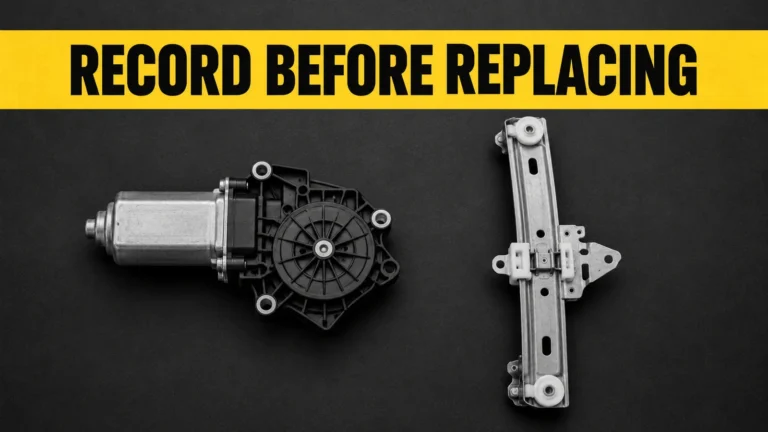
Use the original part reference as a research input, alongside the seller's SKU and the source used to establish the application. Keep those identifiers in separate fields. If an original assembly is available, photographs can help reveal obvious differences, but request a drawing or catalog record before accepting details that cannot be judged reliably from a photograph.
What the architecture names tell you
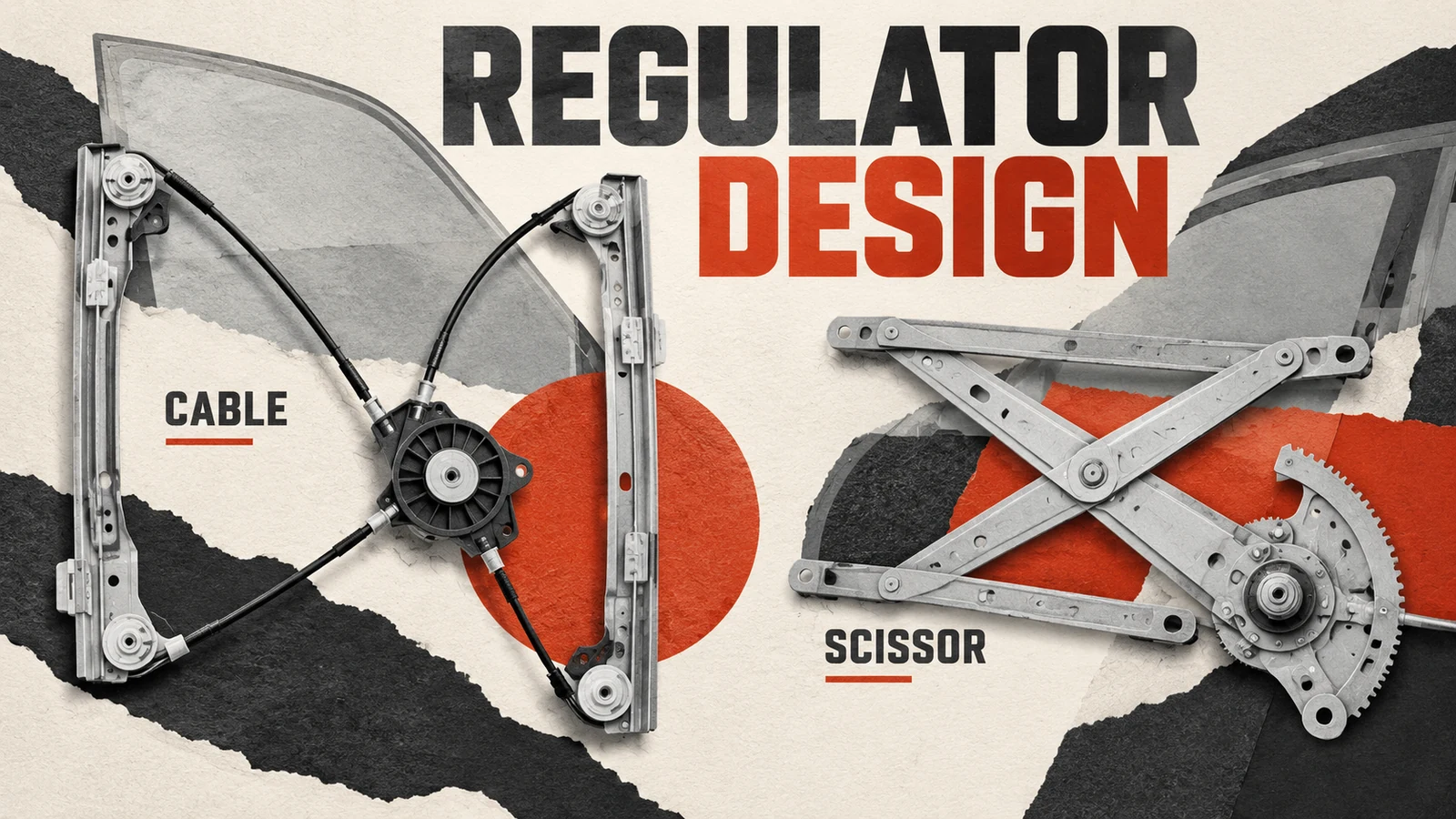
A cable regulator uses a cable drive arrangement with a guided carrier or carriers to move the glass. The manufacturer Brose describes single or double-guided cable window regulators in its door-component portfolio. This confirms that “cable” is a family description, not one fixed guide layout. It does not establish the guide arrangement of a MAKEXCAR listing.
A scissor regulator is identified by its pivoting arm mechanism. The arm arrangement and its connections still need to match the selected door and glass. Do not infer interchangeability simply because two mechanisms raise a window or because their motors look similar. The order needs the applicable assembly reference and the supporting application record.
The architecture name is useful for detecting a mismatch early. It does not answer whether the motor is included, whether an original motor may be reused, which glass attachment is supplied or which electronic functions are supported. Keep those questions visible in the quotation instead of hiding them inside a general product description.
Compare the interfaces that decide the order
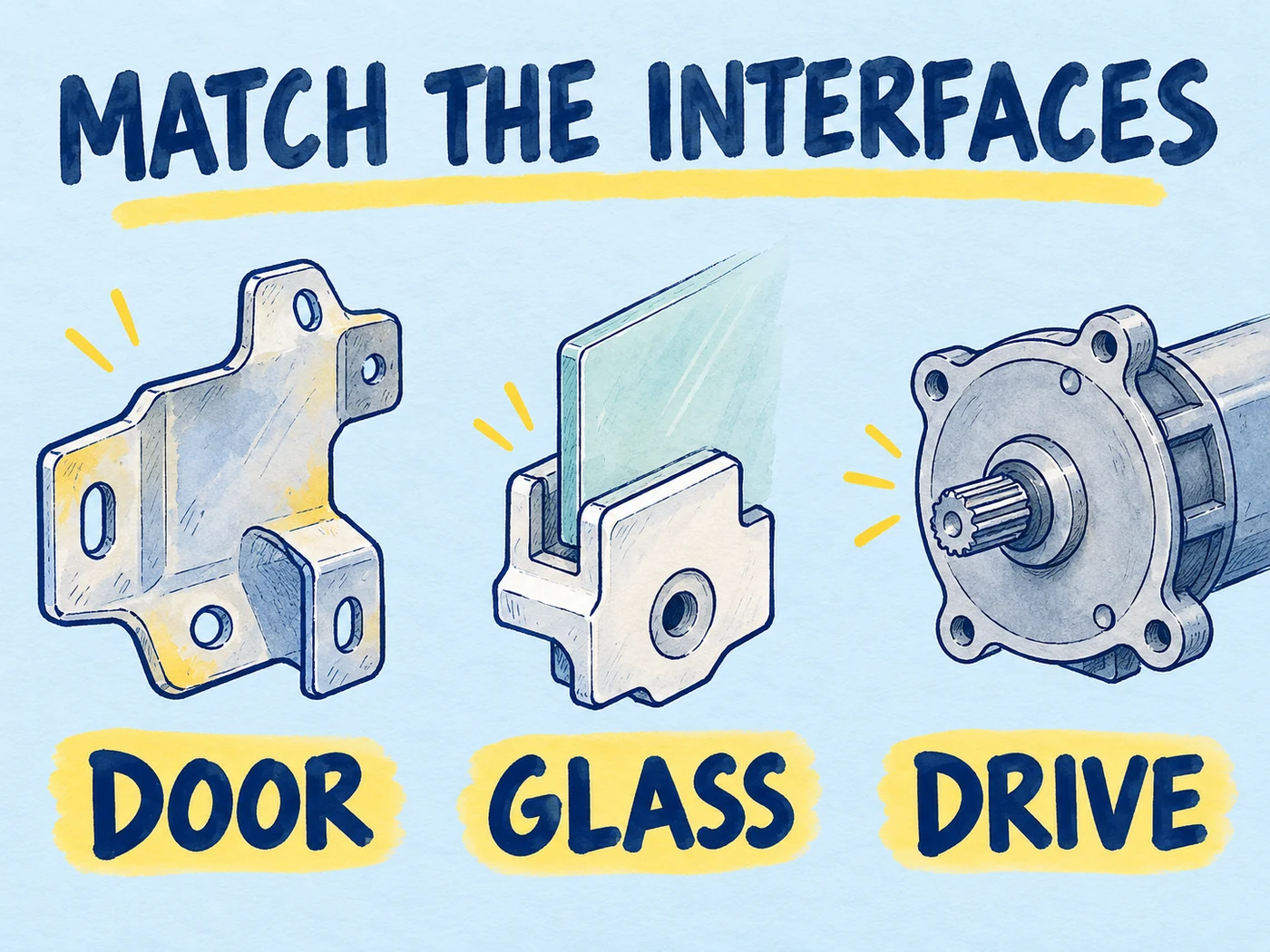
Organize the comparison around the actual door, glass and drive interfaces. Ask the supplier to identify the source for each answer. A detailed drawing of another regulator cannot approve the selected reference, even if it belongs to the same design family. The following editorial worksheet ties a missing input to a concrete request.
| Review item | Why it matters | Request when unresolved |
|---|---|---|
| Application and architecture | Similar model headings may refer to different doors or mechanisms. | The offered SKU against the original reference, body/position and applicable catalog note. |
| Door mounting | A count or photo does not establish the locations and attachment scope. | Applicable mounting drawing with datum, units, tolerance and revision; named fasteners included. |
| Glass attachment | Carrier or clamp appearance does not prove the required glass interface. | Referenced attachment details and the actual supplied contact/retaining components. |
| Drive and control | A familiar motor housing or connector does not confirm pairing or functions. | Supplied motor or supported reuse reference, compatibility basis and relevant control information. |
| Conflicting source records | More detail is useful only when it belongs to the offered assembly and production interval. | A supplier explanation of the conflict and the document version governing the current offer. |
Keep an unresolved interface visible on the inquiry. If the current listing, drawing and original label disagree, ask which source applies and why; do not select the convenient answer by appearance. An identified mismatch can justify rejecting the proposed reference, but an absent record should first trigger a focused evidence request.
Use guide and mounting counts for identification
The single or double-guided distinction above is a useful sourced count: the manufacturer describes cable layouts with one or two guides. Record that count only when the selected assembly's documentation confirms it. Guide count is an identification field, not a performance score, a durability measure or permission to substitute one architecture for another.
Mounting-point counts can also help compare two applicable drawings when their definitions and revisions are retained. Distinguish regulator mounting points from motor fasteners or glass clamps. Counting every visible hole in a photograph can mix unrelated features and produce a misleading result.
Consider a hypothetical RFQ worksheet: drawing A identifies four regulator mounting points and drawing B identifies five. These counts are invented to illustrate a discrepancy, not actual MAKEXCAR specifications or inspection results. Ask whether the definitions and references are comparable, then obtain the relevant drawing explanation. The difference does not by itself establish that either assembly fits or fails to fit.
Even matching counts do not confirm matching positions. To compare locations, use the same reference datum and unit on both drawings. Keep tolerance and drawing revision alongside any dimension. If those records are unavailable, leave the dimension unconfirmed and request the missing information instead of estimating an approval from image scale.
Separate mechanism choice from a reported window fault
A slow or binding window does not, by itself, prove that the installed regulator architecture should be changed. A fault report needs to distinguish the observed symptom from the component diagnosis. Ask for the affected door, when the symptom occurs and the applicable technician's findings before specifying a replacement assembly.
CARDONE's window lift motor technical sheet discusses regulator components, glass tracks and electrical causes that can complicate a motor complaint. Its value here is the need for a broader fault record. This purchasing guide does not supply a vehicle-specific repair procedure, lubricant selection or electrical test limit.
For an incoming claim, preserve the original observation and ask what was inspected. “Window moves slowly” is an observation. “Cable drive requires replacement” is a diagnosis that needs supporting evidence. Keeping those statements separate helps a distributor avoid ordering a different mechanism to solve a problem that has not yet been isolated.
Make the RFQ specific enough to compare
Write the RFQ around one application and one door position. Include the destination market, vehicle identification available to the purchasing team, model and body variant, year or production interval, and front or rear plus left or right. Give the original reference and seller SKU in separate columns, then attach the application evidence.
State whether the requirement is a bare mechanism or an assembly with a motor. Identify any proposed motor reuse by reference, with supporting compatibility information. Ask separately about glass carriers, clamps and fasteners. Their presence in a promotional photograph does not establish the supply scope, and a lower quote may represent a different set of components.
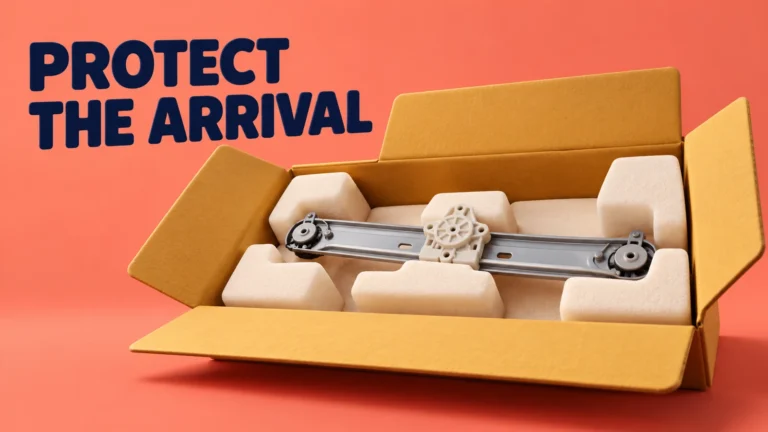
Add the required quantity, packaging request and drawing revision to the purchasing record. Ask the supplier to mark confirmed fields and unresolved fields in its reply. This makes it possible to compare like-for-like offers while keeping questions such as electronic functions and attachment compatibility visible for the technical reviewer.

Review a sample against the agreed record
Receiving a sample is an opportunity to check the approved description, supplied components and identifiable interfaces. Compare its label and reference with the order record, and photograph the assembly in a way that preserves orientation. Use an agreed inspection method for measurements; do not treat an approximate photograph comparison as a dimensional inspection.
Any functional evaluation should use an applicable fixture, procedure and acceptance criteria established for the selected assembly. A mechanism operating outside its intended door environment does not automatically demonstrate glass guidance, full-system compatibility or supported window functions. Record the conditions of a test and avoid extending its conclusion beyond those conditions.
If the sample differs from the drawing, pause the affected approval and obtain an explanation before ordering the lot. Describe the difference precisely: a missing supplied clamp, a different mounting feature or a reference-label conflict. A concrete discrepancy is easier to resolve than a general statement that the product “looks wrong.”
Questions buyers commonly ask
A seller proposes the other mechanism from a photograph
In a hypothetical inquiry, the original assembly is described as a scissor type and the proposed replacement appears to be a cable design. Ask for the offered reference's application basis and its door/glass/drive interfaces. If the proposal changes the architecture, the customer's engineering reviewer needs to assess that conversion. A similar outline or a lower price cannot turn the proposal into an ordinary confirmed replacement.
Two drawings have matching counts but unclear locations
Suppose two hypothetical drawings each show four regulator mounting points, but only one defines the reference datum. The equal count is an identification observation, not matching geometry. Request comparable location dimensions, units and tolerances tied to the actual revisions. Until that record is available, keep the mounting question unresolved rather than estimating distances from image scale.
The sample differs from the agreed glass attachment
In a hypothetical sample review, the label matches the offered SKU but the received carrier is not the attachment described in the agreed record. Photograph and name the observed difference, retain the sample reference and ask the supplier to explain it against the relevant drawing and contents. Resolve whether the description or supplied assembly needs correction before releasing the affected lot.
These are illustrative procurement situations, not performed inspections or customer experiences. They show how architecture, documentation and supplied components can each create a different unresolved question. A mechanism name cannot answer all three, and this guide supplies no durability test or evidence for a universal design ranking.
Send an application-led inquiry
Use these fields for a focused supplier reply. Brackets are buyer inputs, not approved installation or fitment information.
Application: [market, body/production qualifiers, exact door position and original reference].
Proposed assembly: [seller SKU, documented mechanism and source of any cross-reference].
Interfaces: [mounting and glass attachment drawings, revision/datum/units and missing information].
Drive and contents: [motor included or supported reuse, control evidence and required attachment items].
Decision request: [quantity, sample discrepancy or conversion question requiring clarification before approval].
Review the MAKEXCAR window regulator category as a sourcing starting point. Its listings do not replace the application review described above. For a useful inquiry, bring the vehicle and door details, original reference, proposed SKU, quantity and any drawing or catalog evidence already available.
Use the MAKEXCAR contact page to request a review of the required assembly and outstanding interface information. The purchasing decision should follow the documented application and supply scope. Cable or scissor is a helpful description within that decision, not a stand-alone reason to approve the order.