
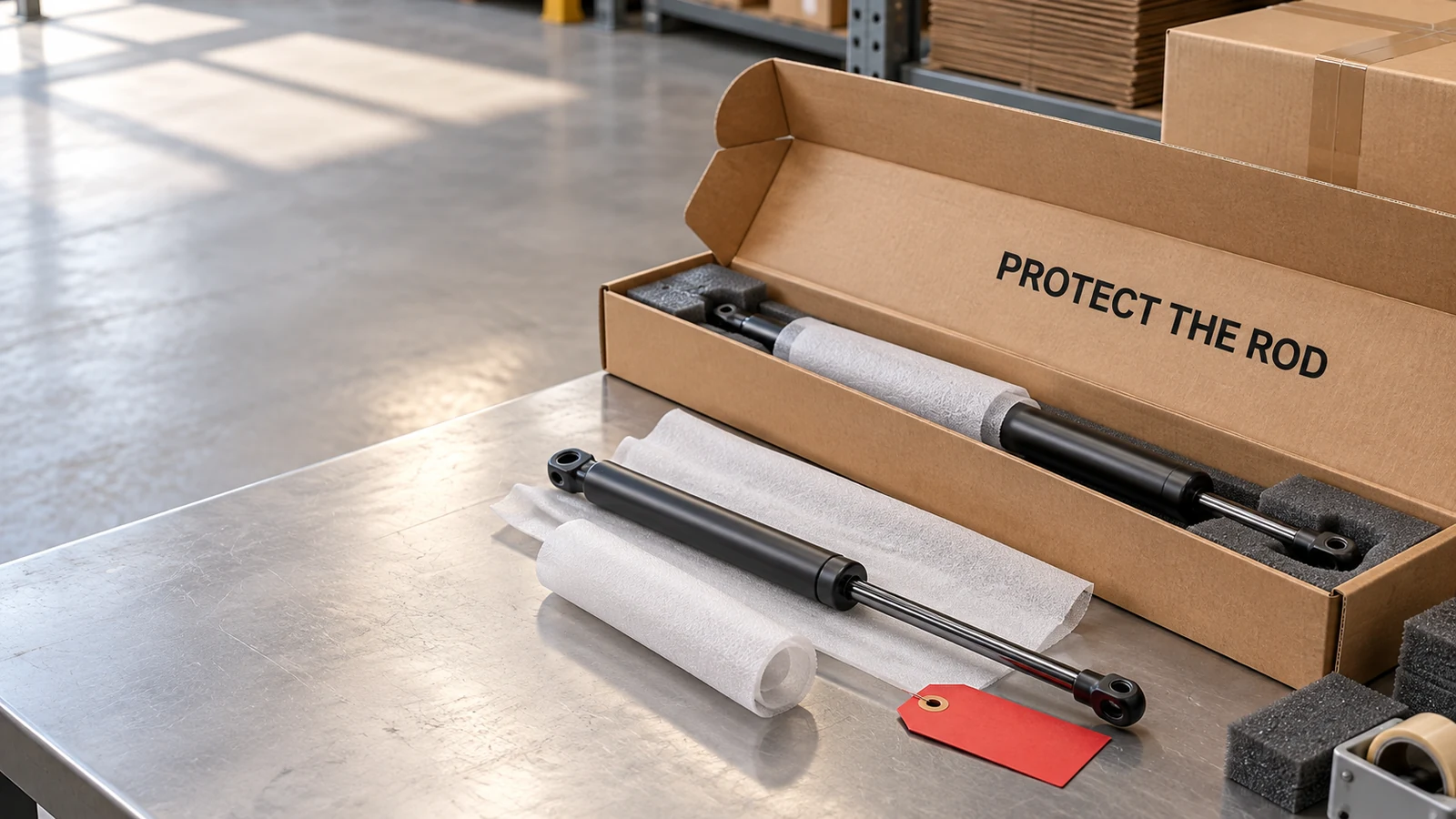
The short answer is to approve the next step only when the offered automotive gas struts is tied to a specific reference, a defined application or market, and a document set that covers the feature being compared. A photograph, a similar shape, or a supplier label can start the review, but none of those items alone proves interchangeability. If a field is missing, record it as pending instead of filling it with a typical value from another model.
Define the decision and the evidence boundary
Begin with a one-line decision record: “Can this offered automotive gas struts be evaluated for the requested order, and what evidence is still missing?” The record should name the requested reference, the offered reference, market, application information and the supply scope. For automotive gas strut bulk order packaging, the evidence boundary matters because the same family can contain different dimensions, interfaces, materials, or packaging arrangements.
Keep three statements separate. A product fact describes the offered item and must come from its drawing, catalogue entry, sample record or test report. An industry explanation describes why a field matters; it does not certify a MAKEXCAR SKU. A procurement recommendation describes what to ask for and how to compare replies. This separation prevents a general technical source from becoming an unsupported product promise.
| Record | Why it changes the decision | If missing |
|---|---|---|
| Requested reference and application | Sets the comparison target and scope | Hold the match as unconfirmed |
| Offered reference and revision | Prevents an old drawing being compared with a new item | Request the current document version |
| Interface or protection field | Shows whether the part can be compared on the relevant feature | Use a conditional quote only |
| Packing scope | Prevents unlike quantities or accessories being treated as equal | Ask for a packing list and images |
Build a reference record before comparing suppliers
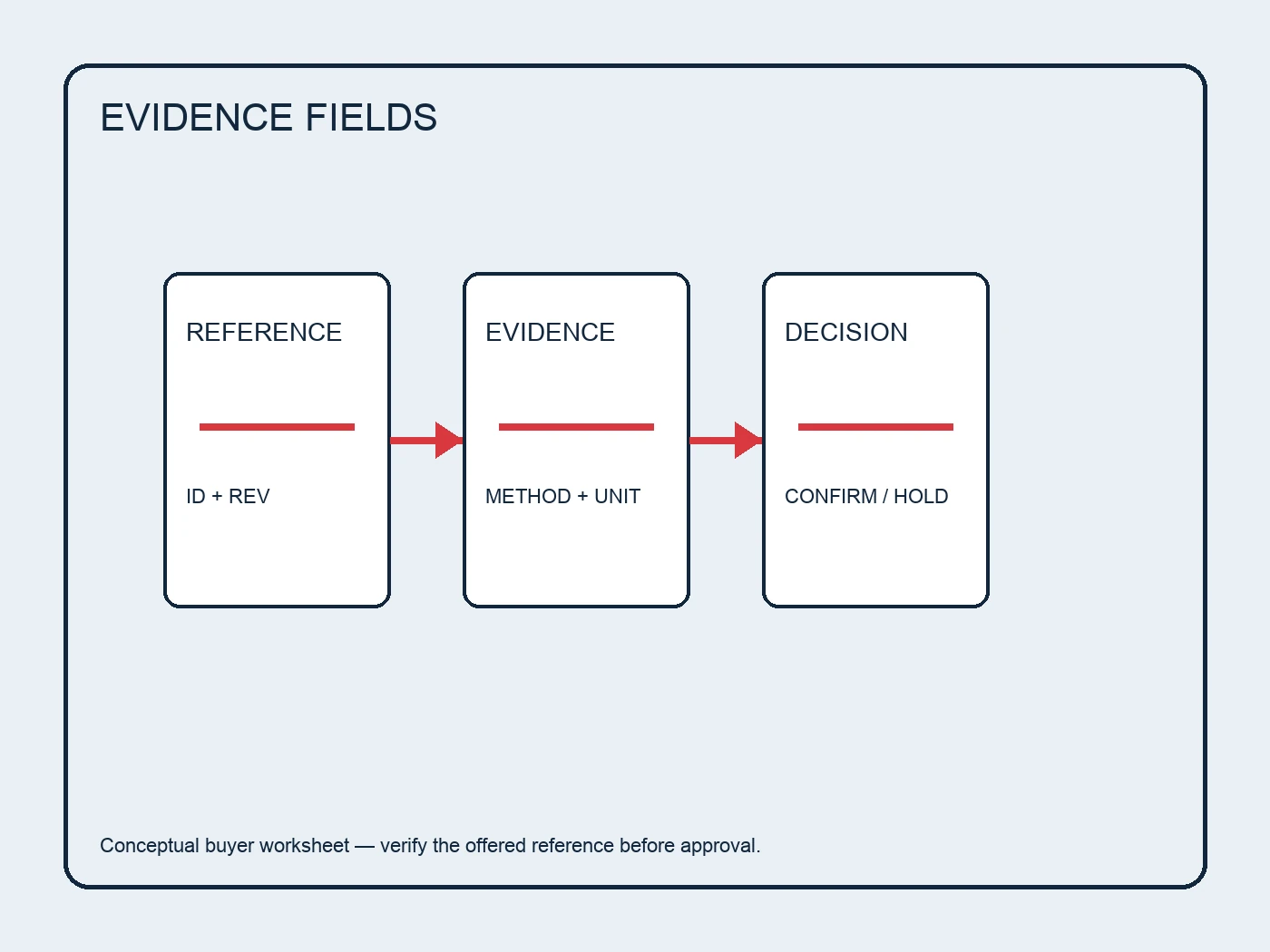
Use a compact reference sheet rather than a long email thread. Put the request on the left and the offered response on the right, with a third column for evidence status. For automotive gas struts, include the physical fields that determine fitment or protection and the commercial fields that determine what will actually arrive. The goal is not to collect every possible specification; it is to collect the fields that can change the decision.
- Reference identity: requested number, offered number, revision and source file.
- Application boundary: market, vehicle or equipment family, year range if supplied, position and quantity.
- Feature record: packaging and handling; record units and viewing direction where relevant.
- Order scope: sample or production, unit of supply, inner pack, carton pack and declared accessories.
- Open items: each missing field, owner, requested format and review date.
Compare like with like, then document the limits
Comparison becomes reliable when the two offers use the same object, condition and unit. For example, a nominal dimension may describe a different point on two parts; a test result may use a different method or sample condition; a carton quantity may exclude inner packaging. Write the comparison criterion before reading the numbers, then keep the original unit and method in the record.
For this topic, ask the supplier to identify the exact object shown in each drawing or photograph. Ask whether the statement applies to a single SKU, a product family, or a proposed alternative. If an answer is based on a family range, retain the range and request the SKU-level confirmation before approval. Similar appearance is a reason to investigate, not a conclusion.
| Comparison check | Acceptable evidence | Do not infer |
|---|---|---|
| Identity | Current reference, revision and labelled drawing | That a similar label is the same part |
| Application | Catalogue entry or application record for the offered reference | Fitment from appearance alone |
| Measurement or test | Method, units, condition and result for the same reference | Performance from a generic data sheet |
| Supply scope | Packing list, sample photos and quantity definition | Contents from a staged photograph |

Use a practical review sequence
A workable review has four passes. First, identity: confirm the requested and offered references. Second, application: record market, position, year or equipment boundary where available. Third, feature or protection: inspect the fields that answer packaging and handling. Fourth, order scope: confirm sample status, quantity, packaging and documents. Keeping the passes separate makes a missing field visible instead of burying it inside a general “looks suitable” comment.
- Mark every statement as confirmed, conditional, or pending.
- Keep the source filename or URL beside each confirmed field.
- Use one revision date for the comparison sheet and retain superseded versions.
- Ask for a labelled image or drawing when terminology is ambiguous.
- Escalate electrical, safety or pressure conclusions to the responsible technical reviewer.
Add a small, transparent data check
A simple calculation can expose an incomplete comparison without pretending to be a product test. Suppose an importer plans 12 cartons and the supplier declares 8 units per carton. The planning quantity is 12 × 8 = 96 units. That calculation is only a packing example; it does not establish the actual pack quantity for any MAKEXCAR item. Replace the inputs with the current packing record before using it in a purchase order.
For automotive gas strut bulk order packaging, the useful data check is to write the unit, condition and source next to the number. If a document gives a range, preserve the range. If a document gives a result without the method, record the result as incomplete rather than comparing it with a fully described test. This is a small discipline, but it prevents an apparently precise number from carrying more meaning than its source supports.
Turn the review into an RFQ that can be answered
An RFQ should make the supplier answer the decision, not merely repeat the product name. Use a short table or attachment with the requested reference, application boundary, required evidence and response format. For automotive gas struts, ask for the exact document or image needed to close the packaging and handling question. State which fields are mandatory for a quotation and which can remain conditional for a sample review.
- Requested reference or OE number: [enter value]
- Market and application: [enter country, vehicle/equipment, year or position]
- Feature question: packaging and handling — [supplier response and source]
- Packing requirement: [unit, inner pack, carton, protection and label]
- Open issue and due date: [enter owner and date]
When the reply arrives, do not score a supplier by document length. Score whether each required field is answered for the offered reference and whether the conditions are clear. A short, specific drawing can be more useful than a long family brochure. If a field remains open, keep the quote conditional and state what would change the decision.
Common mistakes and a better response
| Mistake | Why it creates risk | Better response |
|---|---|---|
| Treating a family photo as SKU evidence | Objects or accessories may not be supplied | Request an item-specific image and packing list |
| Copying a number from another model | The value may use a different method or scope | Keep the field pending until the offered reference is documented |
| Comparing unlike units or conditions | The figures can look precise but answer different questions | Normalize the unit and record the condition |
| Using “universal” as a fitment result | Universal language can hide application limits | Ask for the exact application and interface record |
Questions buyers should resolve before approval
What exact reference and revision does the evidence describe? Which market, application, position and production range does it cover? Which feature is measured, photographed or tested, and under what condition? What is included in the quoted supply scope? Which unresolved field could change fitment, quality review or packaging approval? These questions keep the conversation centered on the decision rather than on general product language.
MAKEXCAR product pages can be used as the starting point for a category inquiry, but a category page does not replace SKU-level fitment or test evidence. For a quotation, send the reference list, quantities, application information, packaging needs and the specific open questions. The response can then be tied to the correct product family and reviewed against the same record.
Conclusion: approve the next step, not an unsupported assumption
A good automotive gas strut bulk order packaging review ends with a clear status: confirmed for the documented scope, conditional pending a named document, or not comparable. That status is more useful than a broad claim that a part is “the same.” Keep the reference, source, condition, units and packing scope together; then use the resulting record to request a sample, revise the quote or close the inquiry.