

This guide explains how to review evidence for MAKEXCAR Ignition Coils without supplying a universal voltage, resistance limit or high-voltage test sequence. Electrical tests can be hazardous and product-specific; the article is for procurement review, not hands-on testing or wiring.
Define which insulation question the report answers
“Insulation test” may describe different checks. One method may examine the resistance of an isolated path at a specified test condition. Another may assess whether a component withstands an applied stress without breakdown. A visual inspection can document cracks or tracking marks but cannot replace either electrical measurement. Ask the supplier to name the exact test and the defect mechanism it is intended to screen.
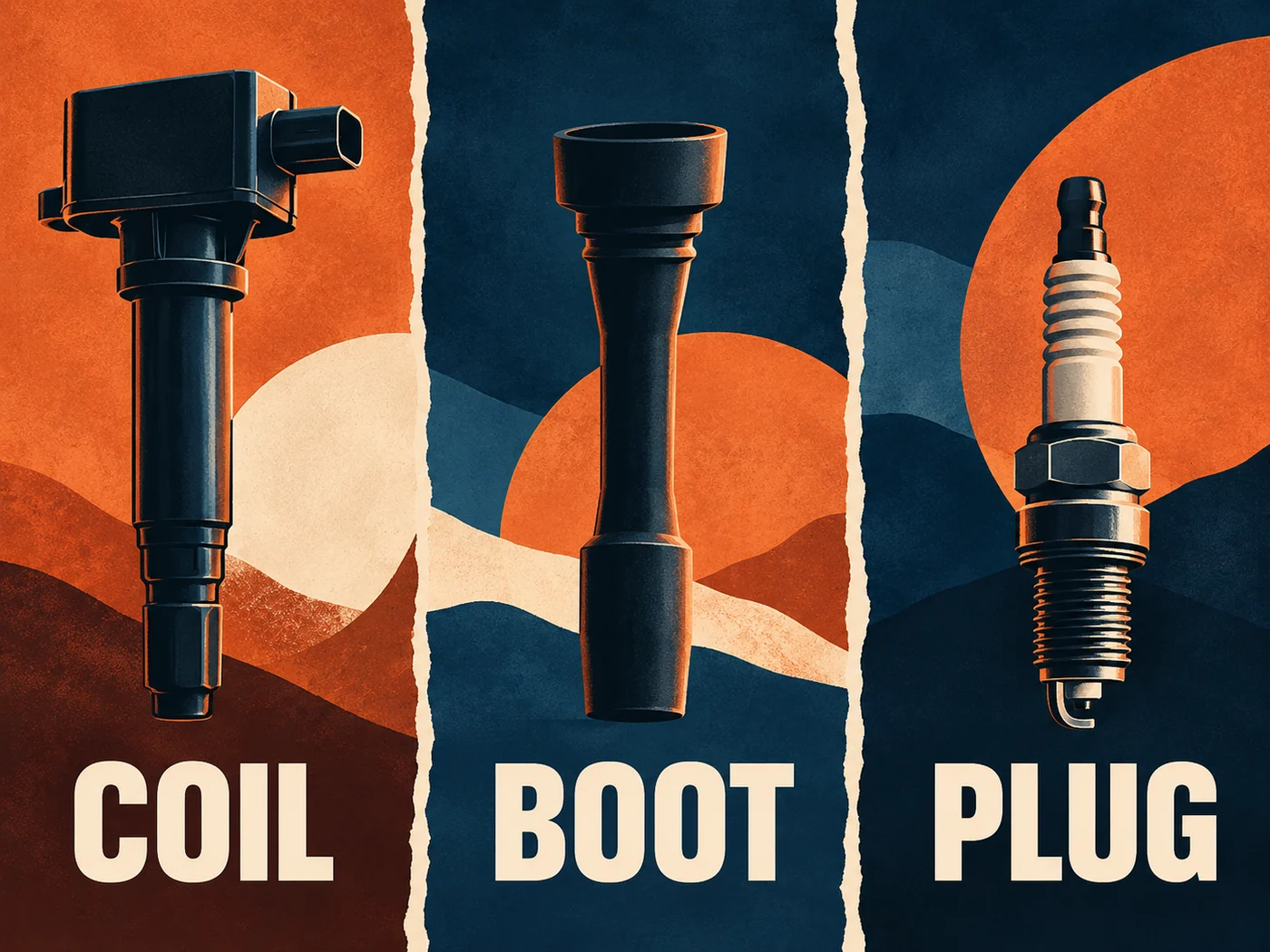
The coil, boot and spark plug operate as a high-voltage circuit. NGK's official coil guidance describes that relationship and discusses flash-over as a possible loss of the intended path. That supports the need to distinguish a coil-body insulation result from a boot or installed-system complaint. It does not specify a MAKEXCAR test voltage, acceptance limit, material rating or defect rate. The specific test boundary must appear in the report.
Start with the decision to be made: is this a production lot acceptance, a first-article sample, a returned component or a vehicle symptom investigation? A production test on a bare coil assembly may not include the vehicle's plug, harness, cover or operating environment. A field complaint may involve those other interfaces. Reports answering different questions should not be placed in one comparison column as if they were equivalent.
Tie every result to the exact article tested
Record the seller SKU, OE reference if verified, engineering revision, sample or lot identifier, quantity tested, test date and responsible laboratory or operator. If the boot is removable, state whether it was fitted for the test and whether it is included in the commercial supply scope. The same coil family may have several boot lengths or connectors. A general certificate for a family is not automatically evidence for the particular quotation.
Ask for a drawing or photograph identifying the test specimen and the connection points used. The test report should explain whether the coil was a complete sold assembly, a subcomponent or a specially prepared laboratory sample. Any modification to make a sample testable should be recorded. Otherwise, a reported result may not represent the condition of a production part supplied to a buyer.
Keep the traceability chain intact between quotation, approved sample, test report and purchase order. A report file name containing a model code is helpful but insufficient if the document itself does not state its sample identity and revision. If a supplier substitutes a later retest, retain both versions and the reason for the new test. Do not silently replace a failed first result with an unexplained pass.
Read the method and electrical boundary
The method section should describe the equipment and connection arrangement at a level that lets an engineer determine what was actually evaluated. Which terminals or surfaces formed the measurement path? Was the boot installed? Was the specimen dry, conditioned or exposed to a specified environment? Did the setup include a fixture that could create its own leakage path? These questions distinguish a defined test from an isolated number on a report.
Record the specified stimulus and its units, actual value if measured, ramp or dwell description if applicable, duration, measurement instrument and calibration status. These are requested report fields, not instructions to perform a test. Avoid borrowing settings from a different manufacturer, coil design or general internet guide. An unsupported “industry standard” voltage is not a substitute for the approved SKU-specific procedure.
Distinguish insulation resistance, dielectric withstand and functional output claims. A report showing a resistance value under one set of conditions should not be described as a withstand test under another. Likewise, an engine running after installation does not prove that a controlled insulation test passed. Ask the supplier to identify which claim each test supports and what it does not support.
Compare environmental and conditioning details
Insulation behavior can vary with temperature, moisture, surface contamination and the condition of the boot and housing. NGK discusses heat, cold and flash-over in its coil material, while its spark-plug technical guidance explains that contamination can lower insulation resistance in the plug's own circuit. Those sources illustrate why test conditions matter; they are not MAKEXCAR product qualifications. A clean, dry bench test and a wet, contaminated field event are different evidence sets.
Ask whether the specimen was new, aged, preconditioned or taken from a return. Record relevant temperature and humidity, any pretest cleaning, soak period and whether the part was allowed to stabilize. If a supplier reports performance after a conditioning cycle, ask for the cycle definition and the interval between conditioning and measurement. “Tested hot” or “humidity tested” is too vague to compare with a second laboratory's record.
For returned parts, preserve as-received photographs before cleaning. Record visible tracking, cracks, oil, water, dirt or damage at the coil housing, boot and spark-plug well. A mark may guide investigation but does not alone identify cause. If the part is cleaned for a repeat electrical test, maintain the original observation and explain how the cleaned test differs. That protects the evidence trail from an overconfident failure attribution.
Require a criterion and the measured outcome
A useful report states the controlling specification number and revision, the applicable pass criterion, measured result, and decision. “PASS” alone is not reviewable. If the result is qualitative, specify the observed event or absence of an event under the defined procedure. If numerical, state the unit, reading precision and instrument reference. A buyer should be able to see why the reported result meets the named rule without inventing an unstated threshold.
Check whether a report presents only the best sample or the complete test quantity. Ask how many units were tested, how many met the criterion and whether any retests occurred. A chart without sample IDs may conceal variation and cannot be linked to an approved shipment. If a report contains multiple test stages, keep each stage's result and criterion together. A single summary pass can hide which stage was performed on which specimen.
Do not interpret a high resistance number or a “no breakdown” label outside its test conditions. The chosen method, measurement boundary and equipment range matter. Equally, an apparent failure may involve a fixture problem or incorrect connection and require a controlled investigation. A report should record deviations and the engineer's disposition rather than treating every unexpected reading as either acceptable or a product defect.
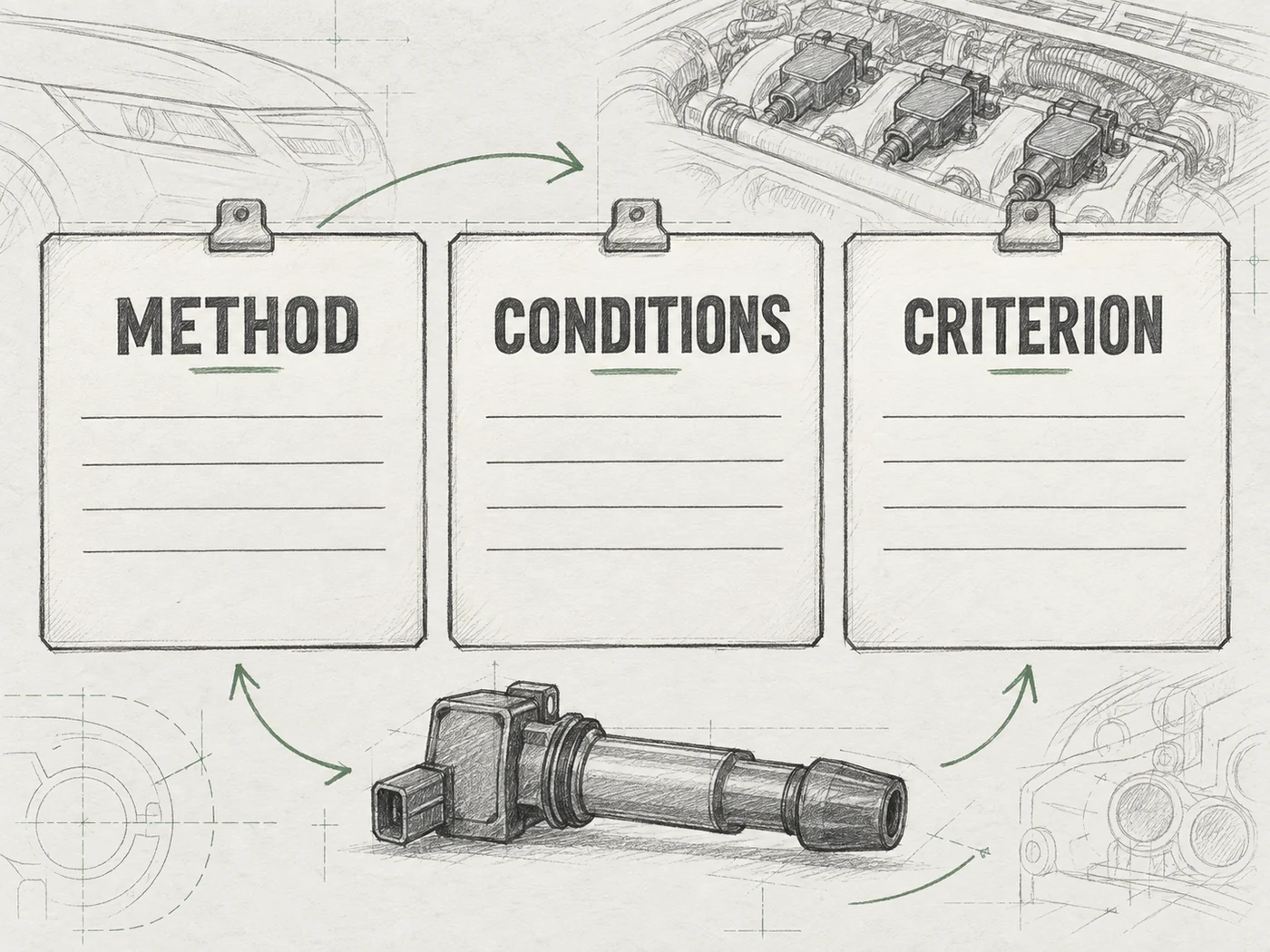
| Record field | Buyer question | Why it matters |
|---|---|---|
| Identity | Which SKU, revision, sample and lot were tested? | Links result to the proposed supply |
| Method | Which approved procedure and test purpose apply? | Distinguishes resistance, withstand and visual checks |
| Boundary | Which terminals, surfaces, boot and fixture were included? | Shows what the result covers |
| Conditions | What stimulus, time, temperature and conditioning were used? | Makes two results comparable |
| Equipment | Which instrument and calibration record were used? | Supports interpretation of the reading |
| Decision | What was measured and what revisioned criterion applied? | Makes the pass or fail traceable |
Use this table as a request template, not as an electrical test recipe. The supplier or qualified laboratory must define the method and safety controls. If a field is not applicable to a particular method, state why rather than leaving a blank that could be mistaken for an omitted check.
Keep coil, boot and plug evidence separate
When a vehicle misfires, the failure path may involve the coil, boot, plug, connection or surrounding conditions. NGK specifically cautions against viewing the coil in isolation. An electrical result on a removed coil does not automatically exclude a boot or plug problem; conversely, a marked boot does not prove that the coil's internal insulation failed. Ask what components were present during each test and how a suspected path was localized.
Compare the sample's supplied parts list with the test specimen. If the quote is for a coil with a boot, a report on a bare coil may leave part of the sold assembly unexamined. If the boot is supplied separately, clarify whether it was tested independently or with the coil. Do not claim that every product requires the same package of tests; the controlled specification should explain the required evidence for that SKU.
A photographed spark or visible trace can be useful investigative evidence when captured under a documented procedure, but it should not be converted into a quantified insulation rating. The corresponding test method, operating conditions and specimen identification still matter. Avoid comparing images from different vehicles or laboratories as if lighting, exposure and geometry were controlled.
Review sample approval and supplier claims
For a first sample, request both the fitment documentation and insulation evidence. Confirm destination market, vehicle make/model, production range, engine code, OE reference, offered MAKEXCAR SKU, connector, mounting, boot and application source. Electrical test success does not establish mechanical fit, and a physically fitting coil does not establish electrical performance. Keep the two approval tracks visible in the same sample dossier.
If a supplier claims “100% tested,” ask exactly which check was applied to every unit, what acceptance rule was used and whether the report is a lot summary or a single specimen result. If a supplier cites a certification, ask for the scope and holder; an accreditation of another company's laboratory does not certify MAKEXCAR products. NGK's own testing statements describe NGK's process only and must not be copied into a MAKEXCAR listing.
When two reports disagree, compare specimens, revisions, connection points, equipment, conditioning and criteria before deciding that one lab is wrong. Ask the responsible technical team to explain the discrepancy and document any retest. Purchasing should preserve the original record, the explanation and the final disposition. A higher-looking number from a different method is not necessarily stronger evidence.
Frequently asked buyer questions
Can the coil housing appearance show insulation quality?
No. Surface appearance can reveal a visible crack, tracking or contamination, but it cannot establish an electrical withstand or resistance value. Review the controlled test and its result for the exact specimen. Keep visual observations as one evidence type, not a substitute for an electrical record.
What voltage should a MAKEXCAR coil insulation test use?
No universal value is given here. It depends on the exact design, purpose, method and approved product specification. Request the controlled procedure and its stated stimulus, duration and criterion. Do not adopt a setting from a different maker, coil architecture or unrelated product.
Does a passing bench test settle a vehicle misfire complaint?
Not by itself. Confirm what was tested and what remained in the installed high-voltage path. The vehicle's plug, boot, connector, environmental conditions and control system may require separate diagnosis. A bench report can answer a defined component question while the field symptom has a wider boundary.
Request the exact report before approval
When reviewing MAKEXCAR Ignition Coils, send the intended vehicle application, OE reference, offered SKU, sample or lot identifier and specific question you need answered. Request the controlled test method, specimen configuration, electrical boundary, environment, stimulus, duration, measurement, acceptance rule and reviewer. Ask for both original and retest records if a result was repeated.
Use the contact page to obtain part-specific documents or discuss a sample. Approve only a result that can be traced to the exact offered part and interpreted under its stated conditions. A report's evidence chain is more useful than an unsupported pass mark or attractive housing photograph.

