Why the glass attachment deserves its own review
A regulator quotation may correctly identify the door and still leave the glass connection unclear. The buyer needs to know what connects the moving carrier to the glass and which parts are supplied. A broad assembly title cannot answer whether the required clamp, liner, clip or fastening item is included under the quoted SKU.
Start with the original assembly reference and applicable vehicle information. Record market, model, body variant, production interval and door position. Then identify the glass attachment from an applicable catalog, drawing or service record. Do not infer a connection solely from an image of another regulator sold for the same vehicle family.
The purchasing question is whether the offered interface matches the documented requirement. It is not whether a generic clamp can be made to hold a piece of glass. Modifying an attachment or substituting unrelated hardware introduces a separate technical question that this buying guide does not approve. Keep proposed alternatives open until the relevant reviewer has the necessary evidence.
Describe the actual connection rather than guessing a name
Suppliers may use carrier, guide, clamp, clip or bracket to describe different components. Ask for an annotated image or drawing that identifies the requested piece and its role. A name is useful once both parties mean the same component; it can be misleading when one party refers to the moving carrier and another to the glass-retaining hardware.
Identify the attachment arrangement shown in the applicable documentation. Record which contact pieces, retaining components and fasteners it specifies, without assuming that all assemblies use the same arrangement. Keep the glass-facing interface separate from the regulator rail or motor interface in the worksheet.
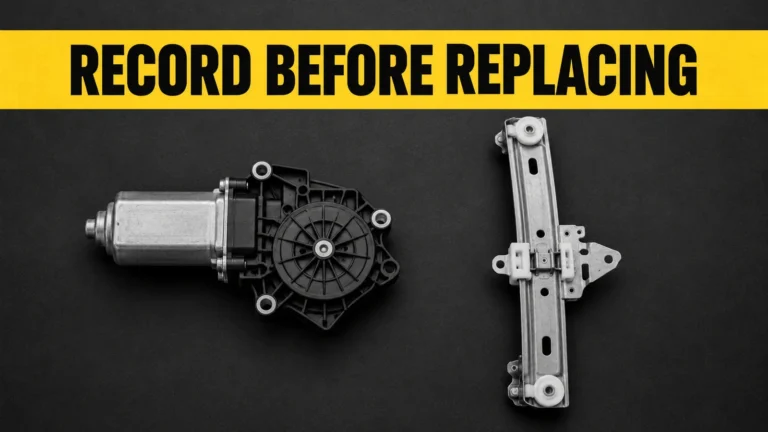
An original sample can help the supplier understand the inquiry, particularly when the catalog name is ambiguous. Photograph the parts with consistent orientation and preserve their reference labels. A photograph may show component presence or an obvious shape difference, but it is not a substitute for the dimensions, materials or application record needed to approve an interface.
Build a focused attachment comparison
Ask the supplier to answer each applicable field against the offered SKU. A field should say confirmed, not supplied or unresolved, rather than disappearing from the quote. The following worksheet is an editorial purchasing tool; it is not an installation specification or a universal design standard for window regulators.
| Field to establish | Why it matters | Next request if missing |
|---|---|---|
| Application and attachment reference | A regulator family name may not identify the relevant glass connection. | Request vehicle/door qualifiers and the applicable carrier or clamp record. |
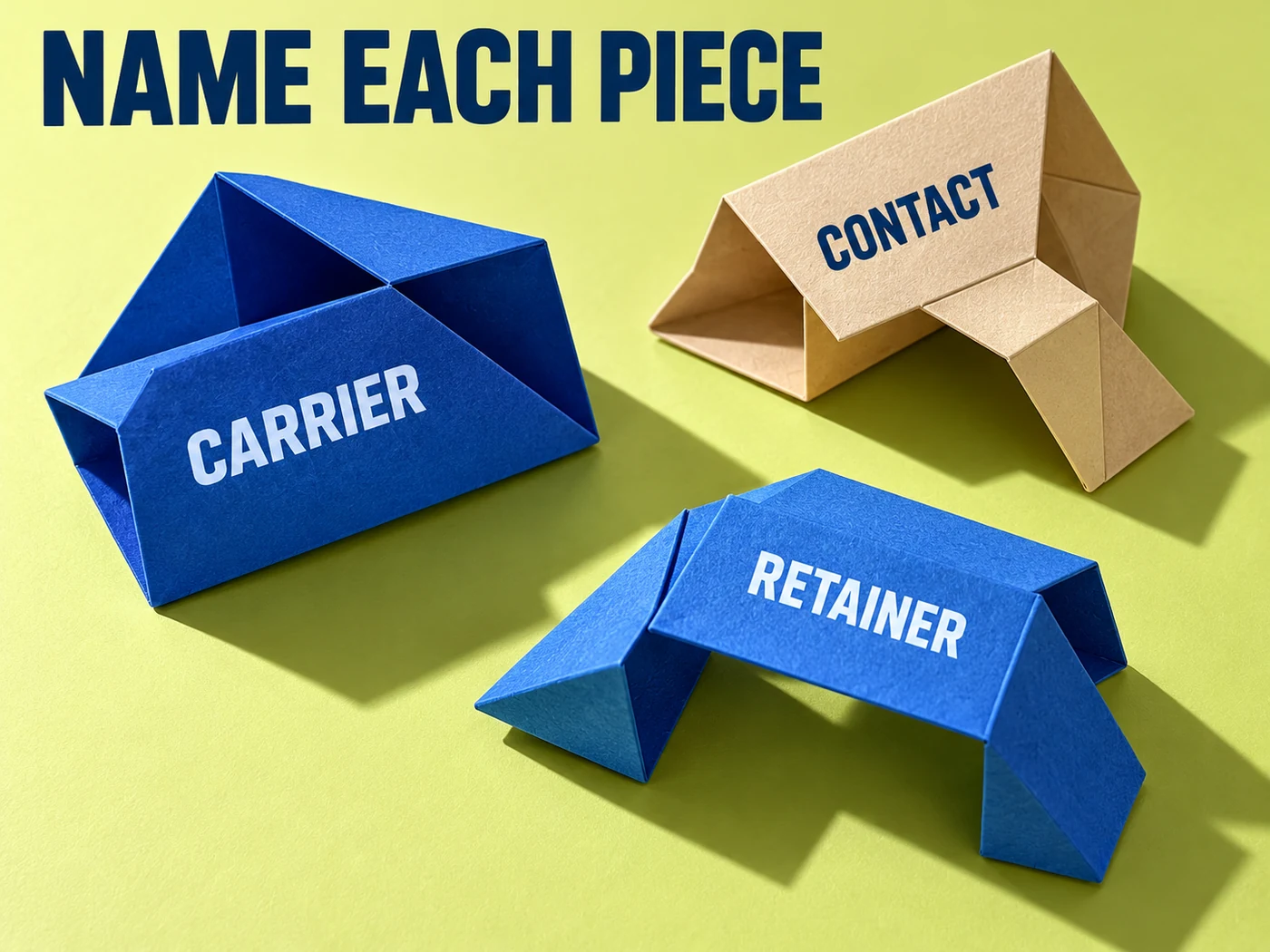
| Glass-facing contact and retaining pieces | Carrier, contact and retainer names can refer to different components. | Request an annotated drawing with each piece's role and reference. |
| Defined interface dimensions | An undefined width can describe several different quantities. | Ask for feature, datum, units, tolerance and drawing revision. |
| Included, excluded or retained components | A photo or small hardware bag does not establish agreed contents. | Request the written supply scope and applicable reuse basis. |
| Service and acceptance information | A familiar outline does not establish handling settings or full-system suitability. | Request the applicable source and responsible technical review. |
When two offers use different descriptions, request an explanation before comparing their prices. One may describe only a carrier, while another includes additional retaining pieces. That difference is a purchasing scope issue as well as an interface question. Keep both questions visible instead of treating a similar product photo as a complete bill of materials.
Use measurements with a defined reference
A useful measurement answers a specific interface question. Ask the drawing owner to identify the feature, datum, unit, tolerance and applicable revision. An undefined “width” can refer to an overall carrier width, a contact opening or a fastening feature; those are different records even when they all use millimeters.
Compare contact-feature dimensions only when the records use the same definition. Do not estimate a glass thickness or clamp capacity from a photograph. A nominal dimension without tolerance and application scope remains a reference value rather than fitment approval.
Here is an explicitly hypothetical drawing check. Suppose the requirement for a defined feature is 100.0 mm with a tolerance of plus or minus 0.5 mm. The stated interval is 99.5 mm to 100.5 mm. A sample measured at 100.8 mm is 0.3 mm above that hypothetical upper limit. These inputs are invented for explanation, not an actual regulator, glass or clamp specification.
The example shows how to retain units and a tolerance basis, not how to approve an attachment. A real dimensional finding also needs the actual drawing, measurement method and relevant uncertainty. Do not extend a single feature comparison into a claim that the full assembly will hold or guide the glass correctly.
Keep service settings out of guesswork
A supplier photograph cannot establish the appropriate clamp tightening setting, contact preparation or alignment procedure. Ask for the applicable service information rather than applying a torque value found for another vehicle. The source must govern the selected assembly and the relevant operation, with its conditions preserved.
CARDONE's regulator service guidance directs readers to applicable vehicle and supplied-unit information for full procedures and cautions against overtightening glass-holding clamps or brackets. This supports keeping handling settings tied to the proper source. It does not provide a universal torque value for a MAKEXCAR attachment.
Likewise, a Chrysler StarParts regulator tech tip discusses glass seating and appropriate clamp torque in its stated troubleshooting context. That is context for a qualified reviewer, not a general procedure reproduced here. This article neither identifies the affected vehicle population nor applies that tip to an unspecified MAKEXCAR SKU.
Separate a binding complaint from an attachment diagnosis
An inquiry about a loose, binding or noisy window should state the observation before naming the failed component. Ask for the affected door, the operating condition and the applicable technician's findings. The buyer should not infer a defective clamp merely because the glass symptom involves the regulator area.
A record that says “glass movement binds near closing” describes an observation. A record that says “replace the retaining hardware” proposes a technical action. Keep the evidence supporting that action alongside the inquiry. A documented diagnosis helps the buyer request the correct component rather than ordering a visually similar attachment to test an assumption.
If the complaint concerns a sample or a received lot, preserve the original parts, labels and relevant images according to the customer's process. Record what changed between receipt and assessment. This is evidence collection for the review; it is not a claim that the material has already been tested or that a particular component caused the issue.

Clarify included pieces and replacement scope
Ask whether the required retaining pieces are included with the regulator, supplied separately or intended for supported reuse. Identify each named piece by the applicable reference. A sample containing a small bag does not establish the bag's contents or prove that those items are correct for the customer's glass connection.
Supported reuse needs its own basis. The original piece's appearance and the fact that it was once installed do not establish its suitability for a new assembly. Request applicable reuse information and let the responsible technical reviewer assess condition. Keep that question distinct from whether the supplier includes a new piece in the commercial quote.
Carry the confirmed supply scope into the order and receiving record. If the quotation excludes a required attachment item, ask for the corresponding line or a documented alternative before release. Do not rely on an informal promise that the missing piece will “probably be inside” when the purchasing requirement depends on it.
Review the received sample without inventing a test
At receipt, check reference labels, visible components and written scope first. Compare any agreed dimensions using the defined method and drawing revision. Preserve orientation in the photographs so later reviewers can tell which side or surface is being discussed. Mark unresolved measurements clearly.
Functional or retention evaluation needs an applicable procedure and acceptance criteria established for the selected application. This guide gives no universal clamp force, pullout load or test fixture. An informal gripping demonstration does not prove full-system compatibility or justify a performance statement about the offered product.
If a feature differs from the agreed drawing or a specified piece is missing, record the exact discrepancy and ask for a response tied to the offered SKU. Keep the affected approval open until the difference is resolved. Specific records make supplier discussion more useful than a general statement that the attachment looks unsuitable.
Resolve three incomplete attachment offers
A photograph matches the outline but has no defined dimensions
In this hypothetical case, a candidate resembles the customer's attachment, but the offer omits the feature and datum behind its width value. Request the applicable drawing and dimensional definition before comparing numbers. Keep the photograph as an identification aid rather than treating outline similarity as complete interface evidence.
A hardware bag has no reference-linked contents
A hypothetical sample includes a small bag beside the regulator but no parts list. Ask which pieces it contains, whether they are included in the current quotation and how their references relate to the intended glass attachment. Do not assume that the presence of loose hardware closes a missing-retainer question.
The proposal assumes a contact piece will be reused
A hypothetical supplier excludes a glass-facing piece and expects the existing one to remain. Request the written replacement scope and applicable reuse information, then identify who will assess the original piece's condition. A commercial exclusion and technical suitability are separate questions; the quoted price cannot answer both.
Send a fillable glass-attachment inquiry
Start with the relevant MAKEXCAR Window Regulators category, then identify the requested attachment and assembly reference.
Send these fields through Contact MAKEXCAR, replacing brackets with available records and marking missing information unknown.
Application and identity: [vehicle market, model/body/build qualifiers, door position and original assembly or attachment reference].
Connection record: [annotated attachment images, glass-facing contact and retaining-piece identities, applicable catalog or drawing].
Defined dimensions: [feature, datum, units, tolerance, drawing revision and measurement record when available].
Required supply: [included and excluded pieces, supported reuse question, assembly scope and quantity].
Reply requested: [offered SKU, source-linked interface basis, written contents and specific unresolved service-information question].
Keep the supplier's response attached to the proposed unit and current quotation. Request updated evidence if its reference or scope changes. This gives procurement a defined comparison while leaving service handling and functional conclusions with the applicable technical review.