Define the assembly before comparing prices
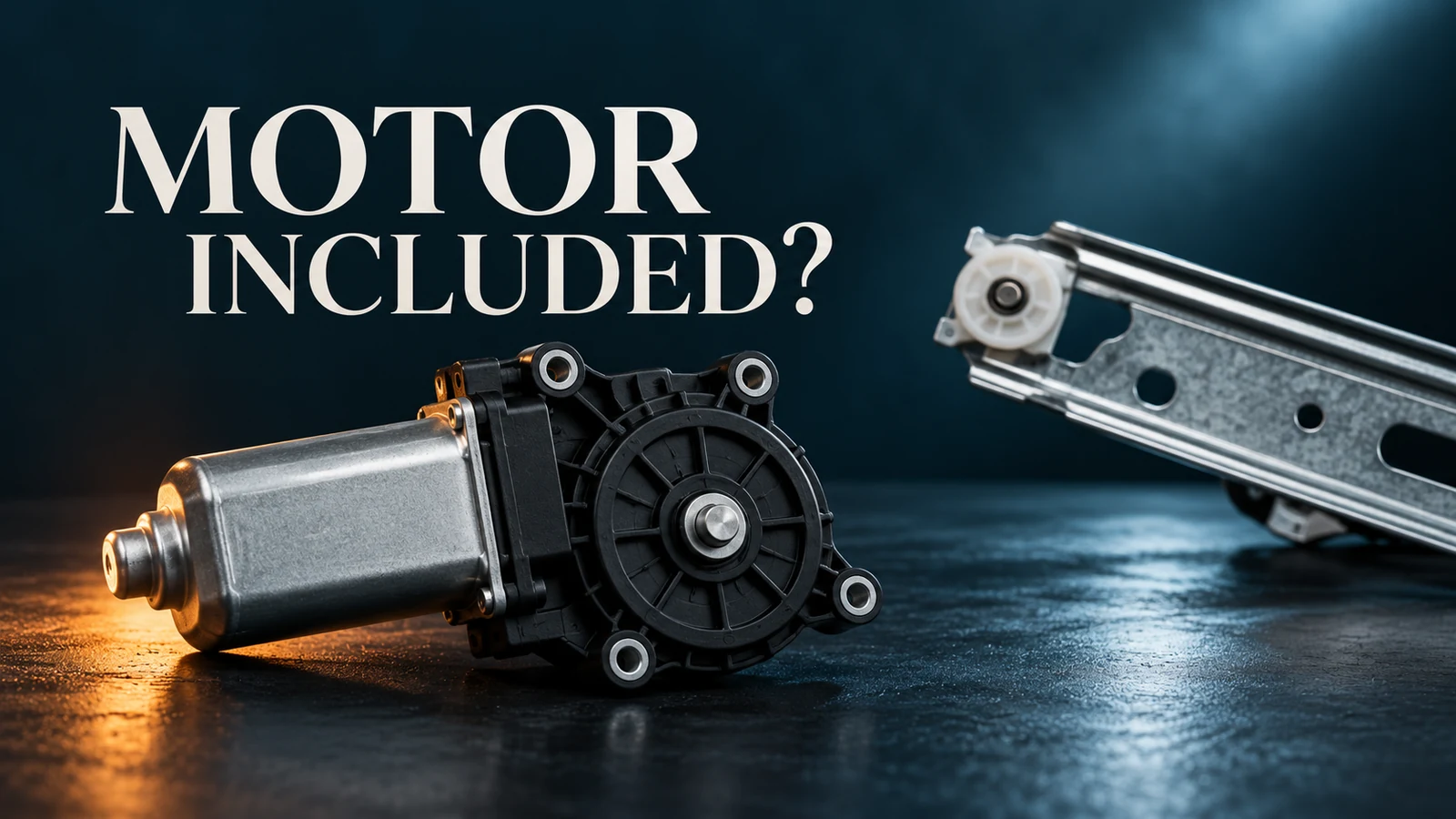
“Window regulator assembly” can leave an important purchasing question unanswered: does the quote include the drive motor? A catalog title, photograph or short description may help identify a candidate, but the order should state the supplied components explicitly. Ask for the offered SKU and its written supply scope rather than relying on the word “assembly.”
Start with the same vehicle and door application for both offers. Record market, model, body variant, year or production interval and door position. Keep the original reference separate from the seller's SKU. If the quotations refer to different applications, resolve that discrepancy before using them in a price comparison.
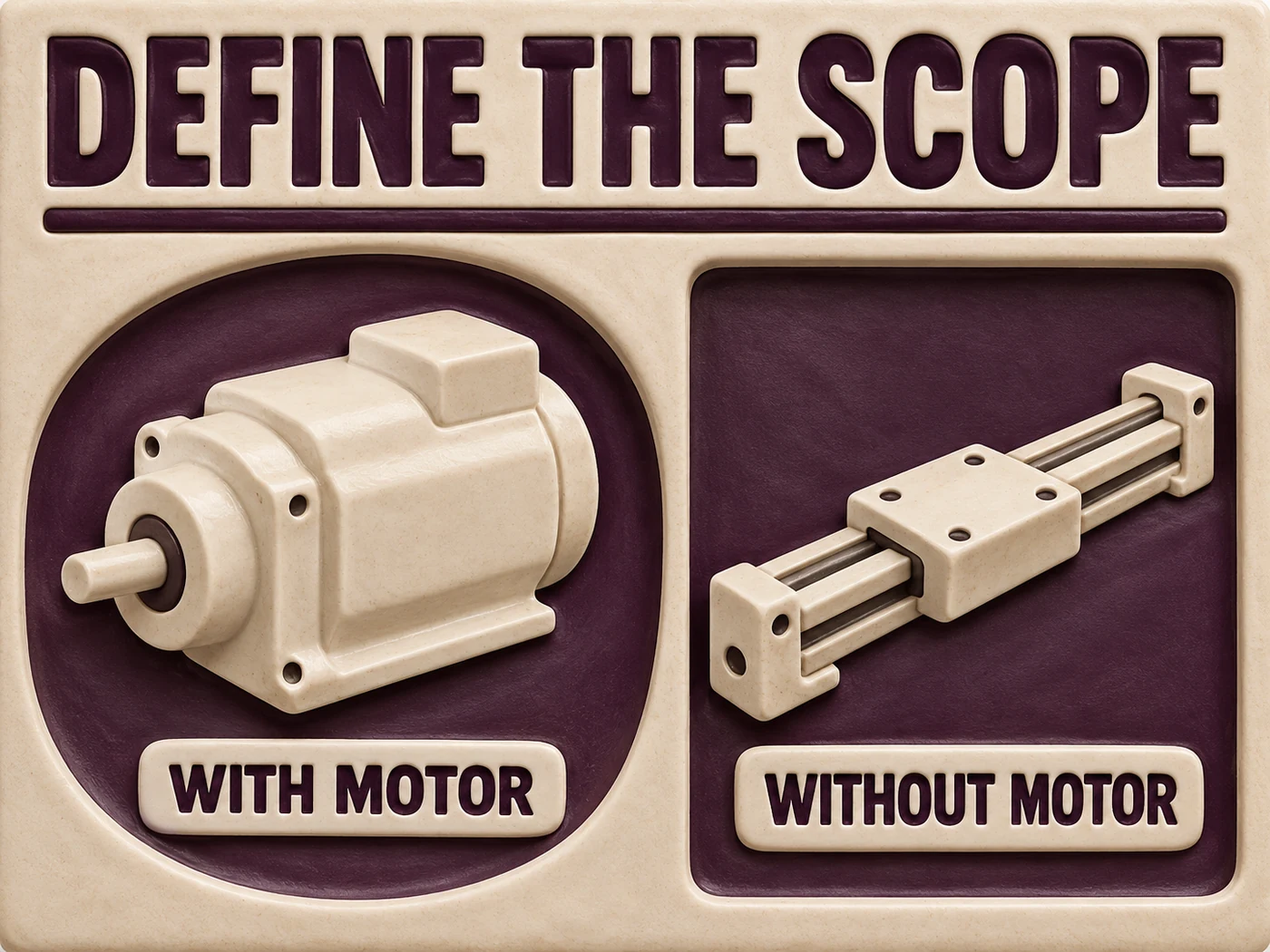
There are two distinct decisions. The first is whether the proposed regulator matches the application. The second is whether the customer needs a regulator with its motor or a regulator intended for supported motor reuse. A satisfactory answer to one question does not establish the other. Keep both decisions in the approval record.
What to confirm in a with-motor quotation
Ask whether the motor is supplied attached to the mechanism or supplied separately, and identify its reference. These are supply details, not assumptions about how the installer should proceed. A photograph of an attached motor does not establish the actual pack contents or the relationship between the pictured item and the offered SKU.
Confirm the glass carriers or clamps, fasteners and other named components separately. Do not expand the pack contents from a generic illustration. When a supplier uses a bill of materials, preserve the applicable version and identify which lines are included in the quoted unit. Optional items should remain visibly optional in the comparison.
Then request the applicable motor and control information. Brose's door-component portfolio describes window regulator drives with different electronic functional scopes. This supports asking about the selected drive's documented functions; it does not establish which functions a MAKEXCAR motor provides or guarantee vehicle compatibility.
What to confirm in a without-motor quotation
A regulator without a motor is not automatically a complete answer to the replacement request. Ask which motor reference the mechanism is intended to accept, and request the evidence for that relationship. “Reuse the original motor” is incomplete if the original reference has not been identified or its condition has not been evaluated.
Motor reuse also depends on the reason for the replacement. The CARDONE window lift motor technical sheet describes mechanical and electrical factors that can complicate a motor complaint. Use an applicable technician's diagnosis to decide whether reuse is appropriate. This article does not provide a universal motor test or a vehicle-specific transfer procedure.
Record who is responsible for confirming the proposed reuse: the supplier provides the documented compatibility basis, and the customer's relevant technical reviewer evaluates the existing motor and the intended application. Clarify that responsibility in the inquiry. An unexplained reuse assumption can pass unnoticed when both quotations use the same broad description.
Build one comparison table for both offers
Use the same fields for both quotations and record each supplier's answer against its offered SKU. “Included,” “excluded” and “unresolved” mean different things. A blank should remain a question until it has an answer. The following editorial worksheet explains what information is needed when two offers are difficult to compare; it is not compatibility approval.
| Comparison item | Why it matters | Ask for this evidence |
|---|---|---|
| Application and regulator | Two prices can cover different doors or mechanisms before motor scope is considered. | Both offered SKUs against the same documented vehicle/door and original reference. |
| Motor inclusion and delivery form | A pictured motor does not prove that it is supplied, attached or the pictured reference. | Written motor reference and attached/separate/absent status in each quote. |
| Supported reuse | A motor-free offer depends on an identified compatible drive and an assessment of its condition. | Supplier compatibility basis and the customer's technical review of the retained motor. |
| Attachments and control information | Optional clamps or undocumented functions can change the required configuration. | Named contents, optional lines, relevant control documents and their versions. |
| Commercial basis | Quantity, currency, exclusions and delivery differences affect the subtotal. | Dated offers for the same requirement, with actual extra items and charges identified. |
If one offer leaves a required attachment optional and the other includes it, ask for a revised price for the required configuration. Retain the initial offer as history, but use the revised scope and date in the comparison. A cheaper mechanism line may still be useful; the buyer needs to know which additional evidence or purchases make it meet the actual requirement.
A small calculation can expose a scope difference
Use real quotation figures when available, with currency, quantity, date and the included items recorded. Do not compare an individual mechanism price with a complete assembly price as though they describe equivalent orders. If a separate motor would be required, its actual quote belongs in the comparison, together with any relevant delivery differences.
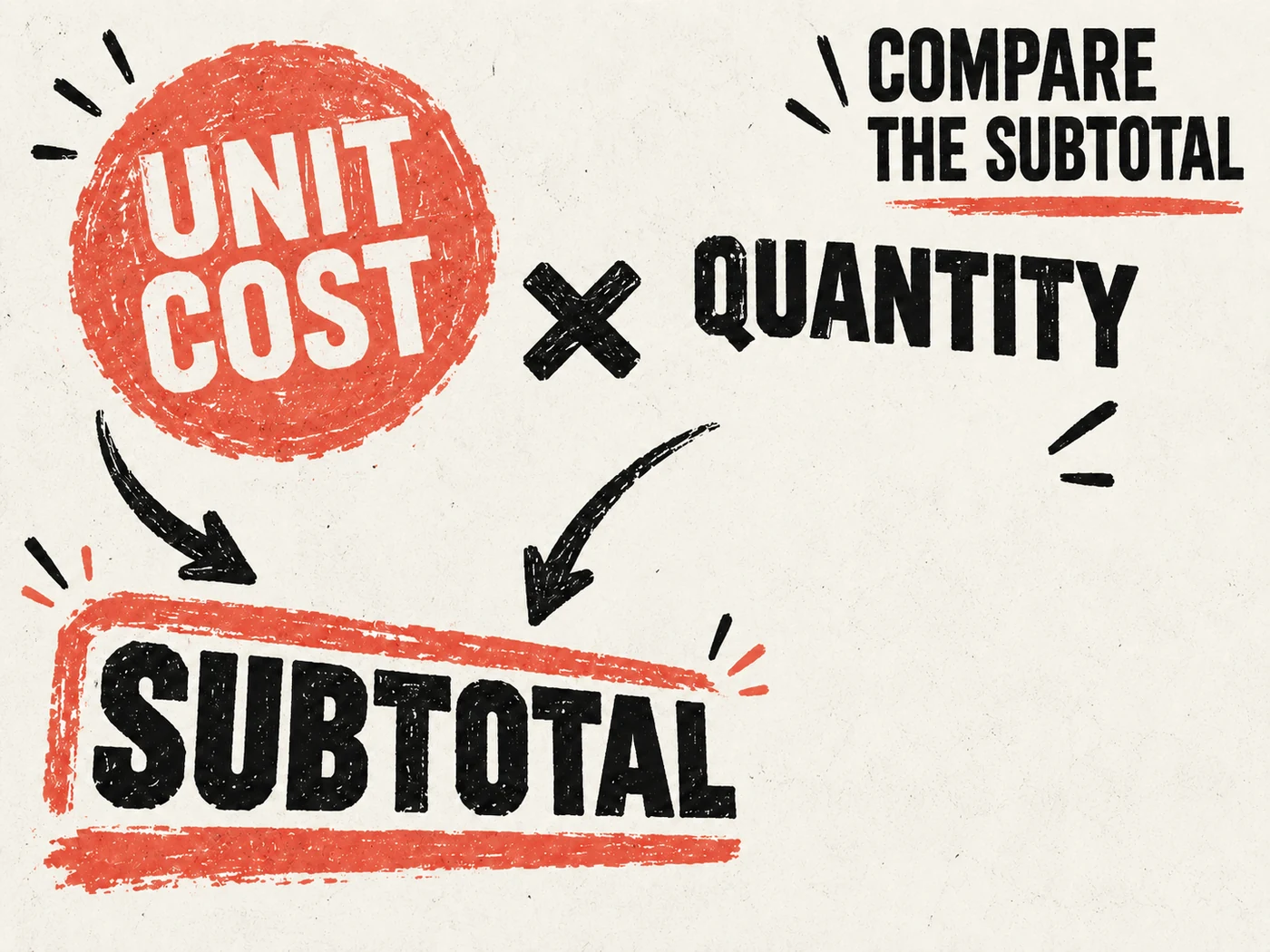
Here is a hypothetical example, not MAKEXCAR pricing. Assume the requirement is twenty door assemblies with compatible new motors. Offer A is USD32 per regulator including the motor. Offer B is USD22 per regulator without the motor, plus a separately quoted compatible motor at USD13. The mechanism-and-motor subtotal is twenty multiplied by USD32, or USD640, for A.
For B, the subtotal is twenty multiplied by USD22 plus twenty multiplied by USD13, or USD700. The difference is USD700 minus USD640, or USD60. These inputs are invented solely to demonstrate the calculation. They exclude freight, tax and any other charges, and do not establish real prices, actual compatibility or a recommended supplier.
If the actual requirement instead permits documented reuse of existing serviceable motors, the applicable comparison changes. Use that confirmed scope and the real costs relevant to the customer's process. Do not assign an invented labor allowance, failure rate or return rate just to make one offer appear cheaper.
Keep commercial comparison and technical approval separate
A comparable subtotal can help the buyer see the consequence of supply scope. It cannot establish that the proposed motor fits, that the original drive is suitable for reuse or that all vehicle functions are supported. The technical approval needs its own evidence, with unresolved items clearly visible.
Likewise, a compatible mechanism does not make a quotation commercially complete. Check the quoted quantity, currency, validity date, packaging request and delivery basis. A change in those fields can alter the buying decision even when the mechanism reference stays the same. Ask for an updated offer when the customer's requirement changes.
For a repeat order, compare the current quote with the last approved scope rather than only with the previous unit price. A supplier may change a description, motor reference or supplied attachment item. Identify those differences before confirming that the new offer is a repeat of the earlier assembly.
Check the sample against the written scope
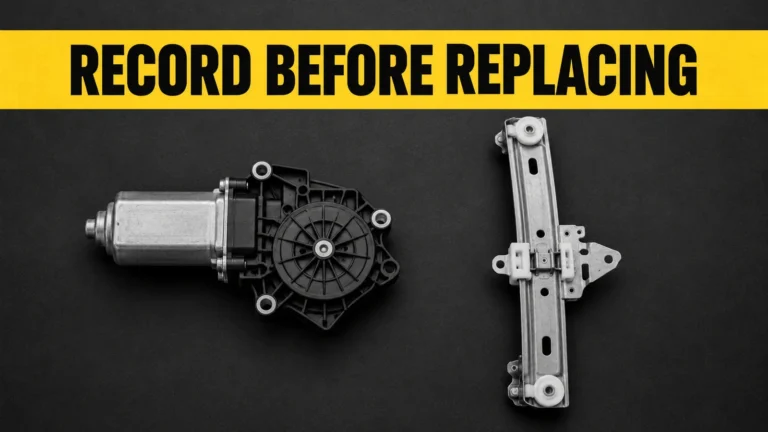
At sample receipt, photograph the supplied components and labels, then compare them with the written quotation and applicable references. Record whether the motor is attached, separate or absent. That observation checks the delivered scope; it does not confirm electrical operation or the correctness of a proposed motor transfer.
Ask the responsible reviewer to evaluate application and interfaces using appropriate documentation. A bare mechanism and a motor-equipped assembly may need different review inputs. Functional checks require applicable procedures and acceptance criteria. An unloaded movement demonstration should not be treated as evidence of complete operation in the customer's door.
Handle any discrepancy before placing the production order. State the exact difference, such as a missing motor that was explicitly included or an unconfirmed motor reference. A written clarification tied to the offered SKU helps preserve the order basis and avoids treating an informal photograph as the final specification.
For distribution teams, carry the confirmed scope into the customer-facing record as well. A warehouse SKU, quotation line and sales description should identify the same supply configuration. If the purchasing team approves a motor-free mechanism but the customer description still promises a motor-equipped assembly, the technical review has not solved the commercial mismatch. Ask the responsible teams to correct that description before the order is released. Record the change alongside the approved quotation so a repeat order does not restore the earlier ambiguity.
Questions to resolve before issuing the purchase order
The lower price has no motor reference
In a hypothetical comparison, the mechanism-only offer says “reuse original motor” but provides neither a supported motor identifier nor its compatibility basis. Do not give that offer a zero motor cost as though reuse had already been approved. Request the pairing evidence and the customer's assessment of the existing drive. If a new motor is required, obtain its actual quote and update the subtotal; the USD example above is only arithmetic.
The photograph and quotation describe different contents
Suppose a hypothetical photo shows an attached motor, while the written offer excludes it. Ask the supplier which configuration the SKU and price cover and request a corrected contents record. The picture cannot settle that conflict. If a sample has arrived, record the received labels and components as an observation, then resolve the quoted scope before approving the order.
The repeat price matches but the supplied drive changes
In a hypothetical reorder, the unit price is unchanged but the current motor identifier differs from the last approval. Compare the references and applicable control information, and ask for the basis of the proposed change. An unchanged price does not preserve the previous technical decision. Retain the revised quote and the customer's approval of the current pairing before treating it as the same assembly.
These are illustrative quotation gaps, not reported customer incidents. In each case the buyer can name the missing input and direct a focused request to the responsible party. Commercial clarity and technical approval should converge on the same offered configuration before purchase release.
Send a scope-specific window regulator inquiry
Copy these fields into the inquiry so the supplier can quote a defined configuration. Brackets are buyer inputs, not a confirmed MAKEXCAR bill of materials.
Application: [market, body/production qualifiers, affected door and original reference].
Assembly scope: [offered mechanism SKU, new motor needed or proposed reuse, motor reference and attached/separate status].
Evidence: [compatibility/control source and version, customer reuse assessment, missing documents].
Included items: [required carriers/clamps/fasteners, exclusions and optional items to quote separately].
Commercial request: [quantity, currency, quote date/validity, delivery basis and charges required in the comparison].
The MAKEXCAR window regulator category is a sourcing starting point. For a useful inquiry, provide the application and door position, original reference, proposed SKU, required quantity and whether a new motor is needed. If reuse is proposed, include the existing motor reference and available compatibility evidence.
Use the MAKEXCAR contact page to request confirmation of the assembly scope and outstanding documents. Approve the price comparison only after both offers describe the required configuration. The goal is a clear order that meets the customer's documented requirement, with motor inclusion and reuse responsibilities stated explicitly.