
This guide focuses on stabilizer bar bushing diameter and mount identification. It does not cover control-arm bushing selection, material upgrades or installation procedures. All dimensions, fit criteria and supplied components must be confirmed for the actual MAKEXCAR reference rather than inferred from another manufacturer's part.
Identify which stabilizer mounting is being discussed
Begin with the vehicle or equipment application and the mounting location described by its catalog or service record. Record the axle and position where the documentation distinguishes them. Keep the stabilizer mounting bushing separate from a link joint or another suspension bushing in the inquiry.
Terminology can vary between customer records and supplier listings. “Sway bar,” “anti-roll bar” and “stabilizer bar” may describe the same general component family, but those terms do not identify a unique bushing. Preserve the actual reference and any application qualifiers rather than replacing the full description with a shorter generic name.
Ask whether the bar and mount are original to the documented configuration or have been changed. If that information is unknown, flag it. A vehicle-model entry cannot by itself resolve a component combination that has not been identified.
Record the bar diameter and where it was checked
Use the applicable manufacturer's documentation to identify the relevant measurement location. Preserve the measured value, unit and method in the customer's record, together with a photograph or drawing showing the location. A number without its location can leave the supplier uncertain about what was actually checked.
Powerflex's specific front anti-roll-bar bushing listing advises measurement where the bushing sits for that application, explaining that the bar diameter varies along its length. This is an attributed application example, not a claim that every bar has that shape or that the listed part fits a MAKEXCAR order.
If several measurements or records disagree, keep them separate and ask which one corresponds to the required position and configuration. Do not round a reported result to the nearest catalog size and treat the difference as approved. Selection needs the reference-specific requirement and the supplier's documented interpretation.
Distinguish bar diameter from the bushing's own dimensions
A listing can describe the bar size served by a bushing, while a drawing describes dimensions of the uninstalled component. Keep those fields labeled. Do not assume that a measured opening in a loose sample is intended to equal a catalog bar-diameter entry without further explanation.
Record the sample condition when documenting its dimensions. Identify whether it is new, returned, loose or associated with a particular mount, and retain the supplier's measurement definition. A used sample can help identify a configuration, but its appearance does not supply the nominal specification of a new part.
Ask the supplier to identify the dimension being confirmed and the applicable tolerance or fit criterion where available. This article supplies no compression allowance, interference value or acceptable gap. Those requirements cannot be generated from a photograph or a generic diameter comparison.

Match the outer profile and bracket context
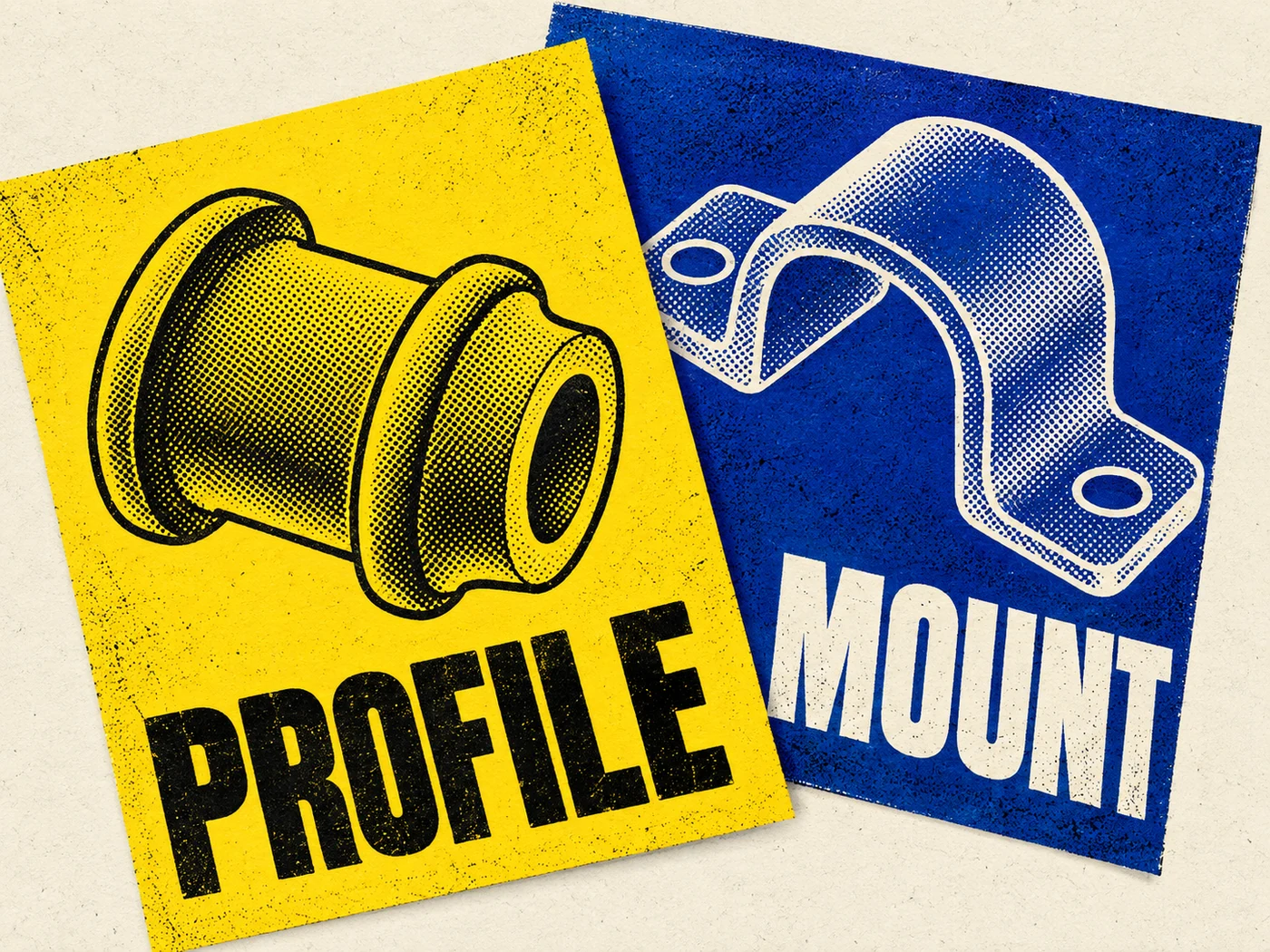
Request a view of the bushing's outer shape and the corresponding mount. Identify the reference and viewing direction of each image. Keep the profile, width, locating features and mount information attached to the same application record rather than comparing unrelated product photographs.
Where the supplier drawing defines bracket or retention features, record their identifiers and relevant dimensions. A bushing associated with one mount should not be assumed suitable for another merely because the bar-diameter field matches. Obtain written confirmation of the actual combination offered.
State whether the bracket is reused, supplied with the bushing or quoted separately, according to the proposed offer. Do not treat an illustration showing a bracket as a packing promise. The approved supply list should establish what the purchaser will actually receive.
Keep application qualifiers visible in the catalog row
Another Powerflex listing restricts its stated fit to a particular vehicle configuration and bar size. That provides a documentation example: a product name and diameter should travel with its applicability qualifiers. The example is not a replacement recommendation or a transfer of its material or performance claims.
For a distributor catalog, create one traceable row for each approved configuration. Include the supplier reference, application source, axle or location, stated bar diameter and any documented mount qualifier. Where the evidence is incomplete, preserve a pending status rather than publishing a broad fitment claim.
Keep source revisions and approved changes. If a supplier changes the application note or reference, identify which catalog rows are affected. Do not silently expand coverage because a new picture looks like an older sample.
A bushing fitment evidence worksheet
The following editorial worksheet collects the questions a buyer should resolve. It contains no manufacturer dimensions or acceptance thresholds. Complete each field from the actual application, supplier drawing and sample record.
| Record field | Evidence to attach | Question to resolve |
|---|---|---|
| Application and position | Catalog or service reference | Which configuration and mounting location? |
| Bar identity | Reference and known change history | Is the installed bar the documented configuration? |
| Diameter record | Value, unit, method and location image | Which position does the result describe? |
| Bushing dimension definition | Reference-specific drawing | Bar-size field or loose-component dimension? |
| Outer profile and location features | Labeled sample views and drawing | Does the offered design match the required mount? |
| Bracket or retaining parts | Mount reference and supply list | Reused, included or separately sourced? |
| Sample condition | Identity and as-received photographs | New sample or used identification evidence? |
| Approval scope | Written decision and unresolved items | Document match, sample review or confirmed application? |
Use matching labels on the worksheet and photographs so the supplier can locate each item. If a measurement is corrected, retain the original record and explain the correction. This gives purchasing and receiving staff a dependable basis for identifying the approved reference.
Review a sample without inventing a fit allowance
First verify the sample identity against the quotation and drawing. Photograph it as received and check that its markings and supplied items match the agreed scope. Resolve an unexpected bracket or missing reference before interpreting the sample's dimensions.
Then compare the documented features using the agreed measurement definitions. Record the method and result beside the applicable criterion. If the supplier has not provided that criterion, describe the review as incomplete; do not create a universal squeeze, gap or “close enough” rule.
A sample review should state what it establishes. A documentary profile comparison is different from application validation or a performance assessment. Neither a matching color nor a familiar-looking split design proves the correct fit, material or service behavior.
Example: the listed diameter matches but the mount is unidentified
Consider a hypothetical inquiry with a vehicle description and a reported bar size that matches a supplier's catalog entry. The customer also sends a loose used bushing, but no mount reference or profile drawing. The diameter agreement answers only one part of the question.
The next request should identify the mounting position, the existing bracket or retaining arrangement and the supplier drawing for the proposed reference. If the customer cannot identify a changed bar or mount, keep that uncertainty visible. The order can remain pending until the combination is documented.
This example contains no actual mismatch, numerical limit or approved substitute. Its purpose is to prevent one matching field from being treated as complete fitment evidence. A supplier may resolve the question with reference-specific information that is absent from the original inquiry.
Carry the approved configuration into packing and receiving
Keep the supplier's dimension terminology in the catalog, including the distinction between the applicable bar size and the component drawing. If a customer-facing description uses a simplified size label, retain a link to the underlying reference record so a later fitment inquiry can recover the original qualifier. A short listing should not erase information that was necessary to approve the configuration.
Keep the final reference, application qualifiers and supply unit on the order line. Define the number of bushings and any separately supplied mounting items per sales unit. “Kit” should have a component list; it should not depend on what staff remember from a sample photograph.
For mixed orders, maintain the correspondence between labels, references and approved configurations. A warehouse description based only on diameter can be too broad if the order contains different profiles or positions. Retain the actual supplier identifiers and agreed pack quantities.
If a fitment complaint later arises, attach the original approval record and the customer's new observations. Document changes to the bar or mount separately from the supplied-part identity. Do not conclude that the bushing was defective simply because the original inquiry omitted part of the configuration.
Frequently asked purchasing questions
Does matching bar diameter prove a bushing fits?
No. The applicable position, outer profile, mount and reference-specific requirements also need confirmation.
Can I use a loose used bushing as the nominal specification?
It can support identification, but record its condition and obtain the applicable drawing. Do not treat its measured appearance as the specification for a new part.
Is the bracket always included?
Confirm the actual offer. Record whether mounting items are included, reused or supplied separately, with identifiers and quantities.
What should I provide with a bushing inquiry?
Send the application, position, reference, diameter record with location, and labeled bushing and mount photographs. Highlight any known component changes or unresolved information.
Request a reference-specific fitment review
Browse MAKEXCAR Bushings, then send an inquiry with the application and documented mount information. Request confirmation of the offered reference, dimensions, supplied components and remaining evidence needed before ordering.