This guide helps distributors prepare a clear return dossier for supplier and workshop review. It does not diagnose a particular vehicle, approve a warranty outcome or supply a cooling-system service procedure. It also does not replace a reference-specific bench-test report.
Open the case with the actual complaint
Record what the customer reports in their own terms, then clarify the observation. Does the complaint concern a part that could not be fitted, a visible supplied-item difference, a temperature reading, a leak or another identified symptom? Avoid replacing these descriptions with thermostat failure before the evidence is reviewed.
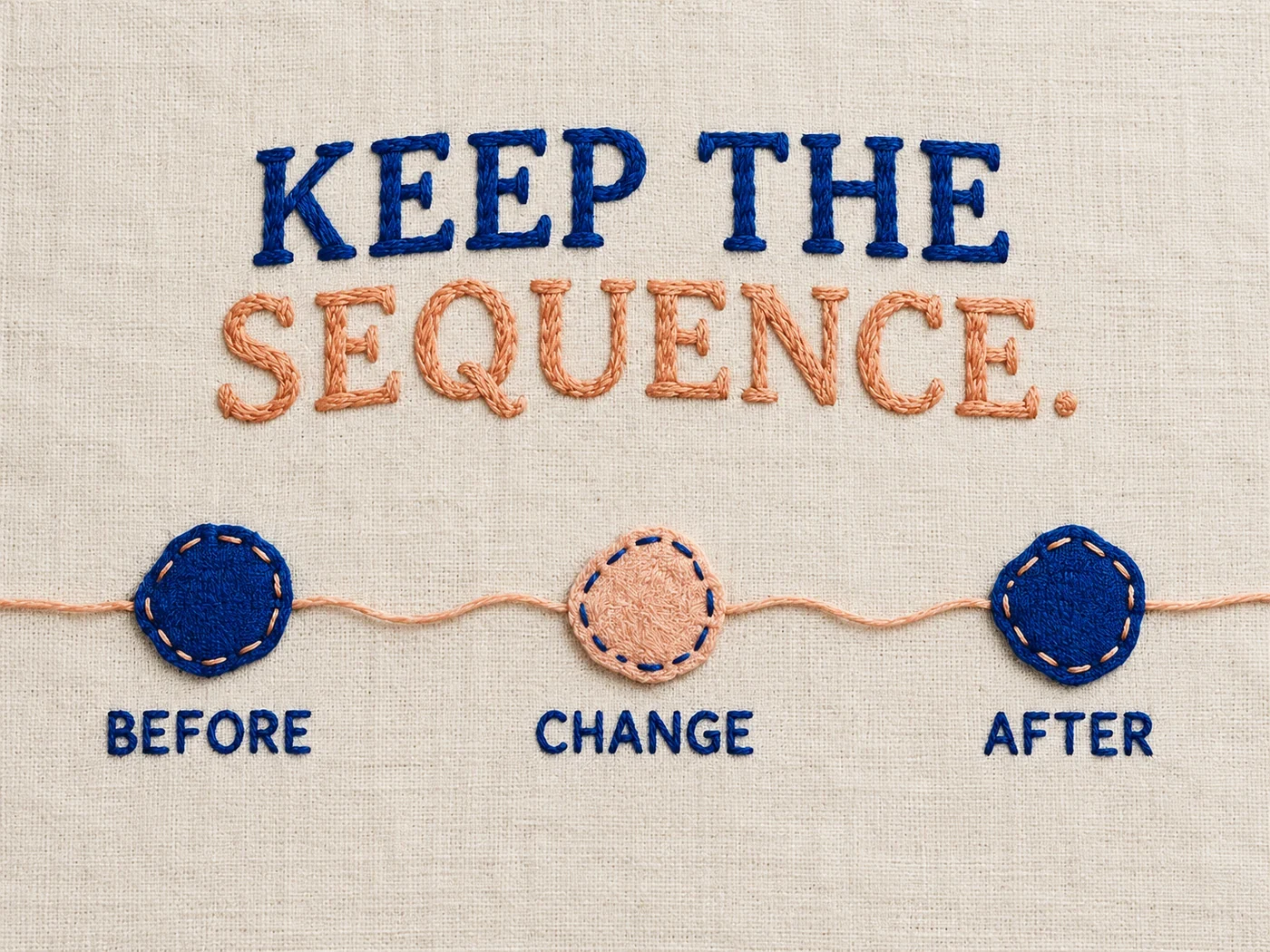
Ask when the complaint was first noticed and whether it was present before the replacement. Keep the date, order reference and delivered item identity together. A before-and-after record helps the reviewer see the sequence without assuming that the last replaced item caused every later observation.
If more than one issue is reported, preserve each separately. A housing-interface concern and a temperature complaint can exist in the same case while needing different evidence. One unresolved question should not be hidden by an answer to the other.
Confirm the ordered, delivered and requested references
Save the order and quotation showing the accepted item, then record the delivered identity and any markings that can be read. Keep the customer's requested reference separate. Do not assume that a carton label establishes the identity of a removed or unlabelled component inside it.
Record the vehicle configuration and the source used for part selection. Preserve any suffix, position or variant distinction relevant to the selected thermostat. If the application source and delivered reference disagree, identify that difference before interpreting a temperature reading as a product-performance result.
MAHLE's official thermostat overview distinguishes inserts, integral and housing arrangements, among other types. This bounded example supports identifying the offered construction accurately. It does not transfer MAHLE type codes, contents, electrical requirements or application assignments to MAKEXCAR items.
Build the fitment record from specific differences
For a fitment complaint, ask which feature differs from the selected requirement. Request oriented photographs showing the delivered item and the relevant mounting, housing or connection concern. Link each picture to the item identity so the reviewer can tell what it represents.
Use the selected drawing or application record for any dimension-based comparison. Keep its feature definition and units. Do not estimate a sealing interface or connector identity from a partial photo, and do not fill a missing dimension with another thermostat's catalog data.
Keep supplied contents visible as a separate field. A missing associated item is a quotation or delivery question; it is not automatically evidence about the thermostat's temperature behavior. Confirm what the sales unit was agreed to include before assigning a return reason.
Describe readings without inventing the operating context
For a temperature complaint, record the actual reading and its units, source and location where known. Clarify whether the record comes from a dashboard display, a diagnostic data channel or a workshop measurement. Those descriptions should stay with the observation rather than being reduced to a bare number.
Retain the time sequence and the conditions under which the reading was recorded. Ask for the relevant workshop record instead of recreating missing conditions from memory. This guide gives no normal operating temperature, warm-up time or acceptance limit for an unspecified vehicle.
If readings from different sources disagree, preserve both with their identities. Ask the technical reviewer to interpret the difference using the applicable vehicle documentation. A distributor should not declare one reading correct simply because it is closer to a temperature printed in a sales description.
Keep the installation history as evidence
Ask the workshop to identify what work was performed, which selected instructions were followed and whether other relevant parts were changed. Record that history without rewriting it into an invented diagnosis. The purpose is to show the reviewer what happened around the reported observation.
MAHLE's official workshop article discusses cooling-circuit air after thermostat replacement and sealing-material concerns. This bounded context explains why the service history belongs in the case. It does not prove that air or sealant caused a particular MAKEXCAR complaint, and no service steps are reproduced here.
Request the applicable vehicle and selected-product documentation for any technical service question. This purchasing guide supplies no bleeding sequence, sealant choice, torque or electrical procedure. A return form should capture the workshop's record, not direct a repair from generic internet advice.
Separate a vehicle symptom from a bench result
A workshop temperature report describes an observation in a particular vehicle context. A bench report evaluates an identified specimen under a documented method. Keep the two sources clearly labelled when both are supplied. Neither should silently stand in for the other.
If a supplier requests a bench evaluation, retain the selected method, sample identity and report conditions for review. This article gives no water-bath procedure, opening-temperature test or curve acceptance criteria. Those requirements belong to the applicable technical source and the actual report.
Likewise, a bench result should not be used to dismiss a reported application concern without reviewing the relevant records. The dossier should make the different evidence questions visible so the technical decision is based on the right source for each issue.
Use a case index instead of a premature conclusion
The original index below helps a reviewer find the evidence. It is not a warranty policy or a pass/fail checklist. Record what has been supplied, what remains missing and which question each item addresses.
| Case item | Record requested | Question supported |
|---|---|---|
| Order identity | Accepted quote and delivered reference | What was ordered and supplied? |
| Application | Vehicle configuration and selection source | Was the correct variant selected? |
| Fitment concern | Oriented photos and selected feature record | What specific difference is reported? |
| Temperature observation | Reading, units, source and context | What was actually observed? |
| Work history | Before/after sequence and workshop record | What changed around the complaint? |
| Technical evaluation | Identified report and selected conditions | Which specimen and question were evaluated? |
| Open questions | Missing facts and clarification request | What prevents a supported conclusion? |
Assign each photo and document to the case identity. An organized file should let another reviewer understand the sequence without asking the customer to repeat every detail. Good indexing improves the review record; it does not guarantee a particular warranty decision.

A post-replacement reading with incomplete records
Consider a hypothetical return request saying the engine now runs hot. The buyer has an invoice and a thermostat photograph, but the reported reading has no units, source or operating context. The workshop history and selected vehicle configuration are also missing.
The buyer records the complaint and requests the missing evidence before calling the part defective. The inquiry separates the delivered identity and fitment record from the reading and service-history record. If a relevant mismatch or technical finding is later documented, preserve that finding with its source rather than replacing the original observation.
This is an illustrative evidence case, not a real MAKEXCAR warranty finding. It contains no actual temperatures or diagnosis. It shows why timing and a broad symptom description leave several review questions unanswered.
Keep the returned item connected to its history
If an item is returned for review, keep the case identity and document what the workshop reports about its removal and condition. Retain photographs linking the returned item to the delivered reference where possible. Do not silently merge multiple returned items into one record.
Ask the receiving supplier which handling or submission requirements apply to the selected review. This guide supplies no shipping, cleaning or dismantling instruction. Preserve the condition and history as documented instead of inventing steps to make a part suitable for an unspecified evaluation.
When the review is concluded, keep the source of the decision and its actual scope. Distinguish a delivery correction, an application clarification and a documented technical result. A catalog update should reflect the supported finding rather than a broad assumption about every thermostat in the family.
Route different evidence gaps to the right decision
Two readings have different sources and no common timestamp
For a hypothetical case record, the dashboard note says 100°C while a diagnostic screenshot shows 92°C. Subtracting the labels gives 8°C, but the records have no shared timestamp, location definition or operating context. These invented readings are not normal limits, opening temperatures or actual MAKEXCAR case data. The numerical difference alone does not prove which source is correct or how the thermostat behaved.
The next request is to identify each reading's source and the circumstances in which it was recorded, preserving any actual timing available. Do not average the labels into 96°C as a supposed true value or convert the difference into a product defect. The technical reviewer must establish whether the observations address the same condition before using them together.
The delivered variant differs from the selection record
If the quotation identifies one reference but the delivered item is documented as another variant, begin with that identity discrepancy. It may answer a delivery or selection question before any temperature evidence is interpreted. Keep the requested application and each reference visible instead of merging them under a broad family name.
A documented variant mismatch does not automatically prove the cause of a temperature complaint or establish a warranty finding about the intended part. Ask for the supplier's explanation of the delivered identity and its applicable mapping. Preserve a delivery correction separately from any later technical evaluation so the catalogue team does not turn a shipment issue into an unsupported family-wide performance claim.
The service record was completed after a second intervention
If the workshop supplies observations only after subsequent cooling-system work, those observations belong to the later state. Retain the original complaint and identify what changed before the new record was obtained. The new document may be useful, but it cannot recreate an undocumented condition immediately after the first replacement.
Ask for the sequence of interventions and available contemporary records rather than requiring the workshop to invent missing readings. MAHLE's service-history context explains why surrounding work matters; it does not identify air, sealing material or another cause in this particular case. Keep the unresolved original-state evidence gap visible when a reviewer considers the later result.
A bench report cannot be connected to the returned unit
A report with an internal specimen number needs a documented connection to the item returned under the case. If that mapping is absent, preserve the result as an identified laboratory record while leaving its relevance to the returned item unresolved. A matching sales-family name is not enough to merge several returned specimens into one passing or failing result.
Request the sample intake identifier, returned-item identity and report mapping from the responsible organization. If the linkage is established, the reviewer can assess the result under its actual method and conditions. If it is not, the file needs that clarification rather than a preselected warranty conclusion. This distinction protects the usefulness of the report without overstating what it proves.
Send a complete thermostat review inquiry
Browse the current MAKEXCAR Thermostats category for published references. Category membership does not establish a common construction, application or temperature specification.
Through MAKEXCAR contact, send the order and delivered identity, selected vehicle details, complaint sequence, oriented pictures and readings with their context. Include the workshop and report records available. Keep fitment and temperature evidence distinct before assigning the return conclusion.
Identity and complaint: order/accepted reference [ ]; delivered markings/reference [ ]; requested vehicle configuration and selection source [ ]; case/returned-item ID [ ]; exact complaint [ ]; specific fitment or supply difference [ ]. Keep observed identity differences separate from assumed causes.
Observation and sequence: reading/value/units [ ]; source and location [ ]; timestamp/context [ ]; pre-replacement observation [ ]; replacement work record [ ]; later interventions and readings [ ]; missing contemporary record [ ]. Use actual documentation; leave unavailable readings unknown rather than completing the timeline from memory.
Evaluation and disposition: report/specimen ID [ ]; link to returned item [ ]; method/conditions and criterion source [ ]; questions addressed [ ]; unresolved application or temperature issue [ ]; decision source and scope [ ]; commercial resolution under applicable terms [ ]. Send the records together so the supplier can review the specific issue without treating dossier completeness as automatic warranty approval.