Choose the response question before comparing numbers
Begin with what the buyer needs to establish: the offered bushing's response in a specified direction and range. A statement such as “stiffness required” is incomplete if it leaves those fields undefined. Ask the technical reviewer which movement direction, displacement interval and measurement basis apply to the application.
Separate that request from a request for material identification or hardness. The quotation may need both records, but they answer different questions. A hardness number without a named scale is already incomplete; adding a scale still does not turn it into a component force–displacement record.
Do not infer a suitable stiffness from a similar silhouette or an apparently similar rubber surface. Identify the exact quoted assembly, configuration and source document first. This gives the supplier a precise request and avoids comparing unrelated values that happen to sit on adjacent lines in a catalog.
Identify the specimen behind the quoted response
Use the exact quoted item in MAKEXCAR's Bushings category to request response data. A material description can support an identity question, while hardness and component stiffness need their own measurements and definitions. Do not turn a metal/rubber label into a compound, scale, stiffness or hydraulic-design specification.
Keep the assembly reference and drawing revision with the specimen named in the report. If one source covers a product family, ask how it maps to the proposed item. Similar external geometry and related reference codes do not establish that two offered bushings have the same load response.
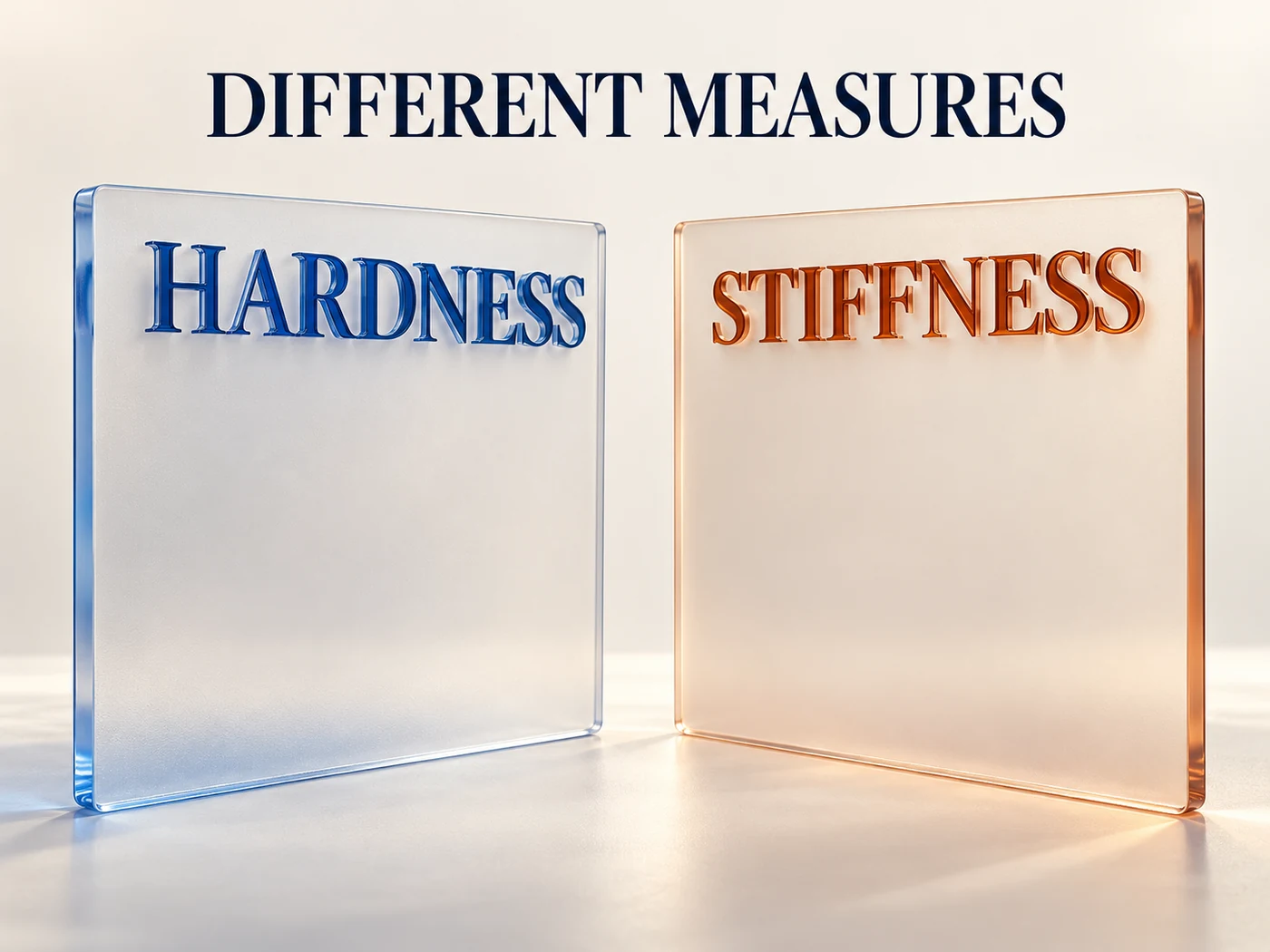
Hardness and component stiffness need separate labels
ZwickRoell's rubber-testing overview distinguishes Shore indentation hardness from other rubber measurements and identifies Shore and IRHD separately. Preserve the reported hardness method and scale rather than treating all rubber hardness numbers as interchangeable. This is general measurement context, not a hardness result or test instruction for a MAKEXCAR bushing.
For the component-response record, request the stated force and displacement units and the author's stiffness definition. Ask whether the supplied number describes a particular operating point, an interval or another defined evaluation. Keep that explanation with the value when comparing quotations.
A table headed only “hardness” or “stiffness” leaves essential interpretation unresolved. Request the missing heading and notes from the original document rather than supplying your own assumed scale or formula. A cropped number becomes useful when its definition and source are restored.
Keep the direction attached to the stiffness value
Trelleborg's Hydro Bush product table lists hardness in IRHD alongside separate axial and radial stiffness fields in N/mm. This is a useful example of separating the fields. The products and application context belong to Trelleborg; their hydraulic construction, numerical values and load limits are not specifications for MAKEXCAR's stabilizer-bushing entries.
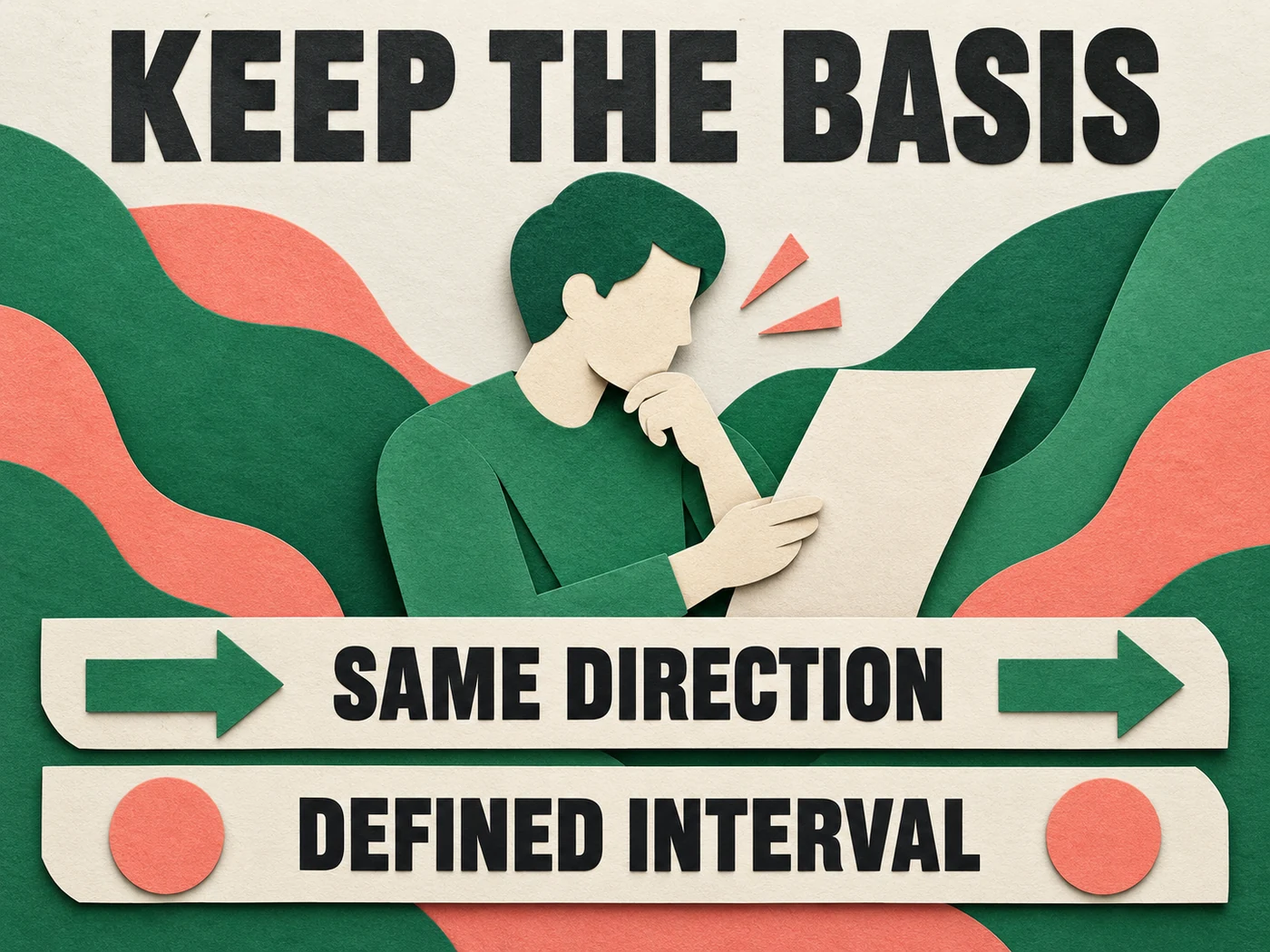
For the offered item, ask the supplier to define the direction and its reference frame. A direction called radial in one document needs a clear relationship to the specimen drawing before it can be matched to another record. Keep axis labels and the relevant drawing view together.
If a report provides several directions, keep each result in its own row. Do not average them into a single purchasing score unless the applicable technical specification defines that operation. A missing direction should remain an unresolved comparison field rather than inheriting the value from a direction that was measured.
Read the force–displacement record before the summary
Request the underlying data or plotted response and identify the segment used for the stated stiffness. Check the reference for displacement and the sign convention. If a curve has several portions, preserve the selected portion instead of drawing one slope through whichever points are easiest to read.
Ask whether the record represents loading, unloading or another stated evaluation. Keep the branch label and the conditions associated with it. Where the author reports a summary value, request the stated calculation basis so that the buyer can see how the summary relates to the presented observations.
The practical question is whether two values were produced on a comparable basis. A number can be correctly copied from a report and still be unsuitable for a direct comparison with a differently defined number. Mark that mismatch explicitly in the quotation worksheet.
A hypothetical interval calculation
Consider an invented record with two points on the same defined loading branch and direction: 200 N at 1 mm, followed by 600 N at 2 mm. The force change is 400 N and the displacement change is 1 mm. The change in force divided by the change in displacement is therefore 400 N/mm for that illustrated interval.
| Hypothetical point | Displacement | Force |
|---|---|---|
| A | 1 mm | 200 N |
| B | 2 mm | 600 N |
| Change from A to B | 1 mm | 400 N |
These numbers are arithmetic teaching data, not measured results, test settings or required stiffness for any bushing. They contain no Shore reading and provide no conversion from hardness. The calculated interval slope applies only to these two invented points; it is not a complete response curve or proof of vehicle suitability.
Notice that simply dividing the second point's 600 N by its 2 mm gives 300 N/mm, a different calculation. It uses the stated coordinate origin rather than the change between A and B. Do not replace the report author's defined evaluation with whichever calculation gives the preferred quotation result.
Match conditions without inventing a test program
Ask the report author to identify the documented temperature, specimen preparation, mounting description and movement conditions. If the record distinguishes static and dynamic results, preserve that distinction and the corresponding conditions. Do not borrow a frequency, displacement or load from an unrelated supplier's example.
Keep any conditioning or preload description with the measured data. The request is for the conditions actually used, not instructions for a buyer to recreate the experiment. Where details are missing, ask for the relevant report section and leave the comparison unresolved until the author clarifies it.
A testing-machine capability does not establish the conditions of a particular specimen test. Similarly, a product's material label cannot fill missing test fields. Preserve the distinction between what a source says was measured and what the quotation merely needs to establish.
Use a comparison worksheet with visible gaps
Keep component-response fields separate from any required hardness record. Each row should expose the comparison basis and the clarification needed when that basis is incomplete.
| Field | Why it matters | Next request if unresolved |
|---|---|---|
| Assembly/specimen revision | Connects the response to the offered item | Obtain the report/drawing reference mapping |
| Direction and reference view | Identifies the movement being evaluated | Request the axis definition linked to the specimen drawing |
| Force/displacement data and units | Preserves observations before summary | Obtain the full curve/table with readable labels |
| Branch/range and calculation basis | Defines what the stiffness value represents | Request the selected interval/point and author's evaluation definition |
| Conditions and acceptance source | Connects result scope to the purchasing requirement | Obtain reported conditions and agreed criterion, keeping missing fields visible |
If hardness is also required, record its method, scale and specimen/source separately. A supplied hardness value closes that hardness question only; it does not populate the response-data rows. Keep conflicting revisions until the supplier identifies which supports the actual quoted configuration.
Retain the raw record and the reported precision
Keep the original table or curve alongside the quotation summary. If the report rounds values, retain that reported precision and label any calculation made from those rounded values. A result copied into a spreadsheet should not gain extra decimal places that imply measurements the source never supplied.
When a plotted point is estimated visually, record the source image and the approximation. Request the underlying data when the decision needs a precise value. If a unit conversion is necessary, retain the original number and unit next to the converted result so that another reviewer can trace the operation. These document practices improve the clarity of the comparison without adding a new performance claim.
Three incomplete response submissions and the buyer action
The supplier gives only a Shore hardness number
Request the method/scale and place the answer in the hardness record. Then repeat the component-response question with its required direction and range. Do not ask for a conversion that treats the scale reading as N/mm. Keeping the two requests separate helps the supplier identify whether additional component data exists without making the buyer invent a stiffness specification.
Two reports call different directions radial
Send the relevant drawing views and ask how each axis is defined for its specimen. Keep original labels while the reference-frame question is open. A shared word does not ensure that two values concern the same movement. If the report owner provides a mapping, retain it with the compared rows rather than relabelling the source silently.
A curve screenshot omits the evaluation range
Request the full image or data and the author's calculation definition. Identify which branch and interval support the quoted summary. If a plotted point must be estimated, label the estimate and preserve the source rather than adding decimal places that imply precise measurements. A clear summary becomes useful when another reviewer can trace its basis back to the record.
These are editorial procurement scenarios, not actual laboratory results or customer incidents. They show how to close specific evidence gaps while leaving application suitability and acceptance to the applicable technical requirement.
Ask for the data that closes the response question
Send MAKEXCAR your bushing reference and the load-response question from the responsible technical reviewer. Five fields make the request specific:
Offered item: [assembly reference], [drawing revision], [quantity], [application identification].
Response definition: [direction/reference view], [required range], [stiffness evaluation definition to confirm].
Source data: [force–displacement curve/table], [units], [branch], [point or interval], [report revision].
Conditions and requirement: [reported measurement conditions], [agreed acceptance source], [missing fields to clarify].
Separate hardness request: [method and scale if needed], [specimen/source], [how the evidence maps to the offered product].
Retain the response with the original record and quotation. A useful stiffness comparison connects the reported value to the movement, range and conditions it describes. It does not replace missing component evidence with a material label or convert a hardness number into an unsupported vehicle-performance conclusion.