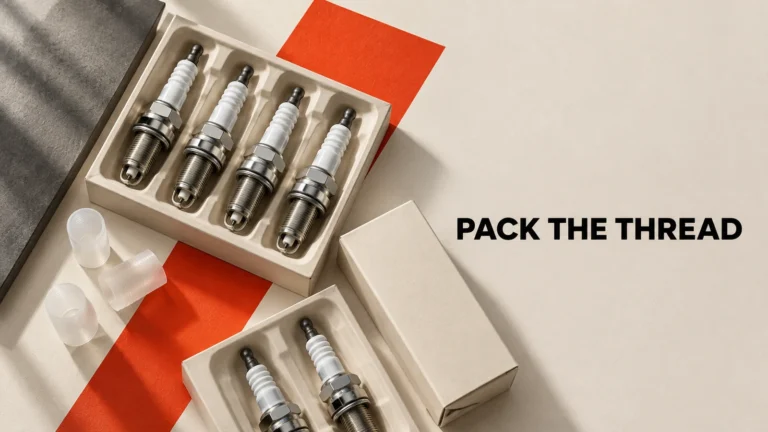
This guide is for distributors documenting new goods on arrival. It is not an engine troubleshooting chart, a laboratory test method or a repair instruction. A visible mark, damaged box or customer description can justify a question, but none alone proves when a crack occurred or establishes the condition of every plug in a shipment.
Define the receiving question before investigating cause
The first question is what condition was observed on which item at which stage. Record whether the package was unopened, opened during receiving, or already handled by another party. Keep the time and observer with the record. This helps separate what the team directly saw from later explanations offered in a supplier discussion.
NGK's official Spark Plug Basics discussion includes damaged plugs with cracked insulators among possible misfire causes. That makes physical damage a relevant concern, but the source does not diagnose your receiving sample or specify a universal visual acceptance threshold. Do not use an engine symptom list to decide that an unused plug has passed inspection.
Document the uncertainty clearly. “Line visible on ceramic; supplier review requested” describes an observation and action. “Transport impact caused crack” asserts a cause that needs additional evidence. Keeping those statements separate helps the reviewer ask the right follow-up question.
Connect the plug to its packing and shipment
Record the product reference as printed on the plug and its packaging, together with the purchase order and available batch or carton identifiers. If markings are unclear, photograph them and ask the supplier to resolve the identity. Do not silently replace a difficult-to-read code with the reference you expected to receive.
Keep the individual box, inner packing and relevant outer-carton evidence connected to that item. A close-up of ceramic without a part identity is difficult to use in a supplier claim. A carton photograph without a connection to the affected plug leaves the same gap from the other direction.
If several plugs are involved, assign a separate receiving record to each identified item or clearly defined group. Do not let a photograph of one sample become evidence that every unit has the same damage. Preserve the quantities actually inspected and the observed findings separately from the total delivery quantity.
Photograph observations without changing the sample
Capture an overall view that identifies the plug, a view of the relevant marking and close-ups of the suspected feature. Use clear lighting and enough context to show where the feature is located. Record who took the photographs and when. These are evidence-collection suggestions, not a calibrated measurement procedure.
Do not scratch the ceramic to make a line more visible, force the parts apart, or perform a destructive check as an informal warehouse experiment. Preserve the sample in its observed state for review. If the technical reviewer requests further examination, record the authorized method and the sample's condition before that examination.
A close-up can reveal a question without resolving it. Reflections, surface marks and physical damage may require different review steps. Ask for the appropriate interpretation rather than attaching a definitive diagnosis to an unclear photograph. Keep the original image files when annotated copies are used in the discussion.

Use a receiving record with visible unknowns
The following table is an editorial document checklist. It does not define a test method, sampling plan or acceptable crack size. Add the fields required by your agreed purchasing and quality process, and make unresolved items visible to the person responsible for the disposition.
| Record field | Evidence to retain | Question it answers |
|---|---|---|
| Item identity | Reference and marking photographs | Which exact item is being reviewed? |
| Receipt context | Date, observer and handling stage | When was the feature first observed? |
| Package relationship | Individual box and relevant carton identifiers | Which packing belongs to this item? |
| Observed feature | Overall and close-up photographs | What was seen, without a cause assumption? |
| Inspection scope | Items examined and recorded findings | What does the evidence actually cover? |
| Reported handling | Documented events, with source | Which events are known rather than inferred? |
| Review request | Supplier questions and response version | What remains unresolved? |
| Disposition | Authorized decision and affected quantity | Who decided the next action? |
Separate package damage from product damage
A crushed individual box or damaged outer carton is relevant evidence to retain. It does not by itself prove that the enclosed ceramic cracked, and an apparently intact carton does not establish that every item is undamaged. Describe both package and product observations, then let the reviewer consider their relationship.
If a handling event was actually reported, preserve the report with its source and timing. Distinguish an observed event from an assumption based on appearance. For example, a receiver may know that a carton arrived with a torn corner without knowing where or when that condition developed.
Do not create an impact-energy value, drop-height threshold or transport test conclusion from a photograph. If the supplier proposes packaging changes or testing, ask for the applicable evidence and agreed scope. This guide does not certify a packing design or establish a carrier's liability.
Keep new-goods inspection separate from used-plug diagnosis
NGK's official explanation of corona stain describes a discoloration on the exterior ceramic in operating context and distinguishes it from a broken internal seal. That is useful background for avoiding simplistic visual descriptions of used plugs. It is not permission to dismiss an unexplained mark on a newly delivered item.
Record whether the reviewed sample is new, installed, returned or of uncertain history. A used customer return may need a different evidence path from an unopened receiving sample. Do not combine them under one damage rate without identifying the separate histories and review decisions.
Likewise, do not use this receiving worksheet to diagnose deposits, overheating or an engine fault. Those issues need the relevant service evidence and authorized technical review. The article intentionally focuses on documenting ceramic condition and handling context before normal stock release.

Write a supplier request that preserves the evidence
Send the exact reference, purchase context, identified sample photographs and relevant packing record. State what the receiver saw and what has not yet been established. Ask the supplier for its review requirements, applicable acceptance basis and proposed next step for the identified item.
If the supplier requests a return, replacement or further inspection, document the affected quantities and authorization. Retain the evidence before dispatching a sample. Do not let a replacement shipment erase the unresolved original record or imply that the cause has been confirmed.
A disposition should identify its owner and scope. Releasing a reviewed item, rejecting an identified unit and deciding how to assess the remainder of a delivery are separate decisions. The warehouse record should reflect the actual authorized action rather than a general message that “the issue is solved.”
Consider a hypothetical receiving case
A distributor receives a carton and notices a line on the exposed ceramic of one plug. The individual box has a dent, while no direct handling event is recorded. The receiver photographs the plug and box, records their identities, and keeps the item pending review.
The supplier asks for a clearer view and the batch identifier. After providing them, the distributor receives a disposition for that sample. The file should retain the original observation, requested evidence and decision. It should not claim that a dent caused the line unless the review actually established that conclusion.
This hypothetical case demonstrates traceability rather than a technical diagnosis. No real batch has been assessed, and no universal rejection rule has been created. Any decision about additional units must follow the agreed review process and its documented evidence scope.
Use the record to improve future inquiries
Before the next order, ask how the supplier identifies individual plugs and cartons, what documentation accompanies a damage concern, and who receives the review request. Agree the evidence path early so warehouse staff do not have to invent it after an issue appears.
Review repeated observations using their actual categories and scope. Keep confirmed findings separate from suspected marks and package-only concerns. This allows purchasing to discuss recurring documentation or packing issues without publishing an unsupported product failure rate.
Carry any agreed changes into the purchase specification with a revision and owner. A supplier discussion is useful when it leads to a documented requirement. It should not become a claim that a new packaging design eliminates all damage without the evidence needed to support that statement.
Frequently asked questions
Does a mark prove that the ceramic is cracked?
Record the feature and obtain the appropriate review. An unclear photograph is not a definitive diagnosis, and this guide provides no visual threshold for automatic acceptance or rejection.
Can a damaged box prove transport caused the issue?
No. Preserve it as relevant evidence and document known handling events separately. A causal conclusion needs supporting review beyond the presence of package damage.
Does one sample establish the condition of a full shipment?
Keep the inspected scope explicit. A sample record does not automatically cover every delivered unit. Any additional inspection or shipment disposition needs its own agreed basis.
What should accompany a sourcing inquiry?
Provide the exact reference, application details, quantity and available evidence requirements. Browse the published MAKEXCAR Spark Plugs category and use the MAKEXCAR inquiry page to discuss the record available for your request.
Sources and evidence boundaries
NGK: Spark Plug Basics supplies general damaged-plug context. NGK: Five Things About Spark Plugs supplies the limited used-plug discoloration distinction. The receiving table and case are editorial guidance. No MAKEXCAR defect rate, transport cause, acceptance limit, warranty, repair instruction or product performance is asserted.