The surface condition belongs with the installation instruction
A purchasing description may identify a spark plug without stating whether its threaded shell has a particular surface treatment. That missing field matters when someone proposes an installation routine based on the plug's appearance or another brand's instructions.
Ask the supplier to distinguish the material description from the thread-surface specification. A label such as nickel does not by itself identify the threaded shell's plating system, its condition or the instructions that apply during fitting. Preserve the exact wording rather than replacing it with a guessed treatment.
The buyer's task is to obtain the applicable evidence. This article does not prescribe a torque value, lubricant, coating-removal method or universal fitting routine. Those decisions require the exact product and vehicle documentation.
Identify the supplied product before selecting an instruction
Identify the exact item being quoted from the MAKEXCAR Spark Plugs category, then obtain the supplied-brand and product information needed to select the applicable document. A familiar code is not proof that a listing is another manufacturer's branded product. Keep supplier code and manufacturer identity as separate fields when they serve different purposes.
Catalog material and thread descriptions need reconciliation with the actual item and supporting manufacturer data. They do not specify the shell's plating chemistry, lubricant permission or engine-specific fitting requirement. If an identity or dimensional field conflicts with the proposed product document, resolve that mismatch before relying on the installation information attached to it.
A manufacturer example shows why lubrication cannot be assumed
The maintenance section of an official NGK two-wheel catalog PDF warns that lubricants or seizure-prevention agents on threads can lead to tightening beyond its standard torque and instructs against their use on the parts covered there. That is a bounded manufacturer example, not an instruction for all brands or for the MAKEXCAR references above.
The catalog is an older edition; the relevant maintenance view is PDF page 66, printed page 59. Its torque and angle tables are not reproduced here or transferred to a different product. A current application decision still needs the exact plug and engine instructions.
Use the example to frame the question: what thread condition does the applicable instruction require? Do not take a caution from one source and combine it with a torque table from another source without establishing that both cover the actual supplied configuration.

Ask for evidence of the threaded shell's treatment
Request the supplier's statement for the thread finish, the supporting specification or product document and the reference or revision it covers. If the supplier describes the treatment as a release aid or corrosion protection, ask which exact product evidence supports that description.
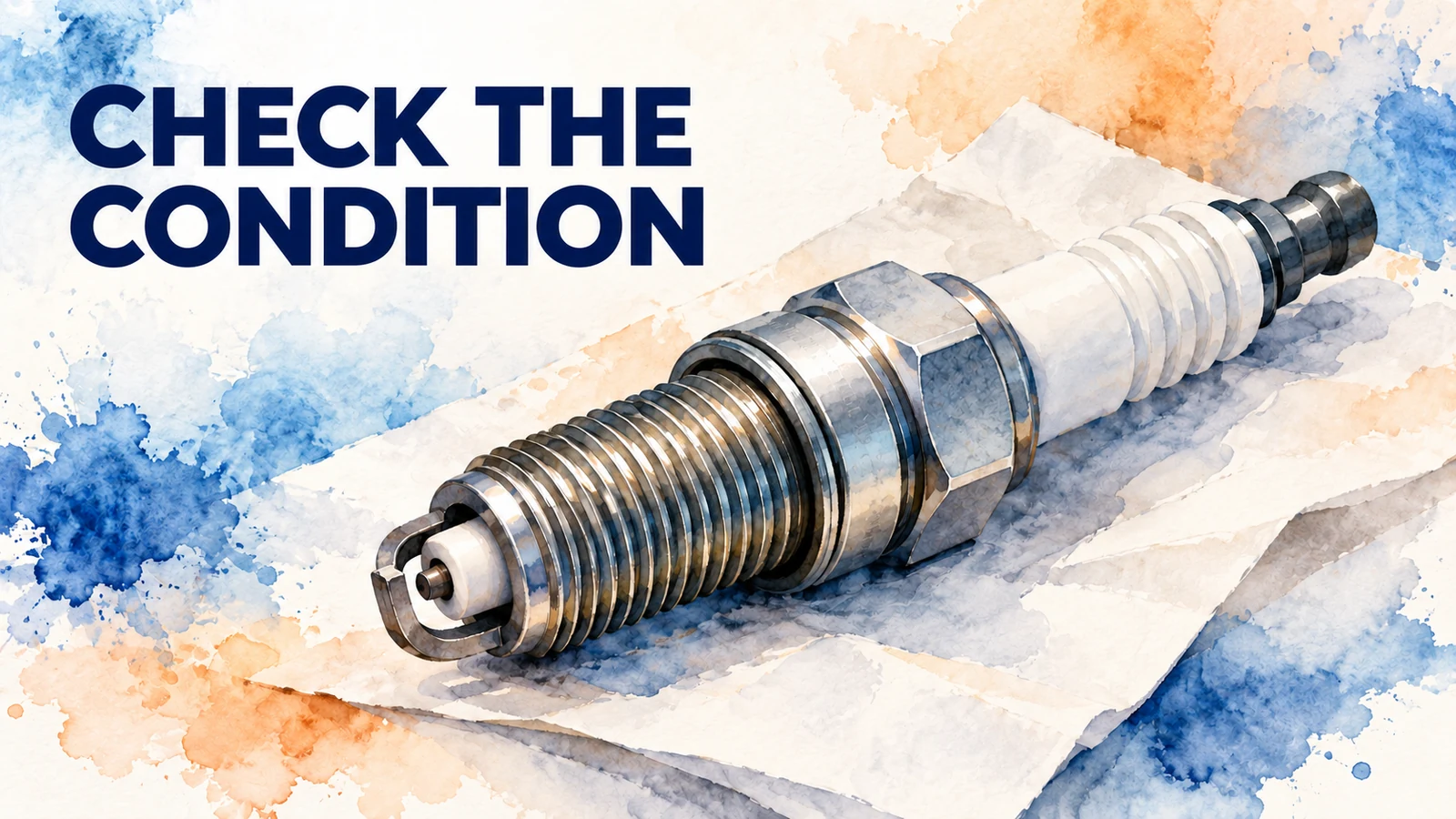
A photograph can help identify the supplied item and reveal a visible discrepancy. It cannot establish a plating chemistry or replace the applicable instructions. Lighting, finish color and image processing should not become the basis for assigning a treatment.
Keep treatment identity separate from condition at receiving. A product document may define an intended finish, while a photograph shows the received item. If the two records appear inconsistent, retain the discrepancy for supplier review rather than inferring the chemistry from color.
Keep the lubrication condition next to the torque source
When requesting fitting information, ask for the exact engine and plug reference, instruction revision and specified thread condition. Preserve the condition alongside any fitting value; a number copied without its applicability and lubrication statement is an incomplete record.
| Instruction field | Why it matters | Request if unresolved |
|---|---|---|
| Product and engine scope | Connects the document to the actual combination | Obtain the supplied-brand/reference mapping and covered application |
| Thread-surface statement | Identifies the documented treatment rather than guessed color | Request the product specification and its applicable revision |
| Lubrication condition | Preserves the instruction's required condition | Ask for the exact applicable passage, not a general workshop habit |
| Fitting specification source | Keeps values and conditions in the same evidence record | Request the full instruction, including scope and associated notes |
| Document revision | Shows which version supported the review | Resolve obsolete or conflicting versions with the responsible supplier/manufacturer |
If passages appear to conflict, send both exact references and ask which applies to the supplied plug and engine. Do not average their values or attach one source's condition to another source's number. Preserve the written resolution with the quotation so a later reviewer can see why one document was selected.
Use document status to identify the next request
Consider an invented purchasing record with the three evidence entries below. The table records document status, not a score for installation approval. It contains no actual MAKEXCAR test result or lubricant instruction.
| Evidence entry | Illustrative status | Question still to resolve |
|---|---|---|
| Product identity | Supplied | Does the document match the actual goods? |
| Thread-surface statement | Supplied | Does its scope include this reference/revision? |
| Applicable installation instruction | Missing | Which condition is required for this plug/engine combination? |
Two supplied records do not make the missing instruction optional. The buyer's next request is the applicable installation document and its reference mapping. Keep the row open until that evidence answers the question; a complete-looking folder or document count is not a substitute for applicability.
If the supplier later provides an instruction covering a different branded product, the status becomes applicability unresolved rather than confirmed. This distinction prevents a purchasing spreadsheet from turning document receipt into technical approval. The actual field that was resolved, and the field that remains open, should both remain visible.

Do not invent a correction for an added lubricant
A buyer may receive a proposal to reduce torque by a fixed percentage whenever anti-seize is used. Ask for the exact applicable manufacturer's instruction supporting that proposal. A general warning that lubrication affects tightening is not a validated correction formula for every plug.
Do not calculate a replacement fitting value from an unrelated published percentage. Different source statements may concern different products or conditions. Keep the question open until the actual application evidence resolves it.
If the product has already been handled or treated in a way that differs from its instructions, refer the specific situation to the responsible technical documentation and supplier. This article does not provide a cleaning, removal, reuse or refitting procedure.
Preserve instructions through quotation and packing
Ask how the applicable instruction will accompany the supplied goods. The buyer should be able to connect packaging, product identity and document revision without relying on a separate sales message whose scope is unclear.
If a quotation changes the supplied reference, revisit the surface and installation records. An unchanged commercial category does not mean the old instruction applies to the replacement. Keep the proposed change and the supplier's confirmation with the order line.
For a mixed shipment, retain the instruction mapping for each plug reference. Do not attach one general lubrication note to every carton unless its applicability has been established for every included item.
Receiving review should check the document mapping
Compare received identifiers and packaging with the agreed item records. Capture product-reference photographs and retain the version of any instruction that accompanied the goods. If the actual product differs from the approved mapping, record the discrepancy and request confirmation for the supplied reference.
Give the installation-information reviewer a short handoff: exact plug, engine application, thread-condition document and unresolved questions. Distinguish a source-supported instruction from an unsourced sales statement. That keeps a previous purchaser's document collection from being mistaken for approval of a fitting method.
Three document mismatches and how to resolve them
A sales email says to add anti-seize but gives no source
Preserve the message as a supplier claim and request the applicable instruction and covered reference. Ask the supplier to identify the passage supporting that condition for the actual plug/engine combination. Do not rewrite the sales statement as an approved fitting rule. If it conflicts with a supplied document, send the specific passages together and keep the technical question open until applicability is resolved.
A revised quotation changes the plug reference
Retain the original and proposed identities and ask whether the old thread-surface statement and installation instruction still cover the change. Request a revised mapping if necessary. The commercial category can remain the same while the document scope changes; keep those two decisions separate. Do not attach the former instruction to the new item merely because the reference codes look related.
The goods arrive with different identifiers
Keep photographs of the supplied labels and the agreed records, then ask the supplier to explain the mismatch and provide the applicable documents. The evidence folder may be complete for the ordered item while failing to cover the delivered one. Refer the discrepancy through the responsible product review instead of trying to infer plating or lubrication conditions from the visible finish.
These are editorial purchasing examples, not actual customer incidents or an installation procedure. They show how to retain enough context for a specific technical answer without inventing a coating chemistry, cleaning method or torque correction.
Send a specific instruction request
Use the MAKEXCAR inquiry page to send the item information and documents already available. Five fields make the instruction request specific:
Supplied identity: [supplier reference], [manufacturer/brand where established], [product revision], [quantity].
Intended application: [engine identification], [existing part information], [application evidence available].
Surface evidence: [thread-surface statement], [document identifier/revision], [missing or conflicting field].
Installation evidence: [applicable instruction], [lubrication condition passage], [scope and fitting-source questions].
Resolution requested: [reference mismatch or proposed change], [which source applies], [how the document will accompany the supplied goods].
Save the response alongside the original statement and quotation. A useful purchasing record connects the actual product, its documented thread condition and the applicable instruction. It leaves unsupported fitting questions visible rather than filling them with a universal anti-seize rule.